
A Comprehensive Guide to Drosera: Biology, Cultivation and Care
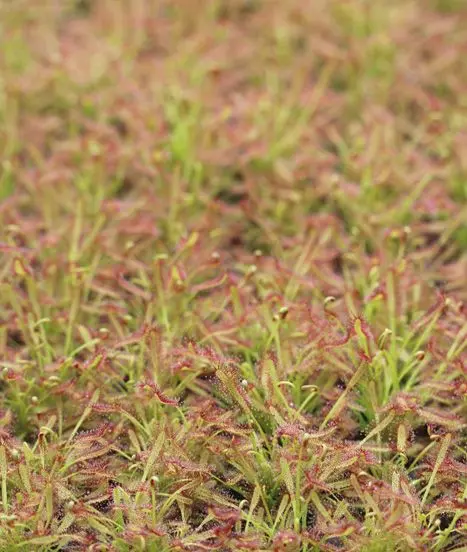
The genus Drosera, better known as ‘sundews’, is one of the most extensive and fascinating in the world of carnivorous plants. With over 250 described species, spread across several continents, Droseras are remarkable for their diversity, their adaptability and their sticky traps capable of capturing prey much larger than themselves. Their apparent delicacy actually conceals a remarkably sophisticated biological mechanism, so much so that it has inspired numerous scientific studies for over a century.
Let’s set off on a clear overview of the cultivation and understanding of Drosera.
1. Understanding Drosera: biology, traps and how they work
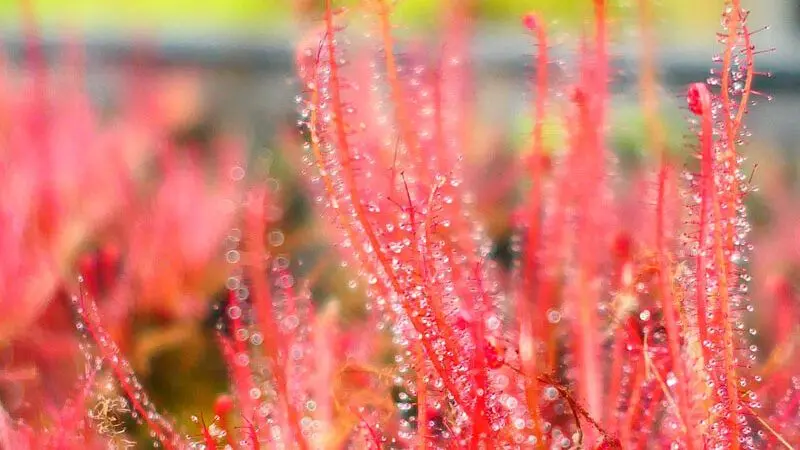
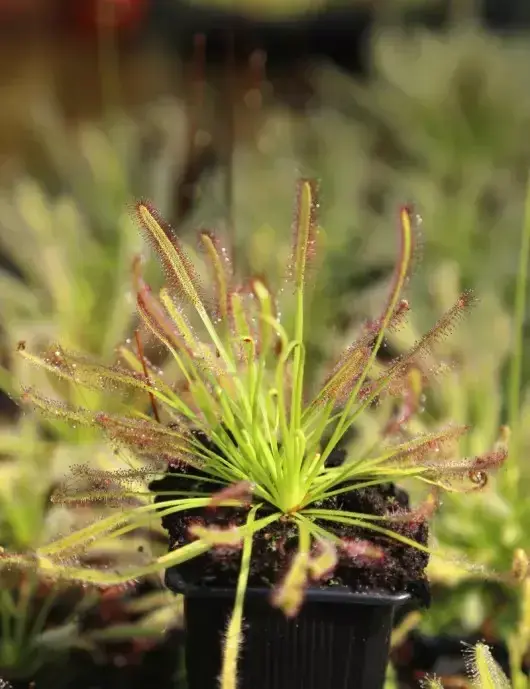
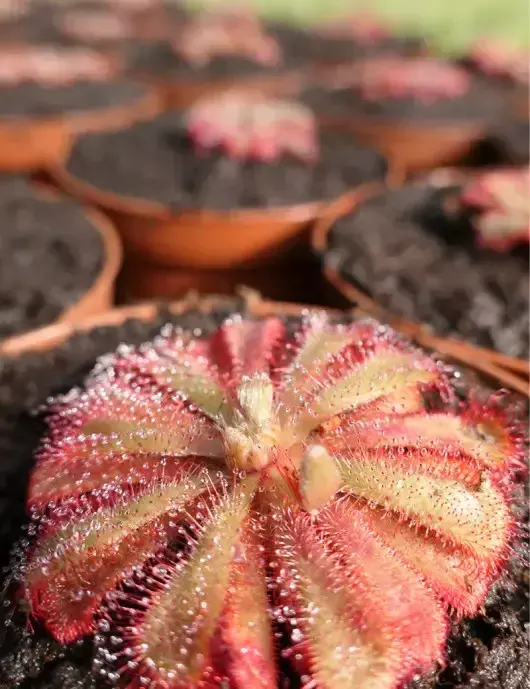
Droseras are characterised by their leaves, which are covered in stalked glands that secrete a viscous mucilage. When light passes through these droplets, they take on the appearance of dew, hence their name. This ‘mucilage’ is much more than just a sticky trap: it contains digestive enzymes that break down captured prey.
Studies by Albert et al. (1992) and the pioneering work of Kondo (1960, 1969) have shown that Drosera’s leaves react to touch by moving slowly but purposefully towards the prey. This ability, known as thigmonasty, optimises the contact surface area, accelerates digestion and reduces energy loss. In certain species, such as Drosera glanduligera, the mechanism is even more spectacular: veritable ‘catapult traps’ fling the insect into the centre of the leaf.
Droseras are therefore not merely sticky: they are capable of precise behaviours, triggered by mechanical and electrical signals, which have been studied in detail in several publications on plant physiology.
2. The major groups of Drosera
The genus is traditionally divided into five main horticultural groups, a classification recognised by the Dionaea Association and consistent with the resources on this blog.
• Tropical Drosera
The most commonly cultivated, featuring hardy species such as D. capensis, D. spatulata and D. aliciae. They grow all year round without any marked dormancy, making them ideal for beginners.
• Temperate Drosera
These species go into winter dormancy. Drosera intermedia and Drosera rotundifolia are common in Europe and thrive outdoors. On your blog, the article ‘Drosera intermedia: a fascinating carnivorous plant’ provides an excellent introduction to this group.
• Dwarf Droseras
Mainly native to Australia, these miniature plants, such as Drosera scorpioides, reproduce via gemmae, a highly effective form of vegetative propagation. They are easy to grow but require a carefully controlled light cycle.
• Tuberous Droseras
Described in detail in Gibson’s work (1991), they are adapted to Australia’s wet winters and dry summers. Growing them is more technical: they spend the summer as tubers and must never be watered whilst dormant.
• Subtropical/savannah Drosera
An intermediate group appearing in certain horticultural publications. They do not have a strict dormancy period but benefit from a period of relative rest depending on the season and photoperiod.
3. Growing conditions: light, water, growing medium and humidity
Light
Light is the key factor for success. Bright light stimulates mucilage production, intensifies red colours and encourages leaf movement.
→ A Drosera that no longer produces mucilage is very often lacking in light.
Eau
Droseras require extremely pure water.
Permitted: rainwater, osmosis water or demineralised water.
Not permitted: tap water, mineral water, hard water.
Substrate
The typical growing medium recommended by Karnivores and the Dionaea Association is a mixture of:
- acidic blond peat,
- perlite or, occasionally, non-calcareous sand.
- live sphagnum moss
Humidity
Most species prefer high humidity, but not to the point of being stifling. Temperate species and some tropical ones (e.g. capensis) cope well with ambient air conditions.
Temperature
- Tropical: 18–30 °C, never below 5 °C
- Temperate: natural cycle with cold winters
- Tuberous: cool and damp in winter / dry in summer
- Pygmy species: stable conditions; avoid prolonged periods of intense heat
4. Care: repotting, flowering, health and mistakes to avoid
Rempotage
Droseras should be repotted every 2 to 4 years. Peat breaks down over time and becomes suffocating. Repotting should generally be carried out in spring so as not to disrupt natural cycles, but certain specific conditions (diseases, pests, etc.) may require repotting at other times of the year.
Flowering
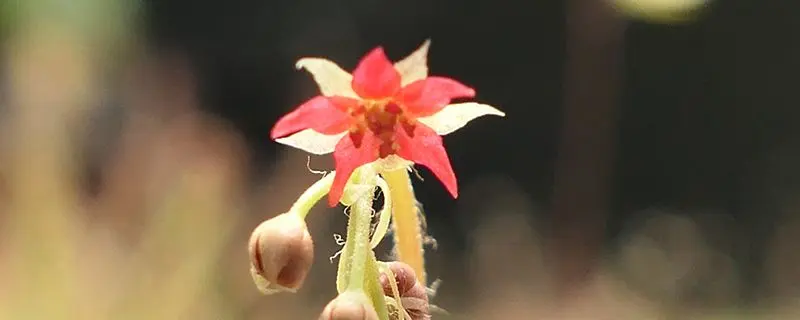
Flowering is charming but is not always beneficial. Tropical Droseras can flower without becoming exhausted, but temperate or tuberous species need to be monitored. If the plant slows down its growth, it is advisable to cut off the flower stalk.
Common problems
- Lack of light
- Hard water
- Substrate too compact
- humidity too low (loss of mucilage)
- aphid infestations on flower stalks
- mould on sphagnum moss that is too damp
The page ‘Diseases and pests of carnivorous plants’ on your blog provides a useful basis for this chapter.
5. Propagation: sowing, cuttings, division and layering
By seed
Temperate Droseras generally require cold stratification for 4 to 8 weeks, although this is not essential.
Tropical species germinate without stratification but require plenty of light.
Cuttings
Leaf cuttings are a classic method. Scientifically studied in several horticultural papers, they rely on the Drosera’s strong capacity for cellular reprogramming.
Division
Simple in species with multiple rosettes (aliciae, spatulata).
Budding
Pygmy Droseras form reproductive buds in winter. These are sown like small seeds and produce perfect clones.
6. Observation, ecology and surprising behaviours
Droseras are remarkable examples ofecological adaptation. This is undoubtedly why they are used both in our kitchens and in integrated pest management. They inhabit nutrient-poor areas, which are often acidic, marshy or sandy. To compensate for these constraints, they capture insects, from which they derive the bulk of their nitrogen intake.
Some species display extreme behaviour:
- Drosera glanduligera catapults its prey towards the centre in a matter of milliseconds.
- Drosera regia, which has been studied in several publications on plant physiology, combines remarkable speed and strength in its movements.
7. Choosing your Drosera: beginner, intermediate or expert
For beginners
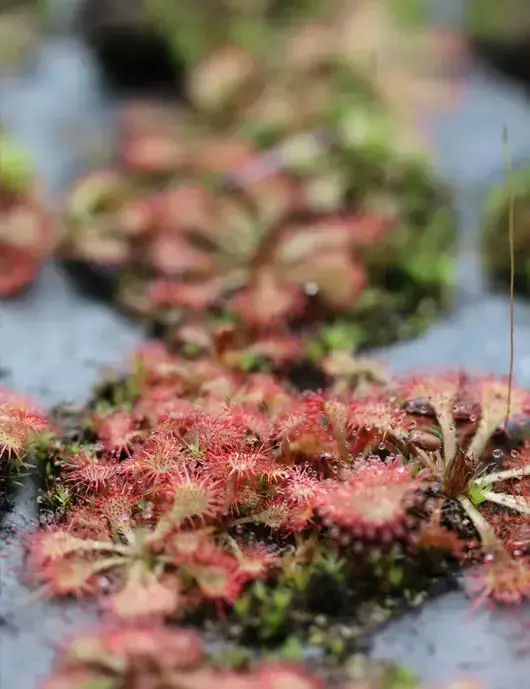
- Drosera capensis
- D. spatulata
- D. aliciae
For intermediate growers
- Drosera binata
- Drosera adelae
- Drosera falconeri (be careful with moisture)
For experts
- Australian tuberous Droseras
- Rare pygmy Droseras
- Mountain Drosera
Conclusion
Growing Drosera means discovering an astonishing, accessible and rich botanical world. Their diversity means there is a species to suit everyone, from beginners to seasoned collectors. By meeting their simple yet specific requirements, Droseras prove to be amongst the most rewarding carnivorous plants, offering colour, movement and daily observation.
FAQ – A comprehensive guide to Drosera
What are the essential growing conditions for a Drosera?
Success depends above all on bright light, very pure water and a nutrient-poor, acidic substrate.
What sort of water should you use to water a Drosera?
Only use rainwater, reverse-osmosis water or demineralised water. Tap water, mineral water or hard water should be avoided.
Which growing medium is best suited to Drosera?
A mixture based on acidic blond peat, with perlite (or non-calcareous sand), and possibly live sphagnum moss.
Why does a Drosera stop producing mucilage?
A lack of light is a very common cause. If the humidity is too low, this can also lead to a loss of mucilage.
When should you repot a Drosera?
Generally every 2 to 4 years, as the peat breaks down and becomes more suffocating. Spring is often the best time to do this.
Which Drosera plants should you choose when you’re just starting out?
Drosera capensis, Drosera spatulata and Drosera aliciae are among the species recommended for beginners.
For sale in the Karnivores shop
Love Carnivorous plants? Don't miss our plants and exclusive offers in the online shop.
Read next
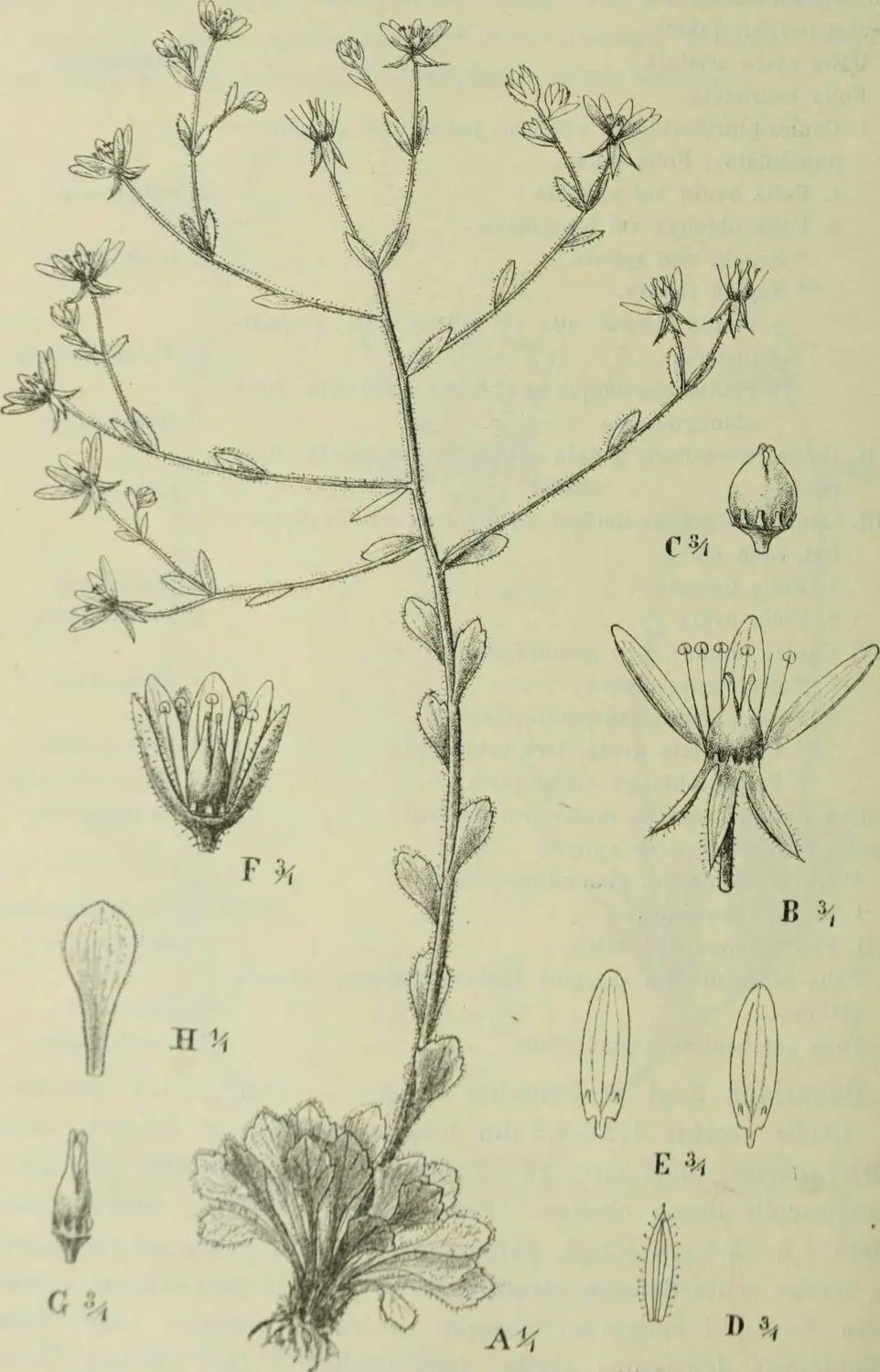
Saxifraga candelabrum: the flowering plant that confirms a 150-year-old hypothesis by Darwin
How does the Venus flytrap detect its prey? A 2025 study sheds light on its ‘sixth sense’
Growing Tillandsia from seed: a comprehensive guide to successful germination

Do Dionisian traps run on electricity?
How carnivorous plants digest their prey
Which plants can you grow on xaxim?