
Saxifraga candelabrum: the flowering plant that confirms a 150-year-old hypothesis by Darwin
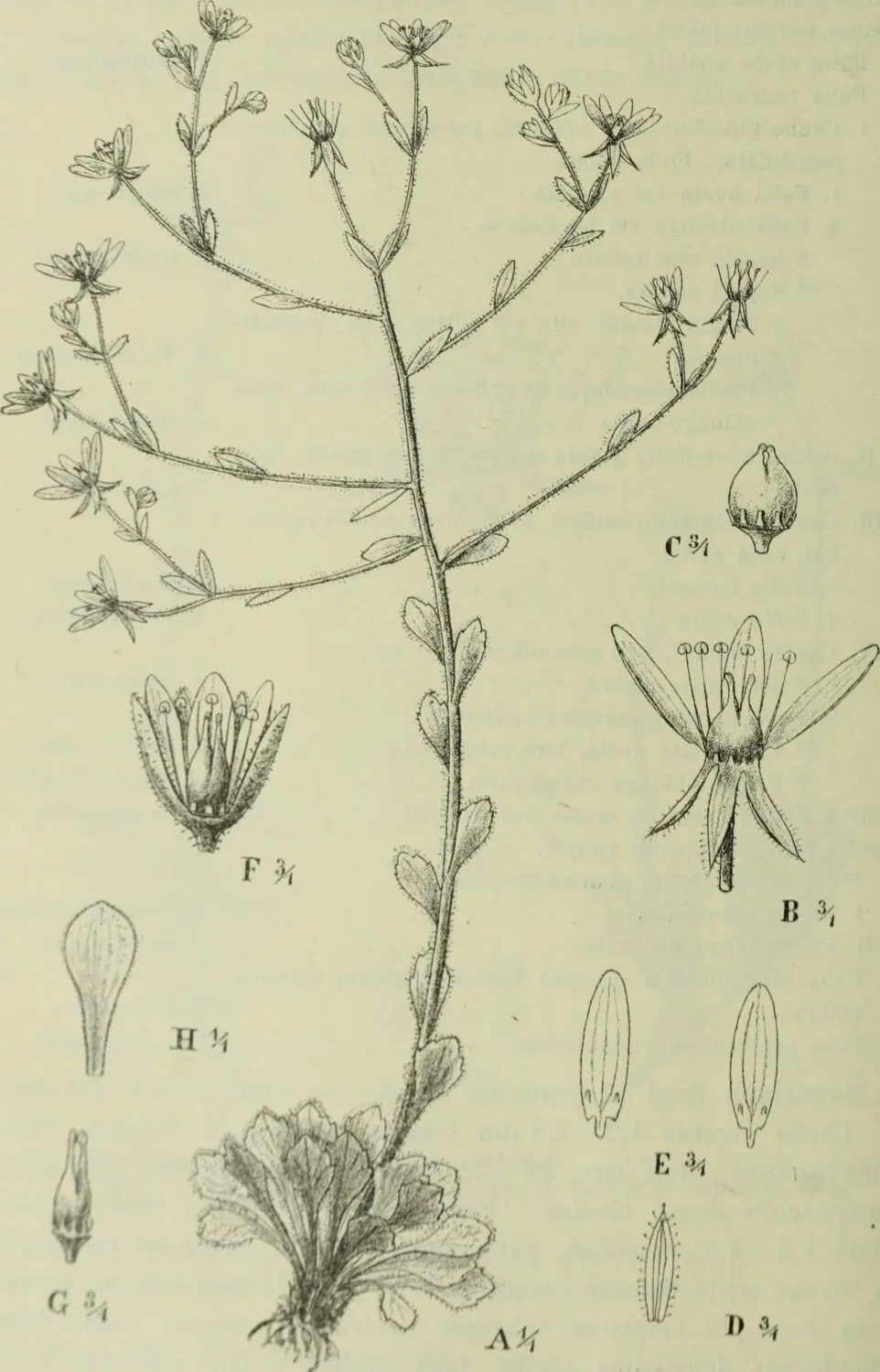
An international research team has just provided evidence that a small Chinese mountain flower, *Saxifraga* *candelabrum*, is indeed carnivorous. This was a hunch that Charles Darwin had put forward as early as 1875… though he was never able to prove it.
A hypothesis left unresolved since Darwin’s time
In 1875, Charles Darwin observed that certain saxifrages were covered in sticky hairs (glandular trichomes) on which trapped insects were regularly found. He concluded that they might be carnivorous, just like the carnivorous plants he was studying elsewhere, such as the Venus flytrap. But at the time, it was impossible to prove that the plant actually digested its prey and derived nutrients from it: the hypothesis remained merely a suspicion for over a century and a half.
What the new study reveals
Published on 4 August 2026 in *Nature Communications*, the study examined *Saxifraga* *candelabrum*, a small perennial that grows in rock crevices in the Hengduan Mountains, at altitudes of between 2,500 and 3,300 metres, in Yunnan and Sichuan (China). To be formally classified as carnivorous, a plant must meet four criteria: attracting, capturing, digesting and absorbing nutrients from its prey.
The researchers verified each of these stages. An analysis of 45 herbarium specimens collected between 1888 and 2016 shows that insects (mainly small midges) are present on the glandular hairs in almost all of the samples: the phenomenon is long-standing and systematic, not accidental. Tests using glass bells (blocking scent) and nets (blocking sight) indicate that the plant attracts its prey using scent compounds, as do other carnivorous plants capable of detecting their prey. Enzymatic analyses subsequently confirm digestive activity (phosphatase), and a nitrogen-15 labelling experiment on fruit flies used as prey demonstrates the transfer of this nitrogen to the plant’s tissues — particularly to the flowers, suggesting a direct benefit for reproduction.
**Key points:** *Saxifraga* *candelabrum* was officially recognised as carnivorous in 2026, confirming a hypothesis put forward by Darwin as far back as 1875. It is also the first carnivorous plant to be identified in a dry alpine environment, whilst almost all known species live in peat bogs or wetland habitats.
What this means in practice
Beyond its historical significance, this discovery considerably broadens the scope of plant carnivory. Genomic analysis reveals that S. candelabrum shares with other independent carnivorous lineages — including species of the genus *Drosera* — a set of convergent genes linked to the attraction, digestion and assimilation of prey. As the genus Saxifraga comprises around 450 species, many of which possess the same sticky hairs, the study’s authors believe that others may also be carnivorous, though this has not yet been detected. Plant carnivory, far from being a marginal phenomenon confined to a few well-known families, may therefore be much more widespread amongst flowering plants than previously thought.
Source: Zhang, X.-J., Deng, T., Lin, N. et al. ‘Identification of carnivory in the flowering plant Saxifraga via multidisciplinary evidence’. Nature Communications 17, 7557 (2026). DOI: 10.1038/s41467-026-75288-y
For sale in the Karnivores shop
Love Carnivorous plants? Don't miss our plants and exclusive offers in the online shop.