
A pygmy sundew: Drosera scorpioides
Introduction
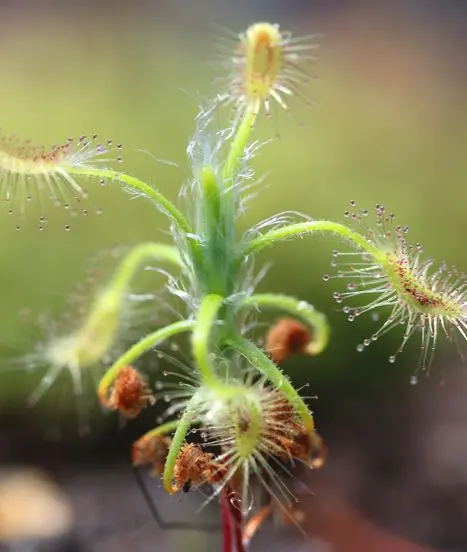
Discover the fascinating Drosera scorpioides, measuring just a few centimetres in size, a carnivorous plant native to the southern regions of Australia, particularly Western Australia. Adapted to Mediterranean climates and nutrient-poor soils, this species uses its sticky tentacles to capture insects and survive. Find out all about its unique biological characteristics, its exceptional ability to reproduce via offshoots, and the ideal growing conditions for cultivating this remarkable plant at home.
The origins of Drosera scorpioides
Drosera scorpioides, a fascinating carnivorous plant, is native to the southern regions of Australia, particularly the state of Western Australia. This area is characterised by Mediterranean climates with hot, dry summers and mild, wet winters – ideal conditions for this particular plant.
Drosera scorpioides is mainly found in sandy or peaty soils, which are often nutrient-poor, explaining its unique adaptation to catching insects to supplement its nutritional needs. Its small green rosettes and sticky tentacles are perfect adaptations to its environment, enabling it to survive and thrive in these particularly nutrient-poor ecosystems.
Biology
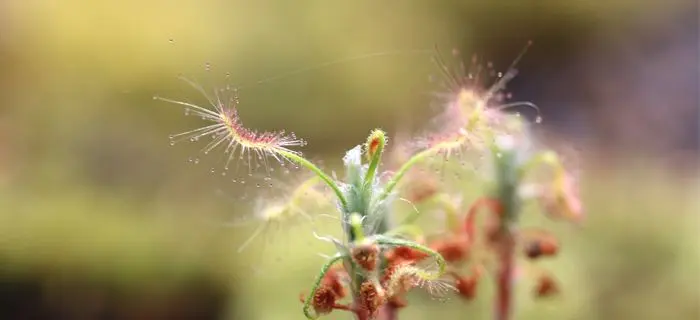
Drosera scorpioides is a carnivorous plant belonging to the Droseraceae family. It is characterised by its compact rosettes of leaves covered in glandular hairs, which secrete a sticky substance to trap small insects. These hairs, or tentacles, react to contact with prey by slowly folding in to immobilise it and aid digestion. The digestive enzymes secreted by the glands enable the plant to absorb essential nutrients, such as nitrogen and phosphorus, from the decomposition of the insects.
Budding: an exceptional ability of Drosera scorpioides
Drosera scorpioides possesses a remarkable ability to reproduce asexually through the formation of gemmae, small vegetative structures located at the base of the rosette. Genetically, this ability enables the plant to produce clones that are genetically identical to the parent plant, thereby ensuring the propagation of its genetic material without the variability introduced by sexual reproduction.
The buds develop into new rosettes once detached from the parent plant, often thanks to favourable environmental conditions such as humidity. This method of reproduction is particularly advantageous in harsh habitats where conditions for seed germination may be unfavourable. Budding ensures the species’ effective survival and colonisation, enabling *Drosera scorpioides* to spread rapidly and maintain its presence in nutrient-poor soils where competition for resources is intense.
Growing conditions for Drosera scorpioides
To grow Drosera scorpioides successfully, it is crucial to replicate the conditions of its natural Australian habitat. Here are the ideal growing conditions:
Growing medium
Use a mixture of peat and perlite, specifically formulated for carnivorous plants, to ensure good growth and optimal growing conditions.
Humidity
Maintain high humidity, around 50–70 per cent.
Light
Provide bright, indirect light. The plant needs plenty of light to thrive, ideally around 12–14 hours of light per day. Direct morning sunlight is beneficial, but avoid the scorching afternoon sun.
Temperature
The ideal temperature is between 15–25°C during the day and can drop to 5–10°C at night and in winter. Drosera scorpioides tolerates temperature fluctuations, but prolonged extremes can be detrimental to its health.
Eau
Use only rainwater, demineralised water or osmosis water.
Ventilation
Ensure good air circulation to prevent fungal diseases and promote healthy growth.
Conclusion
Drosera scorpioides is a fascinating carnivorous plant, perfectly adapted to the Mediterranean climates of Western Australia. Its unique adaptations, such as its sticky tentacles and its ability to reproduce via buds, enable it to thrive in nutrient-poor soils. To grow this plant successfully, it is essential to replicate its natural conditions: a suitable growing medium, high humidity, bright but indirect light, moderate temperatures, pure water and good ventilation. By following these recommendations, you can appreciate the beauty and ingenuity of Drosera scorpioides in your own collection.
For sale in the Karnivores shop
Love Carnivorous plants? Don't miss our plants and exclusive offers in the online shop.
Read next
Saxifraga candelabrum: the flowering plant that confirms a 150-year-old hypothesis by Darwin
How does the Venus flytrap detect its prey? A 2025 study sheds light on its ‘sixth sense’
Growing Tillandsia from seed: a comprehensive guide to successful germination
Do Dionisian traps run on electricity?
How carnivorous plants digest their prey
Which plants can you grow on xaxim?