
Heliamphora
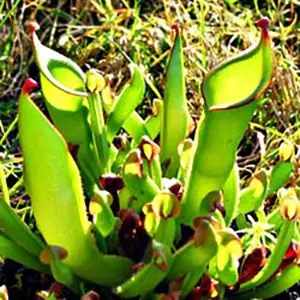
Heliamphoras are urn-shaped carnivorous plants belonging to the same family as Sarracenias. However, the genus has a much more restricted distribution, as it is found only on the high plateaus of Guyana and Venezuela (tepuis), as well as in the far north of Brazil, usually away from human activity.
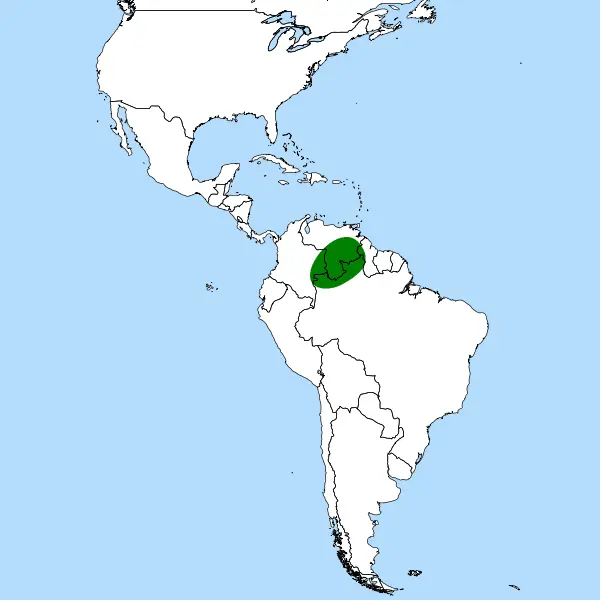
The climate there is highly changeable, with alternating periods of sunshine and heavy downpours, often accompanied by very strong winds. The nights are very damp, and the Heliamphoras are usually shrouded in mist.
The poor quality of the peaty and sandy soils, through which very pure water runs, has led the Heliamphora to adopt a carnivorous lifestyle in order to survive. The traps function in a similar way to those of Sarracenia: they are flared urns at the end of which a spoon-shaped or upturned ladle-shaped protrusion develops, from which sweet nectar drips. The interior is lined with tiny, downward-pointing hairs, which prevent any prey that has fallen to the bottom of the trap from climbing out.
Eighteen species of Heliamphora have been recorded to date, but there is probably still much to discover about this genus. Some have only been described very recently. They are all relatively similar, and only a trained eye can easily tell them apart.

For sale in the Karnivores shop
Love Carnivorous plants? Don't miss our plants and exclusive offers in the online shop.
Read next
Saxifraga candelabrum: the flowering plant that confirms a 150-year-old hypothesis by Darwin
How does the Venus flytrap detect its prey? A 2025 study sheds light on its ‘sixth sense’
Growing Tillandsia from seed: a comprehensive guide to successful germination

Do Dionisian traps run on electricity?
How carnivorous plants digest their prey

Which plants can you grow on xaxim?