
Growing Tillandsia from seed: a comprehensive guide to successful germination
Tillandsias, often known as ‘air plants’, are fascinating for their ability to grow without soil and to attach themselves to a wide variety of surfaces. Whilst propagation by offsets remains the quickest way to obtain new plants, sowing Tillandsia seeds allows you to experience the full life cycle of these remarkable bromeliads.
Sowing seeds requires patience, but it also offers the chance to grow a large number of plants from a single seed capsule. Here’s how to successfully sow your seeds and care for your young Tillandsia plants during their first few years of growth.
Why sow Tillandsia seeds?
Sowing seeds allows you to grow dozens, or even hundreds, of plants from a single seed capsule. It is also the natural method of reproduction used by Tillandsias in their native habitat.
Unlike propagation by offsets, each seedling produces a unique individual. It is a particularly fascinating experience for enthusiasts wishing to observe every stage of a Tillandsia’s development, from seed to adult plant.
Sowing is also often the only way to obtain certain rare species or to produce a large number of plants at a lower cost.
Tillandsia seeds: very distinctive seeds
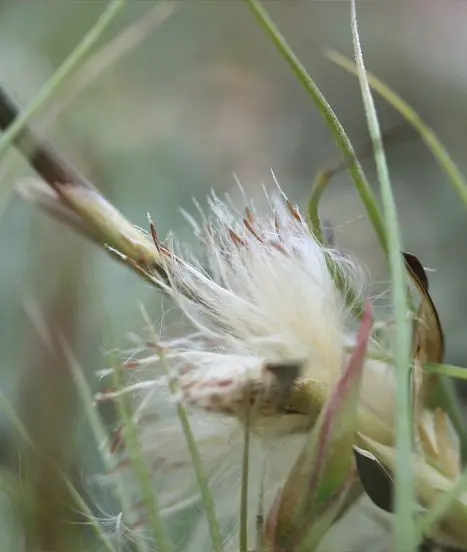
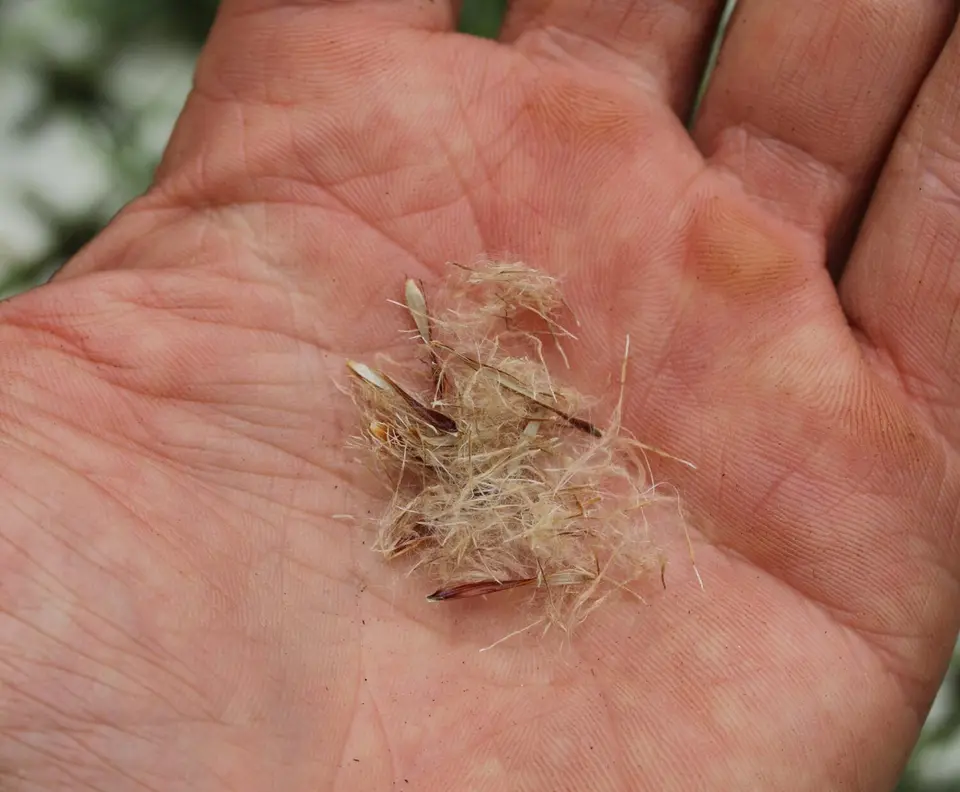
Tillandsia seeds are easily recognisable thanks to their tuft of numerous white filaments.
In the wild, these filaments play a vital role. They enable the seeds to be carried by the wind for tens or hundreds of metres before attaching themselves to a tree, a branch, a rock or any other suitable surface.
This adaptation explains why Tillandsias do not need soil to germinate. The seeds develop directly on the surface of a moist substrate, where they gradually anchor themselves using their first roots, which are primarily intended for attachment.
When should Tillandsia seeds be sown?
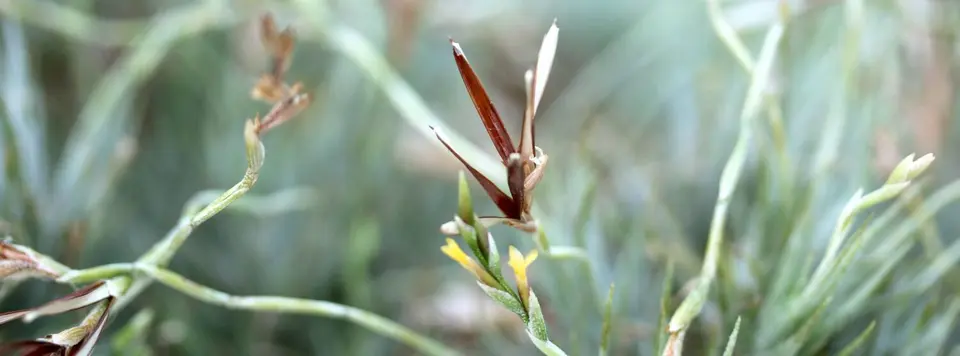
Fresh seeds generally produce the best germination results.
However, Tillandsia seeds often retain good germination capacity for over a year when stored in a dry place under the right conditions.
Sowing can be carried out all year round provided there is a stable temperature of between 20 and 28°C and good light levels.
For amateur growers, spring and early summer are often the most favourable times due to the naturally longer daylight hours.
What growing medium should be used for sowing?
Choosing the right growing medium is an important step.
Rehydrated sphagnum moss is one of the most commonly used growing media. It offers a good balance between moisture retention and aeration. The seeds can be placed directly on the surface without being covered. The filaments naturally allow them to cling to the sphagnum moss.
Aquanappe can also be used with very good results. It helps maintain a relatively stable level of moisture whilst providing a clean and durable growing medium. However, care must be taken to ensure it remains merely damp and not waterlogged. A water mat that is constantly saturated with water encourages mould growth and increases the risk of seedling loss.
Wintering fleece is another useful option. Seeds adhere to it easily and young seedlings develop well on it. This technique works particularly well when combined with regular watering or misting several times a day. The results can be excellent, but it requires more attention than other methods as the growing medium dries out quickly and must be monitored closely.
Other substrates may also be suitable, notably certain synthetic nets, mosquito netting or fibrous materials capable of retaining a slight level of moisture whilst remaining well ventilated.
The aim is always to achieve high air humidity without saturating the growing medium with standing water, whilst ensuring good air circulation around the seeds.
How do you sow Tillandsia seeds?
Start by moistening your chosen growing medium.
Then gently scatter the seeds over the surface, taking care not to crowd them together. There is no need to cover them.
The seedbed is often placed in a very humid environment to prevent the seeds from drying out during the first few weeks.
A mini-greenhouse, a clear box or any other container that helps maintain high humidity can be used. This method generally aids germination but is by no means essential.
For beginners, a mini-greenhouse is often the simplest way to maintain stable humidity levels during the first few weeks.
Many growers also achieve excellent results in open containers by regularly misting or spraying the seeds. This approach requires more monitoring but often provides better ventilation and reduces the risk of mould.
Good light is essential from the outset, but direct sunlight must be avoided so as not to cause the seedlings to overheat.
Temperature, light and humidity
Tillandsias germinate more readily when temperatures remain between 20 and 28°C.
However, some species native to cooler regions or mountainous areas may prefer slightly lower temperatures.
Bright light promotes germination and the development of young seedlings. A location that is too dark will significantly slow their growth.
Humidity must remain high during the early stages of germination. However, regular ventilation is essential to prevent mould and problems associated with a stuffy environment.
Finding the right balance between humidity and ventilation is often the key to success.
How long does it take for the seeds to germinate?
Germination can take place after one to several weeks, or even several months, depending on the species and growing conditions.
The first seedlings gradually appear on the surface of the growing medium. They remain extremely small during their first few months of development.
It is at this stage that patience becomes essential. Young Tillandsias devote much of their energy to anchoring themselves to their growing medium before producing new leaves.
The early years of growth
Unlike many plants, Tillandsias grow very slowly when grown from seed.
During the first few months, they show little change in size despite significant biological activity. The young plants gradually develop their root system and strengthen their hold on the substrate.
It is not uncommon for a seedling to remain tiny for several months, or even more than a year. Many growers give up on their seedlings at this stage, when growth is simply following its natural pace.
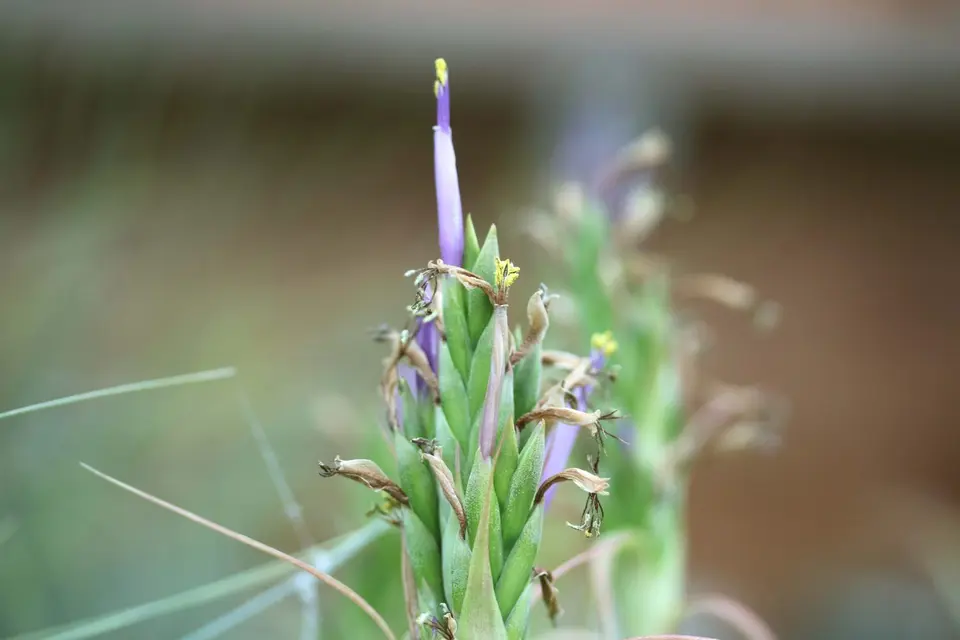
Over the years, the young plants gradually take on the characteristic appearance of their species.
Depending on the species being grown, it generally takes between 3 and over 10 years to produce a mature plant. The fastest-growing species reach maturity relatively early, whilst some large species require many years before they flower for the first time.
Natural germination: what happens in the wild
In their natural habitat, seeds are dispersed by the wind and then attach themselves to various surfaces.
Spontaneous germination can also be observed in cultivation when conditions are favourable. Some seeds attach directly to neighbouring plants, growing media or greenhouse structures.
This ability to establish itself largely explains the success of Tillandsias in many natural habitats across Central and South America.
The most common mistakes
The most common mistake is keeping the seeds in an environment that is too damp and not well-ventilated. Mould can then develop rapidly.
Conversely, prolonged drying out severely compromises the chances of germination.
Insufficient light also slows down seedling development, whilst direct sunlight can destroy them in just a few hours.
Finally, many growers give up on their seedlings too soon. Tillandsias are patient plants that take time to reveal their true potential.
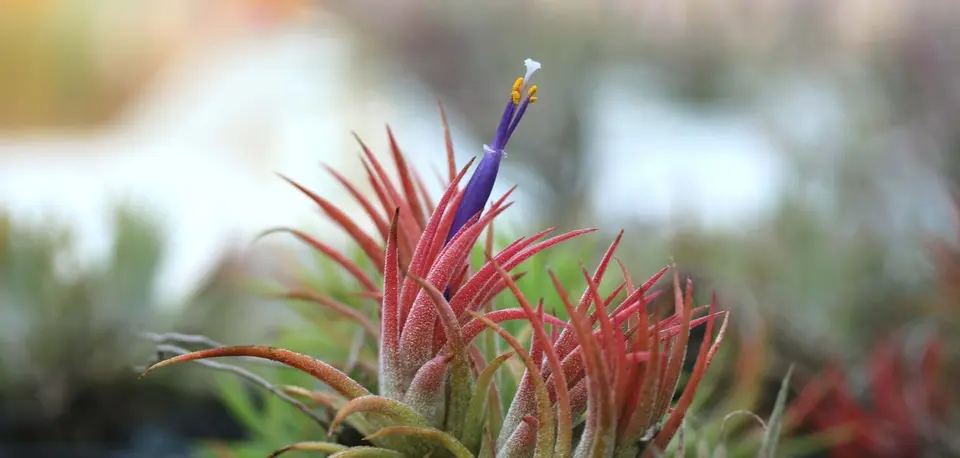
A fascinating experience for Tillandsia enthusiasts
Tillandsia seed-raising is undoubtedly one of the most rewarding cultivation methods for bromeliad enthusiasts. Watching a single seed gradually develop into a mature plant provides a better understanding of the life cycle of these remarkable species.
With a little patience, plenty of light and carefully controlled humidity, it is possible to build up magnificent collections entirely from seed. Bear in mind, however, that growing a Tillandsia from seed is a long-term project: it will take several years before you have a mature plant capable of flowering itself.
FAQ: Sowing Tillandsia seeds, germination and growing young plants
How long does it take for Tillandsia seeds to germinate?
Germination may take place after one to several weeks, or even several months, depending on the species, temperature, humidity and the quality of the seeds.
Do Tillandsia seeds need soil to germinate?
No. Tillandsia seeds germinate directly on the surface of a moist medium such as sphagnum moss, aquanappe or a synthetic mesh. They must not be buried.
What is the ideal temperature for sowing Tillandsia?
Most species germinate well at temperatures between 20 and 28°C. Some mountain species may prefer slightly cooler temperatures.
What medium should I use for sowing Tillandsia seeds?
Rehydrated sphagnum moss is the most commonly used growing medium. Aquanappe, wintering fleece and certain synthetic nets also produce good results.
Should you use a mini-greenhouse for Tillandsia seedlings?
It isn’t compulsory, but it does make it easier to maintain high humidity levels during the first few weeks. Good ventilation remains essential, however.
How long does it take to grow a mature Tillandsia from seed?
Depending on the species, it generally takes between 3 and over 10 years for a plant to reach maturity and be able to flower.
Do Tillandsia seeds keep for a long time?
Yes. If stored in a dry place away from light, they can retain good germination capacity for over a year.
Why aren’t my Tillandsia seeds germinating?
The main reasons for failure are a lack of moisture, unsuitable temperature, insufficient light or seeds that are too old.
Can natural Tillandsia seedlings be observed?
Yes. When conditions are favourable, the seeds can naturally attach themselves to bark, xaxim, growing media or even other plants.
Do young Tillandsia plants grow quickly?
No. Seedlings often remain very small during their first few months, or even their first few years. Growth is generally slow but steady.
For sale in the Karnivores shop
Love Carnivorous plants? Don't miss our plants and exclusive offers in the online shop.
Read next
Saxifraga candelabrum: the flowering plant that confirms a 150-year-old hypothesis by Darwin
How does the Venus flytrap detect its prey? A 2025 study sheds light on its ‘sixth sense’
Do Dionisian traps run on electricity?
How carnivorous plants digest their prey
Which plants can you grow on xaxim?
When should you sow seeds of carnivorous plants?