
Sarracenia versus the Asian hornet: a new study
Introduction
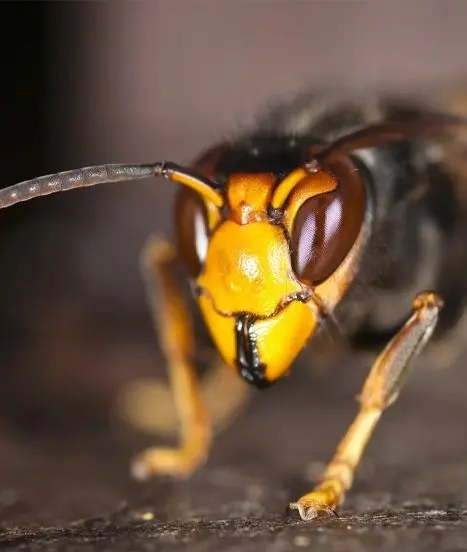
This new study (17 July 2024) focuses on combating the Asian hornet, an invasive species threatening honeybees and biodiversity, by drawing inspiration from the trapping mechanisms of carnivorous plants, particularly Sarracenia. As traditional eradication methods are ineffective and harmful to the environment, researchers are exploring solutions – as we have already seen in another of our articles on the Asian hornet – that are more selective and respectful of biodiversity.
Sarracenias select their prey
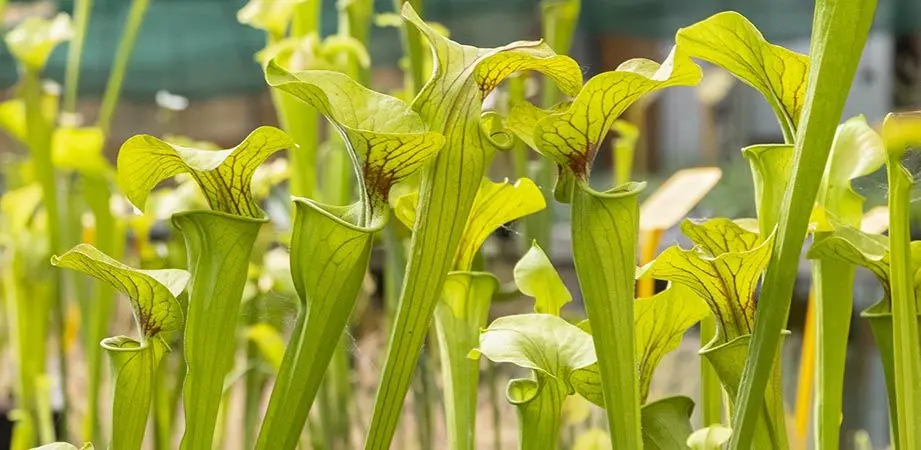
The researchers studied the visual and olfactory signals of four species of Sarracenia to understand their effectiveness in trapping the hornet. The colours of the pitchers were measured to model their visual attractiveness, whilst the plants’ odours were analysed by chromatography to test their effect on the behaviour of the Asian hornet. The results show that different Sarracenia species have specific olfactory and visual signatures, which influence the composition of the prey captured. Species with long, contrasting pitchers, such as S. leucophylla, trap more flying hymenoptera, whilst those with short pitchers, such as S. purpurea, mainly capture ants.
Sarracenia and the Asian hornet
In terms of trapping the Asian hornet, S. purpurea shows no effectiveness, unlike S. leucophylla and its hybrids, such as S. X Juthatip soper, which effectively trap these insects in the autumn. However, some species, such as S. mitchelliana, have an average capture rate, probably due to low retention rates. Traits such as white areoles and the secretion of nectar at the entrance to the trap have proved effective in attracting the hornet, whilst the slippery texture of the pitchers facilitates their capture.
Conclusion
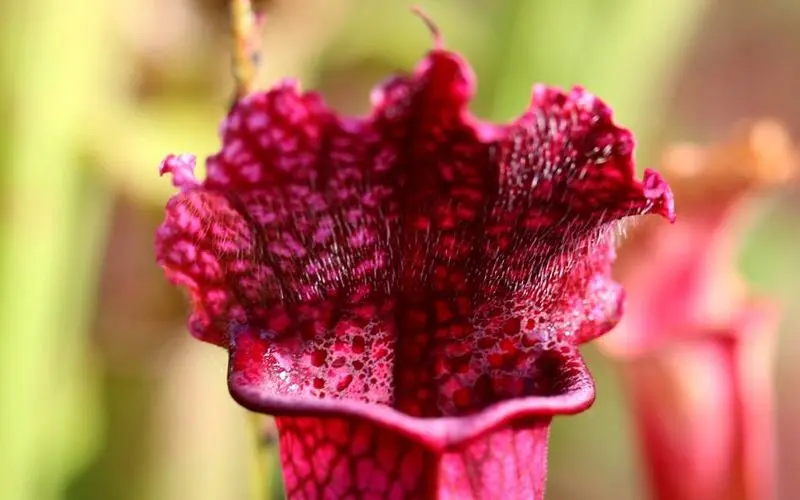
The study concludes that the volatile compounds and physical characteristics of pitcher plants could inspire the creation of a biomimetic trap. Identifying the attractive compounds and effective visual characteristics could lead to an environmentally friendly and sustainable solution for controlling Asian hornet populations, thereby preserving biodiversity and pollination services.
Until such traps are available, we can always make use of living Sarracenia!
For sale in the Karnivores shop
Love Carnivorous plants? Don't miss our plants and exclusive offers in the online shop.
Read next
Saxifraga candelabrum: the flowering plant that confirms a 150-year-old hypothesis by Darwin
How does the Venus flytrap detect its prey? A 2025 study sheds light on its ‘sixth sense’
Growing Tillandsia from seed: a comprehensive guide to successful germination

Do Dionisian traps run on electricity?
How carnivorous plants digest their prey
Which plants can you grow on xaxim?