
Quartz sand for carnivorous plants: what is it used for and how do you use it?
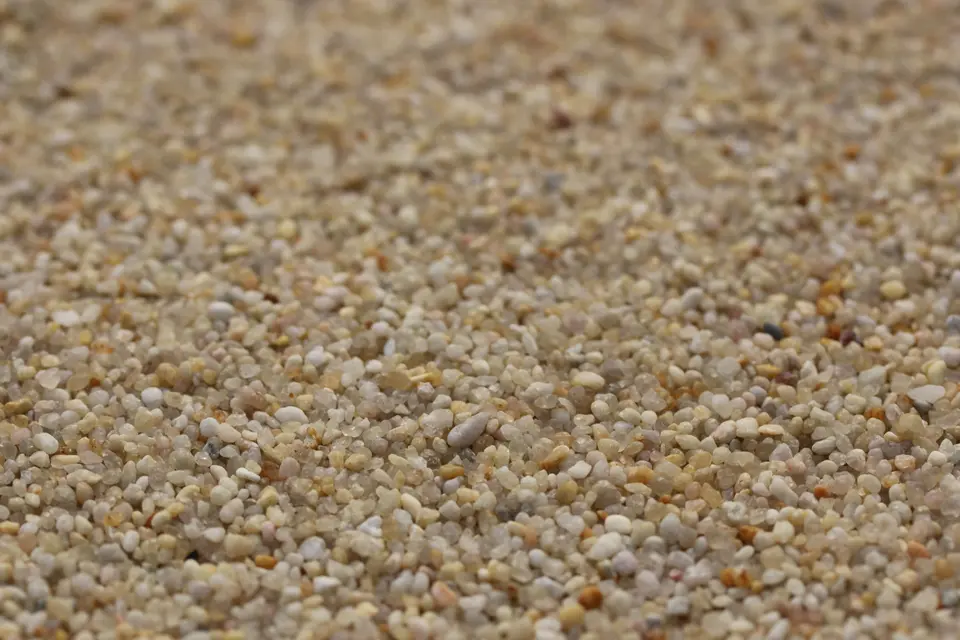
Peat alone settles over time and retains a great deal of water. The roots lack air, and the plant eventually suffers as a result. To lighten the growing medium, you need an inert material that releases neither lime nor salts: quartz sand. Here’s what it is, what it’s used for, what proportions to mix, and how to choose the right sand.
What is quartz sand?
Quartz sand is silica. It is an inert material: it releases neither lime nor salts into the watering water, which is important for plants that do not tolerate minerals well.
Our washed, non-calcareous quartz sand is sourced in France, extracted in Eure-et-Loir. Washed and dried, it is clean, free from dust and clay. Its rounded grains, light beige with shades of ochre, pink and grey, are graded from 1 to 2.5 mm.
It is sold in two sizes: 1 litre (2 kg) and 3 litres (6 kg).
PHOTO OF THE 1 L AND 3 L BAGS (image from product sheet 7014)
Why carnivorous plants need it
Peat alone compacts
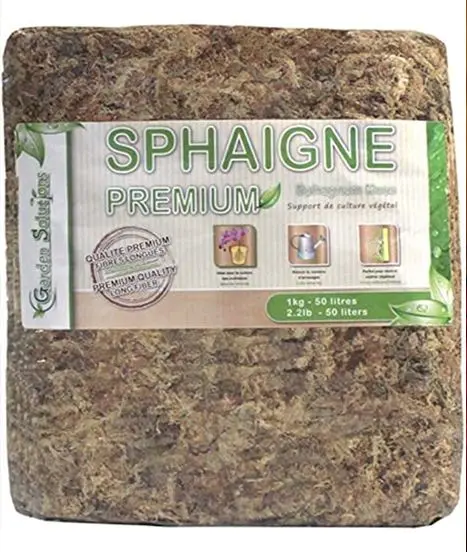
Blond peat forms the base of the growing medium, but on its own it compacts and suffocates the plants. We also discuss this in our article on dehydrated sphagnum moss and conventional growing media.
Sand aerates and lightens the mix
It is the grains of sand that allow air and water to circulate around the roots. The size of the grains determines the amount of air and water retained (NC State University), hence the importance of choosing sand with a consistent grain size.
The ICPS (International Carnivorous Plant Society) recommends a standard mix of equal parts peat and coarse sand. It points out that it sometimes takes three measures of loose peat to one measure of sand to achieve a mixture that resembles a one-to-one ratio. In practice, our ratio of 2 parts peat to 1 part sand gives the same result.
A useful ballast when there is a lot of water
Quartz is heavy. It acts as a ballast in the pot, which is important when there is a lot of water around: a saucer, tray or peat bed.
The right proportions, by genus
For the genera listed below, the rule is the same: 2 parts light-coloured peat to 1 part quartz sand, i.e. one-third sand.
Sarracenia
Mix 2 parts light-coloured peat to 1 part sand. Sarracenias grow outdoors, with water in the saucer during the growing season: a well-aerated substrate suits them best.
The same ratio applies to the Venus flytrap. Our guide to growing Dionaea muscipula details its care: water, light and winter dormancy.
Drosera
Same ratio: 2 parts peat to 1 part non-calcareous sand.
Temperate Pinguicula
For Pinguiculas from cool climates, UC Davis (University of California, Davis) recommends 2 parts peat, 1 part coarse sand, 1 part vermiculite and 1 part perlite. Quartz sand can be used in place of coarse sand. Find detailed information by genus on our page on growing and caring for carnivorous plants at home.
Quantities for your pot
| Pot volume | Light-coloured peat | Quartz sand |
|---|---|---|
| 1 litre | approx. 0.7 L | approx. 0.3 L |
| 3 litres | 2 L | 1 L |
| 5 litres | about 3.3 L | approx. 1.7 L |
| 10 litres | approximately 6.7 L | about 3.3 L |
For a 3-litre pot, a 1-litre bottle of sand is enough: it weighs 2 kg.
Quartz or perlite: which to choose?
Sand isn’t the only option: perlite is also used to lighten peat, and the ICPS mentions both. Each has its own characteristics.
| Quartz sand | Perlite | |
|---|---|---|
| Nature | Inert silica | Expanded volcanic glass |
| Weight | Heavy, acts as ballast in the pot | Very light |
| Eau | No internal water reservoir | Internal pores that retain a small amount of water |
| Dust | Washed and dried, dust-free | May contain dust |
| Salts | None | Some batches are salted (ICPS) |
Neither is ‘the right one’. It’s also a matter of preference: some growers prefer the lightness of perlite, others the stability of quartz. The most important thing is to use a clean, non-calcareous material that has been thoroughly rinsed.
The right sand: what to avoid
Sands to avoid
Avoid play sand, plasterer’s sand and builder’s sand used as they are (ICPS). Seasand should be avoided because of the salt. Barry Rice, author of the definitive FAQ on carnivorous plants, even warns that ‘builder’s mix’ is actually dry concrete.
The vinegar test to detect limestone
Limestone sand contains carbonates, which react to acid. To test sand of unknown origin:
- Put a spoonful of sand into a glass.
- Pour a little white vinegar over it.
- Observe under a magnifying glass: bubbles indicate the presence of carbonates.
The reaction with vinegar is subtle and may go unnoticed. Dolomite, for example, only reacts clearly when ground into a powder: crush a few grains before testing.
Grain size matters
Neither too fine nor too coarse. The ICPS recommends grains measuring 1.5 to 2 mm and advises against finer sands, which compact. Our quartz sand, graded from 1 to 2.5 mm, falls within this range and remains coarse enough to keep the substrate well-aerated.
Rinse before use
Even if it’s been washed, a quick rinse costs nothing: it removes any remaining dust.
Plants for which this is not the right choice
The peat and quartz sand mix is not suitable for all carnivorous plants.
- Mexican Pinguicula: these are not bog plants. The ICPS notes that most prefer an alkaline substrate, which inert quartz does not provide. Growing them requires a specific substrate: see our Pinguicula (butterwort) fact sheet.
- Drosophyllum: this plant, which thrives in dry conditions, is not grown in the same way as other carnivorous plants. The ratio of 2 parts peat to 1 part sand is incorrect: it requires a specific, highly aerated mix, in which sand is just one ingredient amongst others.
Repotting with quartz sand, step by step
- Rinse the sand in a bucket until the water runs clear.
- Moisten the peat with rainwater, osmosis water or demineralised water: non-calcareous water, as explained in our guide to water quality. Mix until you achieve a muddy consistency.
- Add the sand: 1 part washed quartz sand to 2 parts peat. Mix thoroughly.
- Fill the pot with drainage holes until water drains out of the bottom. Do not tamp down the soil.
- Make a hole in the centre with your finger, then place the plant in it.
- Place the pot in a saucer with a little non-calcareous water.
Repotting is best done in spring. Our article on repotting carnivorous plants details each step, and our guide to choosing a substrate for carnivorous plants answers the basic questions. All the components can be found in our carnivorous plant substrates section.
Quartz or perlite: which to choose?
Both are suitable. Quartz is inert, dust-free and adds weight to the pot. Perlite is very light and slightly porous. The choice also comes down to personal preference: try both.
Quartz sand and carnivorous plants
Can we use river sand?
Only if it has been washed and is free from limestone. River sand may contain limestone or impurities: carry out the vinegar test described above. Graded quartz sand avoids these uncertainties.
Does quartz sand alter the pH of the substrate?
No. Quartz is an inert form of silica: it does not release any lime or salts, and does not acidify or alkalise the substrate.
How much sand should I put in a 3-litre jar?
1 litre of quartz sand to 2 litres of light-coloured peat, i.e. one-third sand.
Should you rinse the sand before using it?
It is advisable, as a precaution, to give it a quick rinse to remove any remaining dust, even from sand that has been washed and dried.
For sale in the Karnivores shop
Love Growing guide & tips? Don't miss our plants and exclusive offers in the online shop.
Read next
How to care for and maintain xaxim in a terrarium and a tropical greenhouse
Cork oak bark: an ideal natural substrate for epiphytic plants and terrariums
Free delivery on orders of €59 or more until midnight on Sunday
Oxalis triangularis: growing, care and tips
Dicksonia sellowiana: an iconic tree fern of the xaxim
Dried sphagnum moss or standard growing medium: which is best for truly healthy plants?