
Carnivorous plants: growing and caring for them at home
You’ve discovered carnivorous plants and would like to grow them, but you’re not quite sure what conditions they need, where to place them, or how to look after them on a day-to-day basis… This page is for you! Here we’ve brought together all the information you need to grow the main types of carnivorous plants. You’ll then be able to choose your plants with full knowledge of the facts and make the most of their beauty in your home.
On Karnivores.com, you’ll also find species-specific advice where necessary.
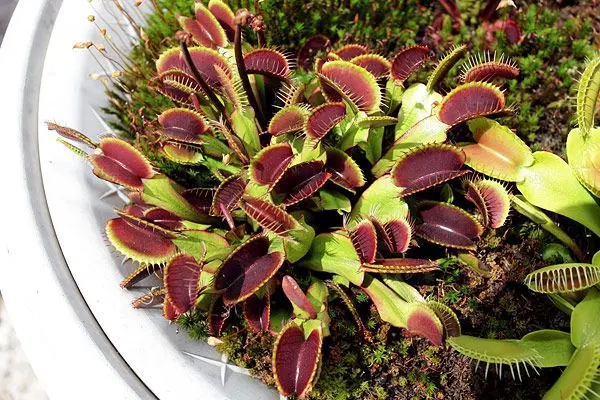
Growing Dionaeas – Dionaea muscipula – Venus flytrap
- Growing conditions. Outdoors all year round: suitable / Indoors all year round: unsuitable (requires distinct seasons) / Alternative: a cool but bright room in winter (below 15°C). A windowsill, balcony or terrace… anything will do as long as it’s outdoors.
- Preferred conditions and growing tips. Sunny position, temperatures from 45°C to -15°C (see ‘tips’), plastic pot with holes in the base, growing medium made from blond sphagnum peat or live sphagnum moss, kept very moist at all times except in winter. Water with rainwater, demineralised water or osmosis water. All Dionaea muscipula are grown in the same way. If you live in a region with harsh winters, don’t be afraid to leave your Venus flytraps outside rather than bringing them indoors. Use a generous amount of growing medium (as much as the space you have allows), wrap the pot in bubble wrap, cover it with a plastic cloche if frosts are severe and prolonged, and, if possible, keep the whole thing sheltered from the wind. The soil should be just moist, not too wet to avoid it turning into a block of ice. Using this method, my Dionysia have survived harsh winters without any problems, including several days without a thaw and temperatures as low as -17°C! Come spring, they look absolutely stunning… far more so than if they’d been left in the warmth indoors, which would have exhausted them! It’s worth noting that a Venus flytrap will look its best outdoors, or in a very bright spot (greenhouse, conservatory) where the temperature varies with the seasons and the day-night cycle.
- Care. When a trap starts to turn black, there’s no need to cut it off: you can let the leaf turn completely black before removing the whole thing. Avoid adding food; the plant catches insects all by itself during the growing season. Repotting can be done as soon as the clump outgrows the pot and the soil surface is no longer visible. There is no need to clean the traps after digestion (to prevent them from closing unexpectedly); the remains will be naturally washed away by rain or wind.
Growing Sarracenia – Sarracenia – carnivorous trumpets
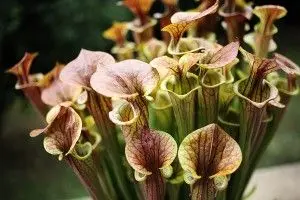
- Growing location. Outdoors all year round: suitable / Indoors all year round: unsuitable (requires distinct seasons) / Alternative: a cool but bright room in winter (below 15°C). A windowsill, balcony or terrace… anything will do as long as it’s outdoors. Can also be grown in a ‘mini-peat bog’, set up either in the ground or in a large container.
- Preferred conditions and growing tips. Sunny position, temperatures from 45°C to -25°C, plastic pot with holes in the base, growing medium based on blond sphagnum peat or live sphagnum moss, kept very moist at all times. Water with rainwater, demineralised water or osmosis water. All Sarracenias are grown in the same way. They are highly cold-hardy, as they sometimes grow at very high latitudes in their natural habitat. A large pot, a large bowl or a large, well-drained container will suit them perfectly (they tend to spread out quite a lot). Plants with well-established roots can survive several weeks of complete frost without suffering.
- Care. Some pitchers may lean over in the wind; in this case, they can be staked. Dead leaves can be removed either before or after winter. Cut as close to the base as possible or remove the entire leaf by holding it at the base and making sideways movements. Many leaves come away easily this way, leaving the plant much cleaner. In spring, leave last year’s phyllodes (non-carnivorous leaves) in place until they wither.
Growing Drosera – Sundews
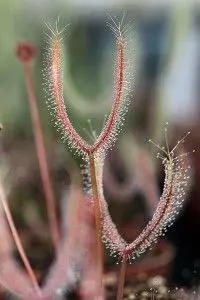
Drosera is a vast genus, comprising species found on every continent… Cultivation methods must therefore be adapted according to the plant’s origin.
Drosera species from subtropical climates (Drosera capensis, Drosera aliciae, Drosera binata, Drosera natalensis, Drosera nidiformis, Drosera regia…)
- Growing conditions. Outdoors all year round: suitable if the temperature is at least -5°C / Indoors all year round: unsuitable (requires seasonal changes) / Alternative: a cool but bright room in winter (below 15°C). Window sills, balconies, terraces… are suitable for these Droseras provided they are not exposed to full sun all day.
- Preferred conditions and growing tips. Part-shaded position (morning and evening sun is welcome), temperatures from 35°C to -5°C, plastic pot with holes in the base, growing medium made from blond peat and quartz sand, kept very moist from spring to autumn. Water with rainwater, demineralised water or osmosis water. Dry wind dries out the Drosera’s mucilage. If you live in an area prone to the mistral, for example, you’ll need to protect them from it. In winter, the above-ground parts of the plants die back if there is a frost. If the roots remain undamaged, they will produce new plants in spring. For this reason, it is important to use a sufficiently large pot, as it freezes to a shallower depth than a small one. Having a cool, bright room available is an advantage for growing them over winter.
- Care. Remove dead leaves. Keep a close eye on new growth and flower spikes: aphids often hide there. Some species flower successively over several months, which weakens the plant itself as energy is diverted to flowering. You can therefore cut the flower spikes as soon as they reach around ten centimetres.
Temperate-climate Droseras (Drosera rotundifolia, Drosera anglica, Drosera intermedia, Drosera filiformis)
- Growing conditions. Outdoors all year round: favourable / Indoors all year round: unfavourable (requires seasonal changes) / Alternative: a cool but bright room in winter (below 10°C). A windowsill, balcony, terrace… anything will do as long as it’s outdoors. They can also be grown in a ‘mini-bog’, set up either in the ground or in a large container.
- Preferred conditions and growing tips. Sunny position, temperatures from 35°C to -20°C, large plastic pot with holes in the base, growing medium based on blond peat (mixture for carnivorous plants) or live sphagnum moss, kept very moist. Water with rainwater, demineralised water or osmosis water. These plants thrive best outdoors all year round, planted in a large volume of growing medium covered with live sphagnum moss, and watered generously from spring onwards. Once well established, they thrive effortlessly, requiring minimal care. In September, their above-ground parts wither away, leaving only a small bud of tightly packed leaves (hibernacle), which unfolds the following spring. This natural process requires no special action.
- Care. Remove dead leaves. Keep a close eye on new growth and flower spikes: aphids often hide there. Some species flower successively over several months, which weakens the plant itself as energy is diverted to flowering. You can therefore cut back the inflorescences as soon as they reach around ten centimetres.
Growing Nepenthes
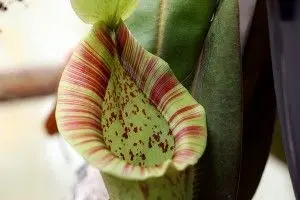
There are two main categories of Nepenthes: lowland and highland. The first term refers to species found at low altitudes (<1,000 metres) and the second to mountain species (>1,000 metres, up to over 3,000 metres).
- Growing conditions. Outdoors all year round: unsuitable / Indoors all year round: suitable. Terrarium, conservatory or heated greenhouse.
- Preferred conditions and growing tips. Bright location without direct sunlight, ideally supplemented by horticultural lighting. Temperatures ranging from 35°C to 20°C for lowland species; a maximum of 30°C during the day and a minimum of 10°C at night for highland species. Pot with drainage holes (no need for a large volume). Substrate based on Chilean sphagnum moss (Nepenthes mix), moist but not waterlogged, which can be topped with live sphagnum moss. High air humidity, particularly at night. Water with rainwater, demineralised water or osmosis water. In their natural habitat, Nepenthes do not experience distinct seasons like ours. They are tropical plants. Days are hot and more or less humid depending on showers and mists. At night, the atmosphere is always very humid, and more or less cool depending on the altitude. To grow them successfully, you must therefore replicate these conditions as closely as possible. This is often most easily achieved in a terrarium (if a greenhouse is not available!), as humidity is maintained there. Larger specimens can be helped by placing a large saucer filled with water underneath, which acts as an evaporation surface. The pot must be raised so that it does not come into contact with the water… Otherwise, when left out in the open, do not expect miracles from these plants: they will grow but will not produce urns. Hybrids, which are more tolerant, can be hung from a tree in the garden during the summer…
- Care. Cut back dead parts right back to the base. Do not hesitate to prune if the plant becomes too large; this gives it a new lease of life by encouraging basal growth (new pitchers) and helps to keep the plant in good shape. You can place an insect in newly opened pitchers to compensate for the lack of nutrients; unlike carnivorous plants grown outdoors, Nepenthes do not have any natural prey available to them…
Growing Pinguicula – Butterworts

In cultivation, one mainly finds Pinguicula species of subtropical origin (most commonly from Mexico) and those of temperate origin (Western Europe). Growing conditions should therefore be adapted to suit the plants’ natural habitat.
Mexican Pinguiculas (Pinguicula moranensis, Pinguicula gypsicola, Pinguicula x ‘Sethos’, Pinguicula x ‘Tina’, Pinguicula agnata, Pinguicula ehlersiae, Pinguicula zecheri, etc.)
- Growing location. Outdoors all year round: suitable if the temperature is at least 0°C / Indoors all year round: suitable (a cooler room is ideal for winter) / Alternative: outdoors from spring to autumn, in a cool spot such as an unheated conservatory or greenhouse, or a well-lit garage… until the last of the frosts have passed. Outdoors, a windowsill, balcony or terrace… are suitable for these Pinguiculas provided they are not exposed to direct sunlight.
- Preferred conditions and growing tips. Shaded position (morning and evening sun is appreciated once the plants have acclimatised), temperatures from 35°C to -5°C, plastic pot with holes in the base. Mineral growing medium: 1/3 perlite, 1/3 vermiculite and 1/3 quartz sand. Half-organic, half-mineral substrate: 1/2 light peat, 1/2 perlite, ensuring it is never waterlogged, just moist. The mineral substrate is closer to natural conditions. These species tolerate hard water; however, its use should be restricted to soils that do not contain blond peat, as this may cause it to deteriorate. Dry wind is likely to dry out the leaves of Pinguicula. If you live in a region prone to the mistral, for example, you should protect them from it. In Mexico, days are sometimes dry, but these Pinguiculas mostly benefit from the moisture provided by night-time mists and fog. During the autumn, their carnivorous rosette disappears, giving way to a rosette of much smaller succulent leaves. From this point onwards, it is important to stop watering them completely. The growing medium must remain dry until the end of winter.
- Care. Remove dead leaves. Keep a close eye on new growth and flower stalks to spot aphids as early as possible. You can use a cotton bud to remove any dirt stuck to the leaves. Wilted flowers fall off naturally; there is no need to remove them.
Temperate-climate Pinguiculas (Pinguicula grandiflora, Pinguicula alpina, Pinguicula vulgaris, Pinguicula leptoceras, Pinguicula longifolia, etc.)
- Growing conditions. Outdoors all year round: suitable / Indoors all year round: unsuitable (requires seasonal changes) / Alternative: a cool but bright room in winter (below 10°C). A windowsill, balcony, terrace… anything will do as long as it is outdoors and in the shade. They can also be grown in a ‘mini-bog’, set up either in the ground or in a large container, in the shade.
- Preferred conditions and growing tips. Shaded position, temperatures from 35°C to -15°C, large plastic pot with holes in the base, growing medium based on blond peat (mixture for carnivorous plants) or live sphagnum moss, kept very moist. Water with rainwater, demineralised water or osmosis water. These plants thrive best outdoors all year round, planted in a generous amount of growing medium and watered copiously from spring onwards. During the autumn, their carnivorous rosette disappears, giving way to a hibernaculum. The following spring, it opens: this marks the start of the new growing season. A new rosette establishes itself. No action is required, as these phases are triggered by natural seasonal variations.
- Care. Remove dead leaves. Keep a close eye on new growth and inflorescences to detect aphids as early as possible. You can use a cotton bud to remove any dirt stuck to the leaves. Wilted flowers fall off naturally; there is no need to remove them.
Growing Heliamphora – Marsh Amphora Orchids
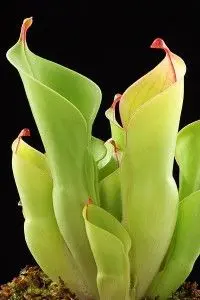
With the exception of Heliamphora heterodoxa, all Heliamphora species grow at altitudes of over 1,000 metres, on the high plateaus of northern Latin America. The conditions there are very specific, but it is possible to replicate them at home.
- Growing conditions. Outdoors all year round: unsuitable / Indoors all year round: suitable. Terrarium, conservatory or heated greenhouse. Alternative: outdoors in summer, in the shade, for hybrids and tolerant species such as Heliamphora heterodoxa.
- Preferred conditions and care advice. Bright spot without direct sunlight, ideally supplemented by horticultural lighting. Temperatures ranging from 35°C during the day to 10°C at night; a day/night temperature difference of at least 10°C is desirable (for example, 30°C by day and 20°C by night, 25°C by day and 15°C by night, etc.). A pot with drainage holes in the base. A growing medium based on Chilean sphagnum or live sphagnum, kept moist but not waterlogged. High air humidity, particularly at night. Water with rainwater, demineralised water or osmosis water. In their natural habitat, Heliamphoras do not experience distinct seasons like ours. They are tropical plants. Days are hot and more or less humid depending on showers and mists. At night, the atmosphere is always very humid and often cool. There are significant temperature variations between day and night. To grow them successfully, you must therefore replicate these conditions as closely as possible. This is most easily achieved in a terrarium, as humidity is maintained there. Hybrids, which are more tolerant, can be grown outdoors in summer. There are two conditions: your area must not be prone to dry winds, and shade must be available throughout the day.
- Care. Removing completely dried-out pitchers may require a pair of scissors, as they do not come away easily: there is a risk of tearing off part of the rhizome! You can offer an insect to newly opened urns to compensate for the lack of nutrients, in the same way as with Nepenthes. Be careful not to overdo it!
FAQ — Growing and caring for carnivorous plants at home
What type of soil and growing medium is suitable for carnivorous plants?
Carnivorous plants require a nutrient-poor growing medium, usually consisting of blond peat or sphagnum moss mixed with a drainage material such as perlite or sand, as they are adapted to nutrient-poor environments and the addition of fertiliser or enriched soil could be detrimental to their health.
What sort of water should you use to water carnivorous plants kept indoors or in pots?
You should opt for water that is free of minerals — rainwater, reverse-osmosis water or demineralised water — because the limescale and salts found in tap water or mineral water are often toxic to these plants.
What levels of humidity and watering should you expect when looking after a carnivorous plant?
The growing medium must remain constantly moist, or even very moist depending on the species, and must never be allowed to dry out for any length of time. It is often recommended to maintain a sufficient level of water beneath the pot (in a saucer or tray) so that the roots are constantly kept slightly submerged.
What level of light and what sort of lighting are required to grow carnivorous plants successfully?
Carnivorous plants require good natural light or bright artificial lighting (depending on the species), ideally full sun or strong indirect light — light is essential for photosynthesis and the formation of traps.
Should we fertilise carnivorous plants or provide them with nutrients in the same way as we do for other plants?
No — carnivorous plants should not be fertilised in the same way as ordinary plants. They derive their nutrients from the prey they capture; fertiliser or enriched soil would upset their balance and often harm their health.
What are the key care considerations to bear in mind to prevent a carnivorous plant from becoming stressed or dying whilst in cultivation?
Care must be taken to ensure the water is clean and free from limescale, that the growing medium is suitable and kept moist, that there is adequate light and good air circulation or sufficient humidity, and to avoid excessive heat or dryness. Regular care — checking the water, renewing the growing medium if necessary, and removing dead leaves — is essential for the plant’s long-term health.
Sources and references
Our experience :)
Carnivorian
Carnivorous plant care
https://www.carnivorian.co.uk/carnivorous-plant-care
For sale in the Karnivores shop
Love Growing guide & tips? Don't miss our plants and exclusive offers in the online shop.
Read next
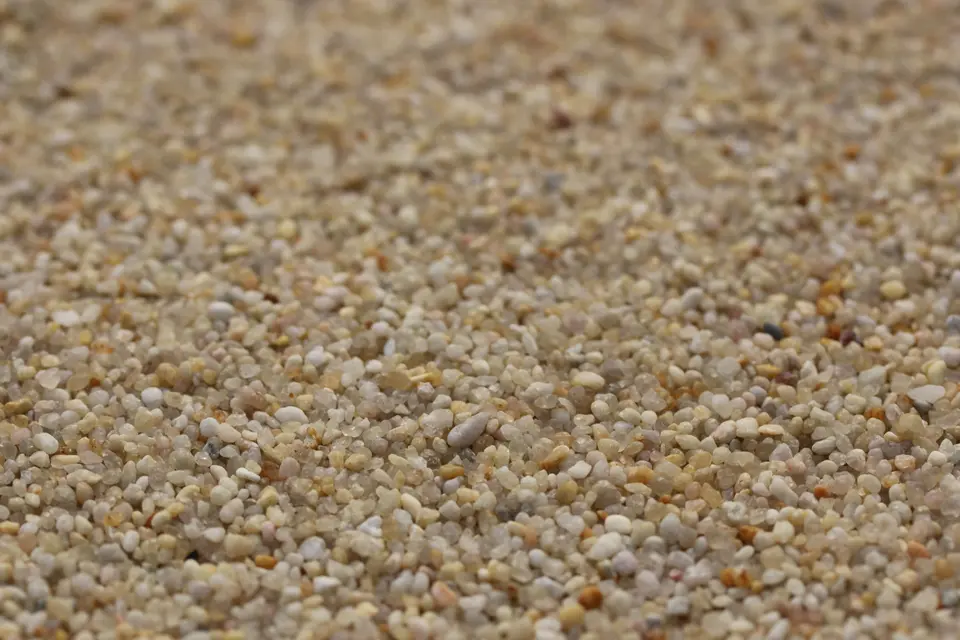
Quartz sand for carnivorous plants: what is it used for and how do you use it?
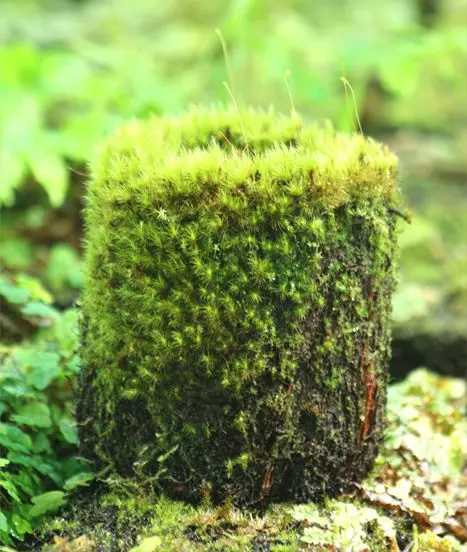
How to care for and maintain xaxim in a terrarium and a tropical greenhouse
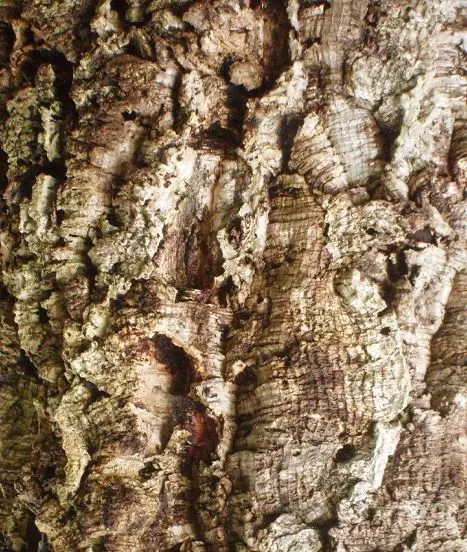
Cork oak bark: an ideal natural substrate for epiphytic plants and terrariums

Free delivery on orders of €59 or more until midnight on Sunday
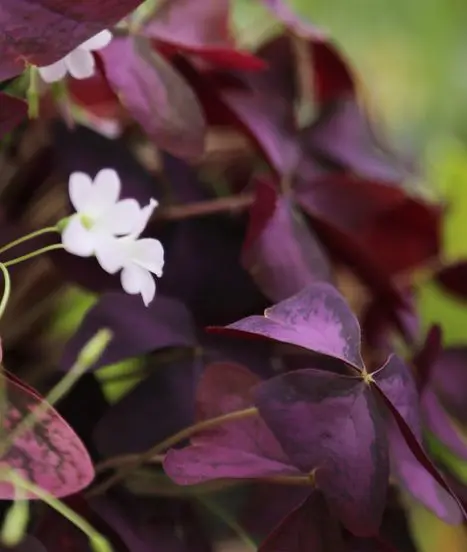
Oxalis triangularis: growing, care and tips
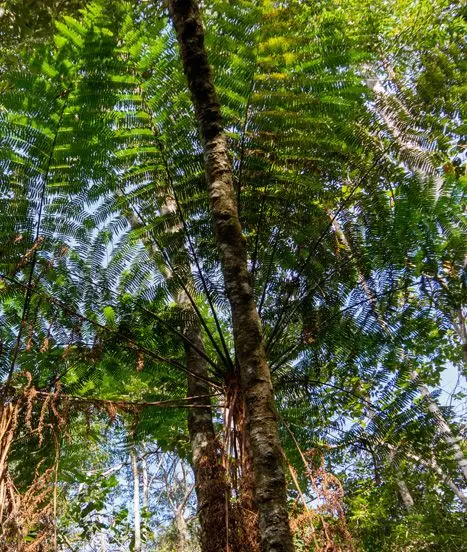
Dicksonia sellowiana: an iconic tree fern of the xaxim