
Plectranthus ernestii: an ideal, striking plant for a terrarium
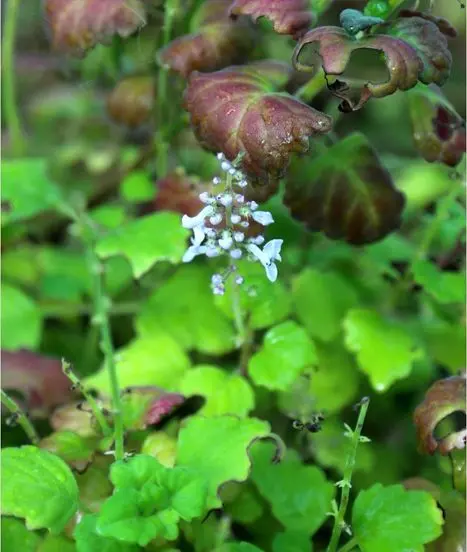
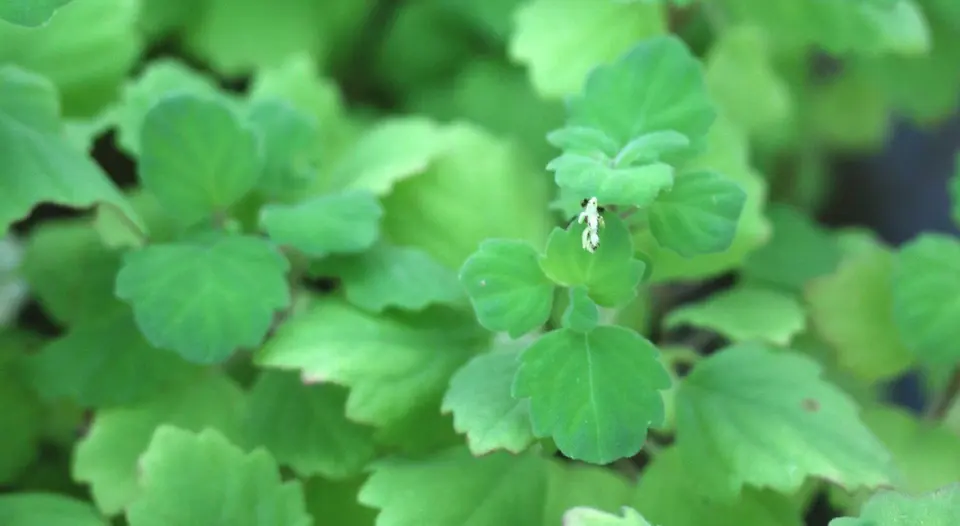
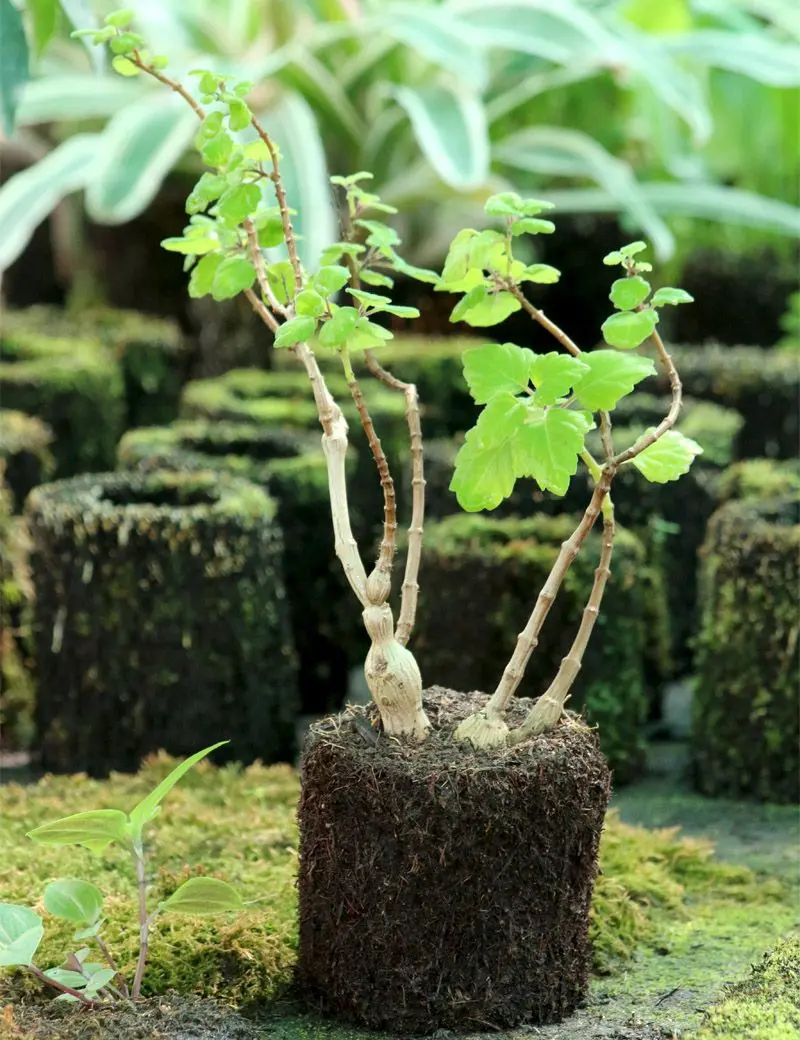
Plectranthus ernestii is still a relatively unknown plant in the world of terrariums, and yet it more than deserves its place alongside ferns, mosses and small bromeliads. With its swollen stem, reminiscent of a miniature caudex, and its dense, deep-green foliage, it immediately adds texture and an almost ‘bonsai’-like quality to a display.
Whilst the blog plante-carnivore.fr mainly explores the world of carnivorous plants, it also highlights complementary plants that help to create balanced and sustainable displays. In this regard, Plectranthus ernestii is an excellent choice.
A structuring plant in a tropical setting
Native to southern Africa, Plectranthus ernestii belongs to the Lamiaceae family. Unlike the more common Plectranthus species grown for their decorative foliage, this species develops a thickened trunk at its base, giving it a very distinctive appearance.
In a terrarium, this characteristic is a major asset. Whereas many plants remain low-growing or ground-covering, it introduces a gentle vertical element and visual structure. It works particularly well as a focal point, slightly off-centre, in an open or semi-open terrarium.
Its growth habit can be easily controlled by pruning, which helps to maintain proportions suited to a confined environment.
Growing conditions in a terrarium
Plectranthus ernestii is not a fussy plant, but it does require a certain degree of consistency in its growing conditions. As with any successful terrarium, the key lies in the quality of the setup. If you’re just starting out, we strongly recommend reading our detailed guide to setting up a planted terrarium easily, which explains the essential principles of drainage, substrate and humidity management.
Light
The plant thrives in bright but indirect light. Placed under horticultural LED lighting or near a bright window without direct, intense sunlight, it will grow into a compact form. A lack of light will cause the stems to become leggy and the plant to lose its density.
Potting mix
The most important factor is drainage. Plectranthus ernestii cannot tolerate excess standing water. The substrate must be light and well-aerated. A mixture of good-quality potting compost, perlite or fine pozzolan works very well.
The principle is the same as that used for a well-balanced terrarium: a drainage layer at the bottom, possibly with some activated charcoal, followed by a structured, breathable substrate.
Watering
It is best to allow the surface of the growing medium to dry out slightly between waterings. In a terrarium, the ambient humidity slows down evaporation, so you must water sparingly.
As with carnivorous plants, water quality plays an important role. Water that is too hard can, in the long term, upset the balance of the substrate. You can read our article on what water to use for carnivorous plants to understand the issues surrounding mineralisation.
Temperature and humidity
A temperature between 6 and 26 °C is ideal for this plant. It thrives in moderate to high humidity but requires a gentle draught. In a completely enclosed terrarium, you must be particularly careful to avoid overwatering.
Tailleing and shaping
The aesthetic appeal of Plectranthus ernestii lies in its swollen stem and its ability to branch out. To maintain a compact habit, simply pinch back the tips of the stems regularly. This encourages branching and makes the plant bushier.
More drastic pruning can be carried out in spring. This helps to emphasise its miniature appearance and maintain proportions suitable for a small display.
Propagation
Propagation is quick and easy. A healthy stem cutting a few centimetres long, left to dry for a few hours before being planted in a light growing medium, usually takes root within two to three weeks.
This ease of propagation makes it an attractive plant for gradually expanding your collections or sharing with fellow enthusiasts.
Common problems
Most problems encountered are caused by overwatering. A substrate that is too compact or excessive watering can lead to blackening at the base of the stems and root rot.
Conversely, long, sparsely leafed stems indicate a lack of light.
Regular observation allows you to adjust the conditions quickly.
Which plants to pair it with?
Plectranthus ernestii fits perfectly into a natural setting combining mosses, small ferns and miniature bromeliads. Mosses play both an aesthetic and a practical role, stabilising the surface of the substrate and regulating humidity. If you’d like to find out more about this, you can read our article on using mosses in terrariums.
Placed slightly in the background or as a focal point, the plant adds depth without dominating the overall composition.
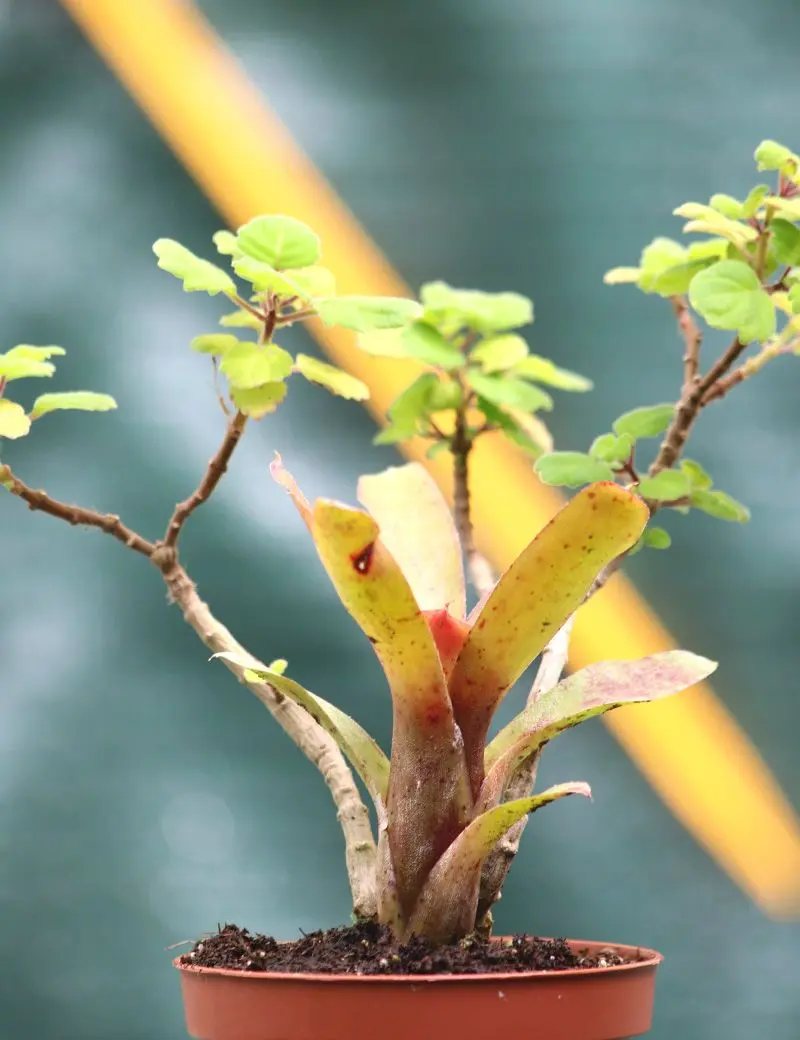
Plectranthus ernestii: a bonsai-style plant for the terrarium
Plectranthus ernestii is often compared to a bonsai, and this comparison is not merely aesthetic. Its trunk, which is thickened at the base to form a true caudex, gives it the appearance of a miniature tree over time. When grown under controlled conditions, regular pruning of the tips encourages branching and creates a denser silhouette, resulting in a compact and harmonious structure.
Placed in a shallow container or set within a slightly raised display, it further enhances this illusion of a miniature tropical tree. Unlike a traditional bonsai, it requires neither complex wiring nor advanced techniques: sufficient light, a well-draining substrate and light pruning are all that is needed to gradually sculpt its shape. This ease of care makes it an accessible alternative for adding a natural, structuring ‘bonsai’ element to a terrarium or plant arrangement.
Conclusion
Plectranthus ernestii is an ideal plant for adding structure to a terrarium thanks to its decorative caudex and low-maintenance nature. Provided it is well-drained, correctly lit and watered in moderation, it quickly becomes a lasting and elegant focal point.
If you’d like to enhance your terrarium with a striking, hardy plant that’s easy to propagate, Plectranthus ernestii is an excellent choice to add to your collection.
FAQ – Plectranthus ernestii in a terrarium
Is Plectranthus ernestii suitable for a closed terrarium?
It can be grown in a closed terrarium, but only if watering is carefully controlled and some ventilation is possible. Excessive stagnant moisture can cause the stem base to rot. It generally thrives better in an open or semi-open terrarium.
What is the lowest temperature that Plectranthus ernestii can tolerate?
It is best not to let the temperature drop below 12 °C for any length of time. Although the plant can tolerate slightly cooler conditions from time to time, a temperature range of between 18 and 26 °C remains ideal for steady, compact growth.
Why does my Plectranthus ernestii produce long, slender stems?
Long, sparsely branched stems are a sign of insufficient light. Increase the light intensity (without direct, intense sunlight) and pinch out the tips to encourage branching.
What growing medium should I use to prevent rot?
A light, well-draining growing medium is essential. A mixture of good-quality potting compost, perlite or fine pozzolan helps to prevent excess standing water, which is the main cause of problems for this species.
Can it really be shaped into a bonsai?
Yes. Its natural caudex and its ability to branch out after pruning mean you can achieve a miniature tree effect without any complex techniques. Regular pinching is all that is needed to make the shape more dense.
Does Plectranthus ernestii flower in a terrarium?
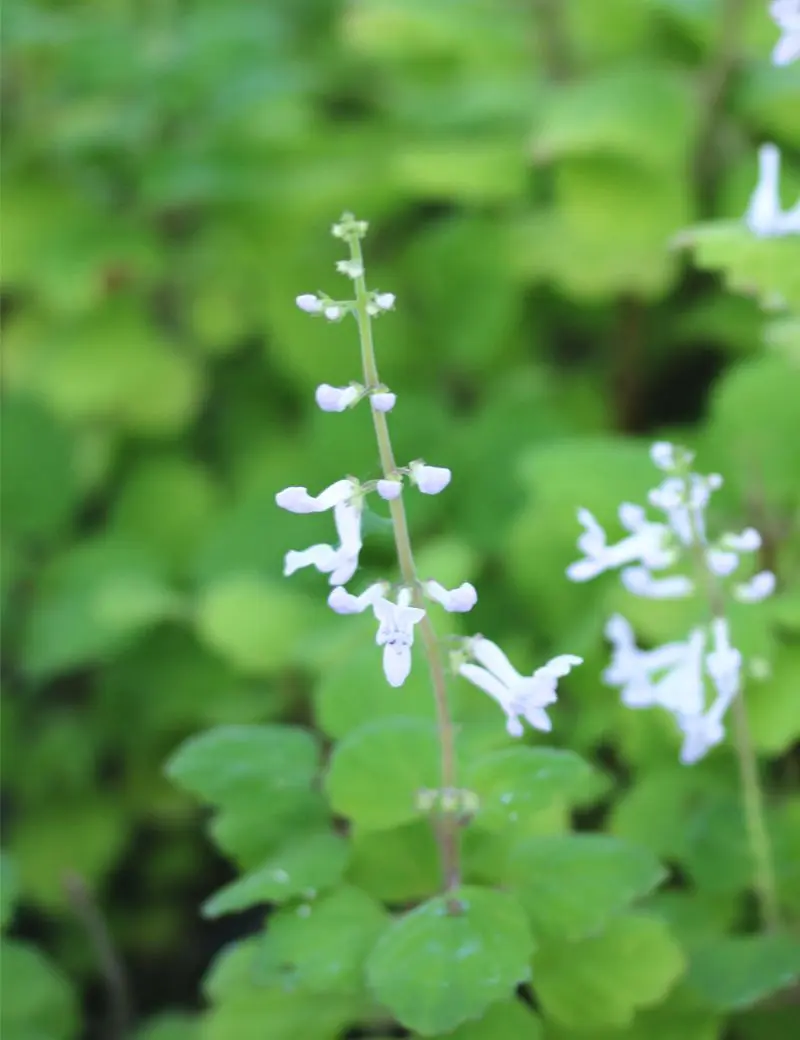
Yes, it can produce small flowers, even when grown in a mini-pot, provided there is sufficient light and stable conditions. However, it is mainly grown for its decorative trunk and striking foliage.
For sale in the Karnivores shop
Love Exotic animals and terrariums? Don't miss our plants and exclusive offers in the online shop.
Read next
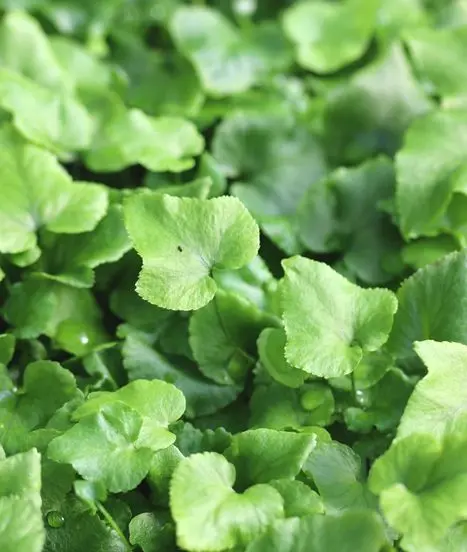
Cyrtomium fortunei: an evergreen fern ideal for shaded areas
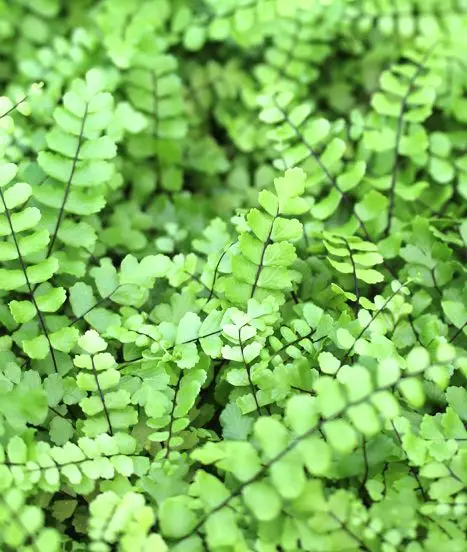
Asplenium trichomanes: wall fern – growing, origin and tips
Ficus pumila: growing, care and tips
How to secure the xaxim in a terrarium so that it stays in place safely and securely
A comprehensive guide to growing Neoregelia in a terrarium
Ophiopogon japonicus 'Nanus': The minimalist 'lawn'