
How to secure the xaxim in a terrarium so that it stays in place safely and securely
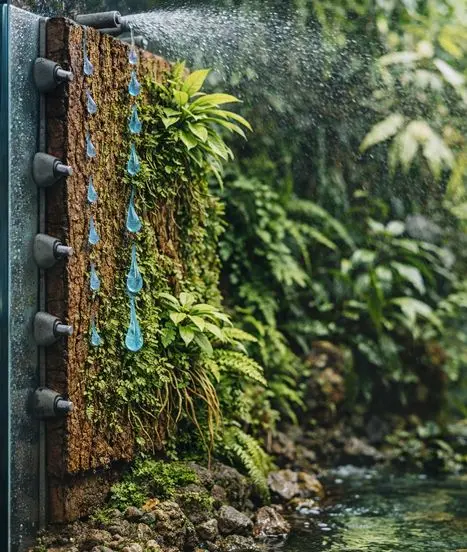
Securing the xaxim is a crucial step in the success of a tropical terrarium. Even with a high-quality substrate and well-chosen plants, poor securing can lead to premature drying out, difficulty in rooting, or the decor becoming unstable over time.
When properly secured, the xaxim becomes a truly living substrate. It remains moist, stable and fully functional, allowing plants to establish themselves long-term. This step therefore deserves particular attention, right from the terrarium’s design stage.
Understanding the role of securing the xaxim
Xaxim is not merely a decorative element. Once installed, it is subjected to humidity, the weight of water, root growth and, at times, handling. A haphazard attachment often leads to gradual sagging or partial detachment, particularly when positioned vertically.
Proper securing ensures the xaxim remains pressed firmly against the support, allows water to circulate effectively across its entire surface and guarantees adequate ventilation at the back. It is this combination that promotes root development and maintains a stable microclimate.
Choosing the xaxim’s location in the terrarium
Before securing it in place, it is essential to determine the exact location of the xaxim. In a tropical terrarium, it is generally placed at the back or on a side wall, where humidity is most consistent and there is sufficient air circulation.
The xaxim must be positioned so that it receives a regular supply of water via misting or runoff. A location too far from sources of humidity will result in uneven drying and compromise its effectiveness.
Taking the time to consider this placement helps to avoid having to dismantle the terrarium later on, which is always a fiddly task once the terrarium is up and running.
Mounting the xaxim directly onto a glass panel
Mounting on a glass panel is one of the most common methods in terrariums. It must be carried out using materials that are resistant to moisture and remain perfectly stable over time.
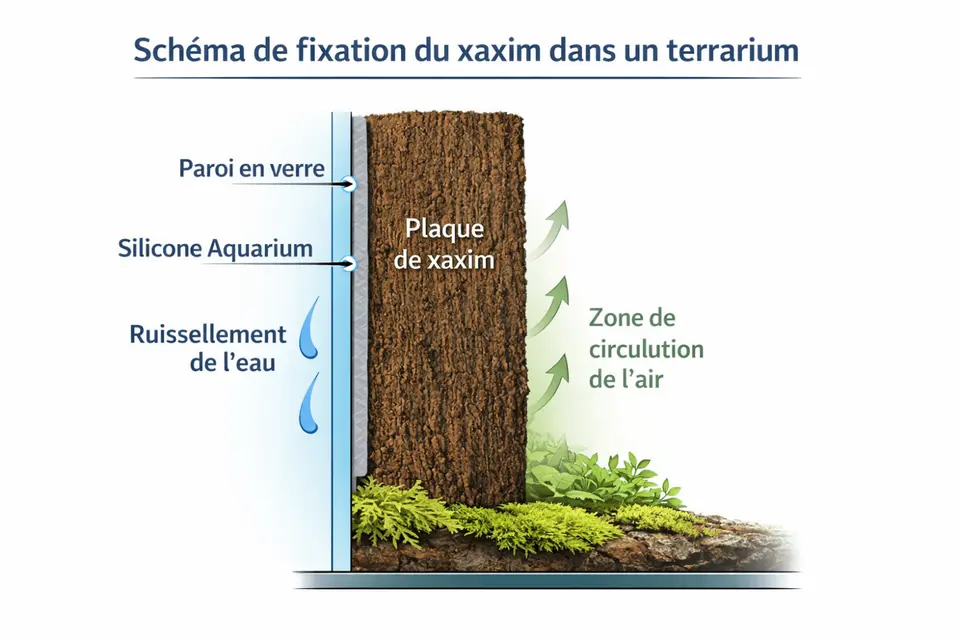
The most reliable method is to use a neutral silicone sealant specifically designed for aquariums. This type of silicone does not release any harmful substances and retains its elasticity even in a damp environment. The Xaxim is pressed against the glass after the silicone has been applied, then held in place whilst it dries.
It is important not to cover the entire rear surface of the xaxim. Leaving a few areas uncovered allows for a slight flow of air and reduces the risk of stagnation.
Mounting on a rigid base or artificial structure
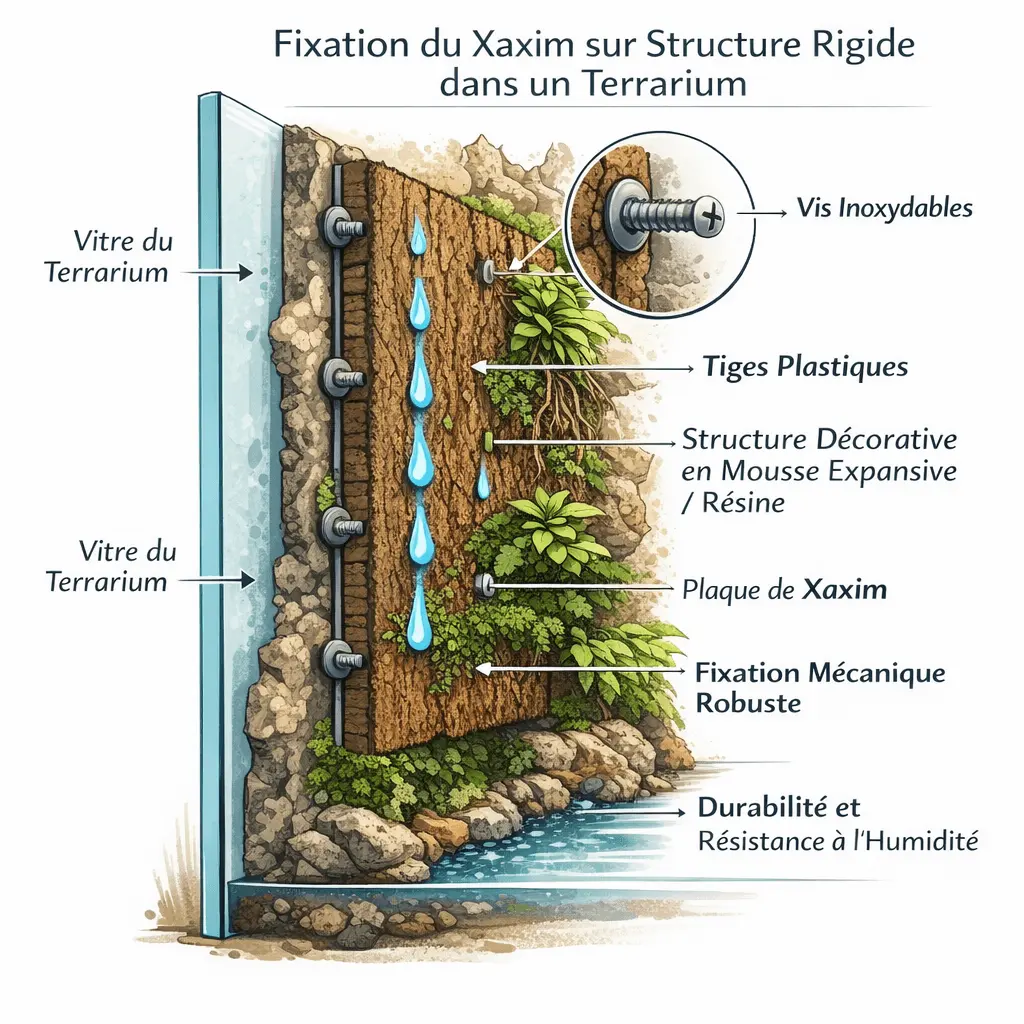
In some terrariums, the xaxim is secured to sheets of expanded foam, resin or an existing decorative structure. This arrangement offers great freedom of form, but requires a secure fixing.
The xaxim is then mechanically secured using stainless steel screws, plastic rods or discreet mesh. These elements are subsequently concealed by the plants, mosses or the contours of the décor.
This method is particularly well-suited to complex living walls and ensures excellent durability, even with plants that have vigorous root systems.
The importance of contact between the xaxim and the substrate
Regardless of the method of fixing, the xaxim must be in close contact with its backing without being crushed. If the contact is too loose, it leads to dry air pockets, whilst excessive crushing prevents the fibres from breathing.
A good compromise is to ensure even pressure across the entire substrate when securing it. Once moistened, the xaxim stabilises naturally and moulds to the shape of the décor.
Checks to carry out before filling the terrarium with water
Before introducing the plants, it is advisable to test the strength of the fixing. The xaxim must neither move nor come away when light pressure is applied. Checking at this stage avoids much more complex interventions later on.
It is also recommended to rehydrate the xaxim after fixing to ensure that water circulates properly across its entire surface and that no areas remain dry.
Can xaxim be added once the terrarium is already up and running?
It is entirely possible to attach xaxim to a terrarium that already contains water or is in operation, but this process requires greater care. Ambient humidity, the presence of plants and, in some cases, animals make handling more delicate than during the initial set-up phase.
In this context, it is essential to work in a clean and temporarily clear area to ensure the material adheres properly. The xaxim must be thoroughly rehydrated before fixing, and the contact surface must be clean to guarantee a long-lasting hold.
When fixed with care, the xaxim blends seamlessly into the existing décor. It quickly resumes its role as a living substrate and can be colonised by plants without disrupting the terrarium’s balance. However, where possible, planning for the xaxim’s attachment right from the design stage remains the simplest and most secure solution in the long term.
A well-planned mounting for successful cultivation
Securing the xaxim correctly in a terrarium is a long-term investment. A stable installation allows the substrate to fulfil its role fully, to accommodate the roots without stress and to maintain a humid and balanced environment.
With a suitable mounting system and constant humidity, the xaxim quickly becomes a central feature of the terrarium – aesthetic, functional and durable.
In most cases, a simple, well-designed mounting system is sufficient. There is no need to resort to complex set-ups or unusual materials. By using a high-quality xaxim and a tried-and-tested method, such as those commonly used in tropical terrariums, stability is quickly achieved and remains reliable over time.
Conclusion
Careful fixing of the xaxim is essential to ensure the stability of the décor and the healthy growth of plants in the terrarium. By taking the time to choose a suitable location and a durable fixing method, the xaxim retains its properties and becomes a reliable support in the long term. A well-planned installation makes maintenance easier and ensures stable, natural growing conditions.
FAQ – Mounting the Xaxim in a Tropical Terrarium
How do you fix xaxim in a tropical terrarium?
To attach xaxim in a tropical terrarium, it is recommended to use a neutral silicone sealant specifically designed for aquariums or a mechanical fastening system (stainless steel screws, plastic rods) on a rigid structure. The fastening must be stable, moisture-resistant and allow for some ventilation at the rear.
What type of silicone should I use to stick xaxim to a terrarium glass panel?
You must use a neutral silicone specifically designed for aquariums. This type of silicone is designed to withstand constant humidity and does not release any toxic substances, which is essential for maintaining the biological balance of the terrarium.
Can xaxim be added to a terrarium that is already in use?
Yes, it is possible to add xaxim to a terrarium that already contains water or has plants in it. However, this must be done with care, on a clean and temporarily clear surface, to ensure good adhesion and a long-lasting hold.
Should there be a space after ‘xaxim’?
Yes. It is advisable not to apply adhesive to the entire back surface of the xaxim. A slight flow of air reduces the risk of moisture build-up and promotes healthy rooting of epiphytic plants.
Is mechanical fastening more durable than silicone?
Mechanical fastenings (stainless steel screws, plastic rods, mesh) offer excellent durability, particularly for complex green walls or large terrariums. However, aquarium-grade silicone is sufficient for the majority of standard installations.
How long should I wait before planting after the xaxim has been secured?
After applying the silicone adhesive, it is recommended that you wait 24 to 48 hours for it to dry completely. This step ensures that the xaxim is securely fixed in place and prevents it from shifting when submerged or planted.
For sale in the Karnivores shop
Love Exotic animals and terrariums? Don't miss our plants and exclusive offers in the online shop.
Read next
Cyrtomium fortunei: an evergreen fern ideal for shaded areas
Asplenium trichomanes: wall fern – growing, origin and tips
Ficus pumila: growing, care and tips
Plectranthus ernestii: an ideal, striking plant for a terrarium
A comprehensive guide to growing Neoregelia in a terrarium
Ophiopogon japonicus 'Nanus': The minimalist 'lawn'