
Ophiopogon japonicus 'Nanus': The minimalist 'lawn'
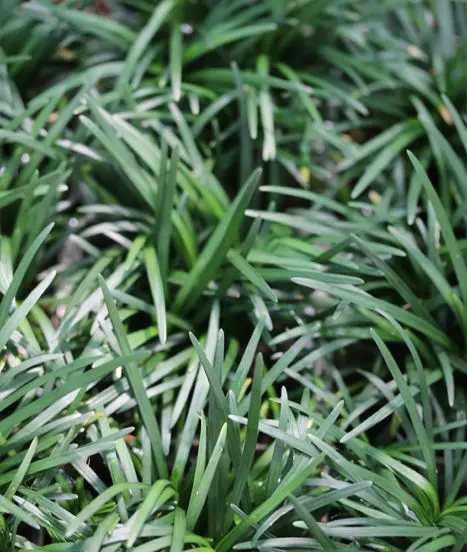
Are you looking for a versatile, low-maintenance plant that adds a striking visual touch? Let us introduce you to Ophiopogon japonicus ‘Nanus’, often known as ‘Dwarf Mondo Grass’ or ‘Dwarf Japanese Lily of the Valley’. Far from being a carnivorous plant, it is nonetheless a little gem waiting to be discovered!
Its origins and botanical identity
Ophiopogon japonicus is a species native to East Asia – specifically Japan, China, Korea and Vietnam – where it grows naturally in woodlands and forests. The ‘Nanus’ variety is a cultivar selected for its compact size, hence its ‘dwarf’ designation.
From a botanical point of view, Ophiopogon belongs to the Asparagaceae family (yes, the same family as asparagus!), and not to the grass family as its appearance might suggest. It is an evergreen perennial, forming dense clumps of linear, slender, deep dark green leaves, which generally do not exceed 10 to 15 cm in height and are of a similar width. In summer, small, inconspicuous, lilac-white flowers may appear, occasionally followed by small blue-black berries. Its root system is characterised by stolons and tuberous roots, which allow it to spread slowly.
Particularly suited to terrariums and beyond
Ophiopogon japonicus ‘Nanus’ is particularly prized for its slow, compact growth, making it an excellent choice for terrariums (preferably open ones) and miniature gardens. It provides a fine texture and a consistent green colour, resembling a miniature carpet of grass without requiring constant trimming.
But its merits don’t stop there! It is also a superb ground-cover plant for shaded areas of the garden. It is also used along paths, between paving slabs, or to cover the base of shrubs or trees. Its ability to withstand occasional trampling and its resistance to deer and rabbits make it a valuable asset for landscaping (although this ‘skill’ is of no use to it in a terrarium!). When grown in a pot, it can even serve as a base for a bonsai.
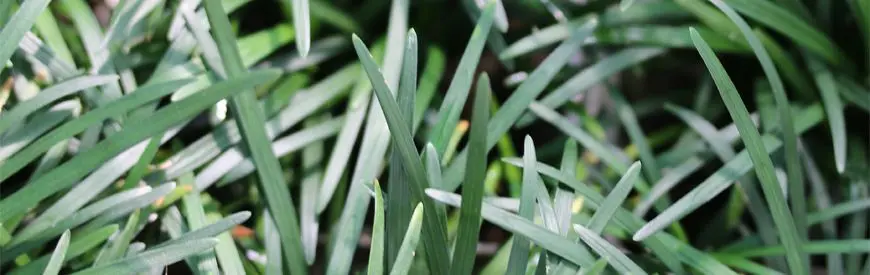
Growing tips for guaranteed success
Ophiopogon japonicus ‘Nanus’ is renowned for its hardiness and ease of care once it is well established. Here are the key points for growing it:
Light
It thrives in shade or partial shade. It can tolerate full sun if the soil remains constantly moist, but direct, intense sunlight can cause its leaves to turn yellow or scorch. It therefore pairs well with plants such as Ficus pumila quercifolia.
Watering
The soil must remain moist but well-drained. It tolerates short periods of drought once established, but prefers regular watering during the growing season. Overwatering, especially in winter, is its main enemy and can cause root rot.
Soil
Rich, fresh and well-drained soil is ideal. A potting mix for indoor plants is perfect for pots. It tolerates a wide pH range, from slightly acidic to neutral.
Temperature
Hardy down to around -15°C to -20°C when planted in the ground, it is often grown as a houseplant or conservatory plant in colder regions. Indoors, temperatures between 18°C and 25°C are suitable.
Humidity
It is not very demanding in terms of atmospheric humidity; moderate humidity is sufficient. In a terrarium, ensure good ventilation to prevent moisture from becoming trapped.
Care
It is a very low-maintenance plant. Pruning is generally not necessary, except to remove yellowed or damaged leaves. You can divide the clumps in spring to propagate it or control its spread.
Common problems
Keep an eye out for slugs and snails, especially in damp areas. Root rot is the most common problem, although the plant isn’t particularly susceptible to it either.
With its attractive appearance and ease of cultivation, Ophiopogon japonicus ‘Nanus’ is an excellent choice for… all the reasons we’ve just given you!
For sale in the Karnivores shop
Love Exotic animals and terrariums? Don't miss our plants and exclusive offers in the online shop.
Read next
Cyrtomium fortunei: an evergreen fern ideal for shaded areas
Asplenium trichomanes: wall fern – growing, origin and tips
Ficus pumila: growing, care and tips
How to secure the xaxim in a terrarium so that it stays in place safely and securely
Plectranthus ernestii: an ideal, striking plant for a terrarium
A comprehensive guide to growing Neoregelia in a terrarium