
Ficus pumila: growing, care and tips
Introduction
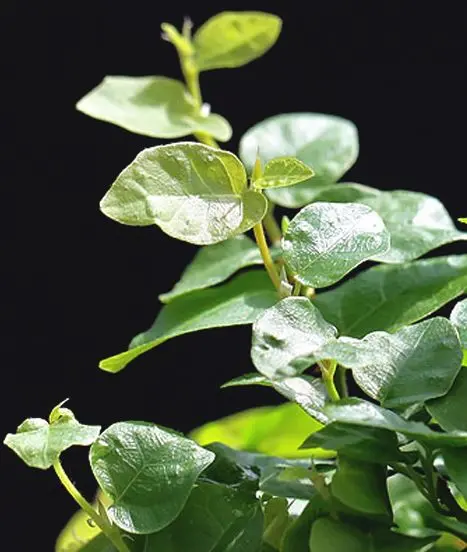
Ficus pumila, also known as the creeping fig, is a climbing or trailing plant much loved for its fine, dense and decorative foliage. Native to East Asia, it is characterised by its small, oval leaves and its ability to quickly cover a support, whether it be a wall, a trellis, a stake or a hanging basket.
Unlike other ficus plants grown indoors, Ficus pumila develops small adventitious roots that allow it to cling naturally to surfaces, just like its cousin Ficus pumila quercifolia. This characteristic makes it a particularly interesting choice for creating a living wall, covering a vertical structure or adding greenery to a well-lit space.
Easy to grow when provided with good humidity and suitable light, Ficus pumila is a vigorous, versatile and highly decorative plant.
Ficus pumila: characteristics
Ficus pumila belongs to the Moraceae family, like the common fig tree.
It is native to East Asia, notably China, Japan, Taiwan and Vietnam, where it grows naturally on rocks, tree trunks and damp walls.
This species is particularly prized for its young foliage, consisting of small, supple, oval and highly decorative leaves. Over time, and depending on growing conditions, the plant can become very vigorous and quickly cover large areas.
There are several horticultural varieties, including:
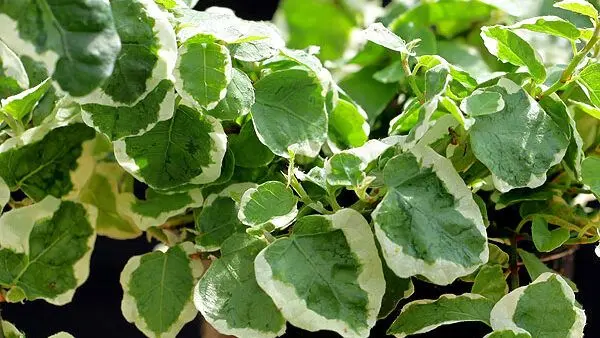
- Ficus pumila ‘Variegata’, with variegated foliage,
- Ficus pumila ‘Minima’, which is more compact and has small leaves.
Indoors, it generally remains more supple and compact, whilst outdoors, in the right conditions, it can become much more invasive.
Caring for Ficus pumila
Ficus pumila is a relatively easy plant to grow, provided you follow a few simple guidelines: gentle light, well-draining compost and regular watering.
Position
Ficus pumila thrives in bright light without scorching direct sunlight. Indoors, it thrives near a bright window, provided you avoid overly harsh exposure through a windowpane in the height of summer. Outdoors, it prefers bright partial shade or a spot sheltered from direct sunlight during the hottest part of the day.
A lack of light slows its growth and can result in sparser foliage.
Temperature
Ficus pumila thrives at temperatures between 18 and 24°C.
Indoors, it is best not to expose it to temperatures below 10°C for prolonged periods. Outdoors, some well-established plants can withstand occasional light frosts, but the foliage may be damaged as soon as the first significant cold spells set in.
In cooler climates, it is therefore generally grown as a houseplant, in a conservatory or in a temperate greenhouse.
Watering
Ficus pumila thrives in consistently moist conditions but does not tolerate overwatering.
The growing medium should remain slightly moist, without ever becoming waterlogged. It is advisable to allow the surface of the pot to dry out slightly between waterings.
During the growing season, in spring and summer, watering should be more frequent. In winter, it should be reduced, especially if growth slows down.
When the air is dry, particularly in heated indoor environments, a few sprays of water or a more humid atmosphere can significantly improve the condition of the foliage.
Soil
Ficus pumila thrives in a light, fertile and well-draining growing medium.
A potting mix for foliage plants, lightened with a little perlite, fine bark or plant fibre, is well suited. The most important thing is to avoid substrates that are too compact, as these retain too much water.
Fertiliser
During the growing season, applying liquid fertiliser for foliage plants every two to three weeks helps to support foliage development.
In autumn and winter, applications can be spaced out or even stopped, depending on growing conditions.
Caring for Ficus pumila
Ficus pumila grows rapidly when it is thriving. Regular maintenance helps to keep the plant compact, dense and attractive.
Taille
Pruning is very useful for controlling its growth.
Light, regular pruning encourages branching and results in a denser plant. More drastic pruning in spring can be carried out if the plant becomes too overgrown or unbalanced.
Rempotage
When grown in a pot, repotting every 1 to 2 years is recommended, particularly for young or very vigorous plants.
This helps to renew the growing medium, support growth and prevent the potting mix from becoming depleted.
Air humidity
Like many plants with fine foliage, Ficus pumila thrives in a humid atmosphere.
Indoors, air that is too dry can cause the tips of the leaves to dry out, slow growth or lead to some leaves falling off. A more humid environment significantly improves its health.

Things to do
Ficus pumila thrives when grown in the right conditions.
It is advisable to:
- grow it in a pot, as a hanging plant or on a vertical support,
- prune it regularly to maintain a compact shape,
- maintain the right level of humidity,
- repot it regularly,
- clean its foliage from time to time.
Things to avoid
Certain mistakes are commonly made with this plant.
You should avoid:
- letting the soil become waterlogged,
- exposing it to scorching direct sunlight,
- growing it in air that is too dry,
- letting it climb on fragile or delicate surfaces,
- exposing it to the cold for prolonged periods.
Its adhesive roots can indeed leave marks on certain walls, plaster or paintwork.
After growth: care and propagation
Indoors and as a terrarium plant, Ficus pumila is mainly grown for its foliage, as it rarely flowers under these conditions.
Propagation is simple and can be done very easily by taking stem cuttings in spring or summer.
It is usually sufficient to take a healthy stem, place it in a light, moist growing medium, and then maintain good humidity until roots form.
Conclusion
Ficus pumila is a climbing or trailing plant that is particularly well-suited to adding greenery to an indoor space, a greenhouse, a conservatory or a sheltered outdoor area.
With plenty of light, a well-draining growing medium and regular moisture, it grows rapidly and produces dense, decorative and very natural foliage.
It is a species suitable for beginners, yet attractive and versatile enough to appeal to more experienced plant enthusiasts as well.
FAQ – Caring for Ficus pumila
What is Ficus pumila?
Ficus pumila is a climbing or trailing plant of the Moraceae family, prized for its dense foliage and rapid growth.
Where does it grow naturally?
It is native to East Asia, particularly China, Japan, Taiwan and Vietnam.
What level of exposure is right for him?
It thrives in bright light without direct, scorching sunlight, or in bright partial shade outdoors.
How should you water Ficus pumila?
The growing medium should be kept slightly moist, without excess water. Good humidity in the room is also beneficial.
Should you fertilise Ficus pumila?
Yes, in spring and summer, using a fertiliser for houseplants every two to three weeks.
Can he climb a wall?
Yes, thanks to its adhesive backing, but it may leave marks on some surfaces.
Is it cold-resistant?
It does not cope well with prolonged cold and should ideally be kept above 10°C when grown indoors.

For sale in the Karnivores shop
Love Exotic animals and terrariums? Don't miss our plants and exclusive offers in the online shop.
Read next
Cyrtomium fortunei: an evergreen fern ideal for shaded areas
Asplenium trichomanes: wall fern – growing, origin and tips

How to secure the xaxim in a terrarium so that it stays in place safely and securely

Plectranthus ernestii: an ideal, striking plant for a terrarium
A comprehensive guide to growing Neoregelia in a terrarium
Ophiopogon japonicus 'Nanus': The minimalist 'lawn'