
Drosera binata: biology, characteristics and cultivation
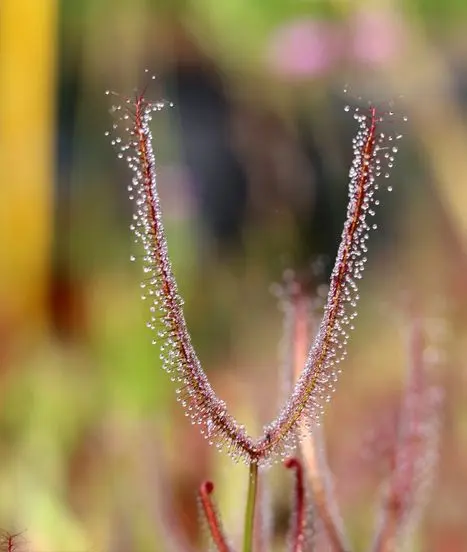
In the world of carnivorous plants, Drosera binata occupies a very special place. Whilst many Drosera species form a low, inconspicuous rosette that lies flat on the ground, Drosera binata is distinguished by its upright, branched form. Its leaves branch out into elegant forks, sometimes multiple, giving the plant an almost shrub-like appearance. This unique structure, combined with vigorous growth, explains why Drosera binata is often regarded as one of the most spectacular and educational species of the genus.
Origin and natural distribution
Drosera binata is native to Oceania. It occurs naturally in southern and eastern Australia as well as in New Zealand, including on some outlying islands. Its habitat is typical of carnivorous plants: peat bogs, acidic soils low in nutrients, and wetlands that are regularly waterlogged and receive plenty of light.
These extreme environments have shaped the biology of Drosera binata. The lack of available nutrients in the soil has favoured the development of carnivory, whilst the abundance of water and light has allowed the development of long, slender, upright leaves.
An atypical morphology within the genus Drosera
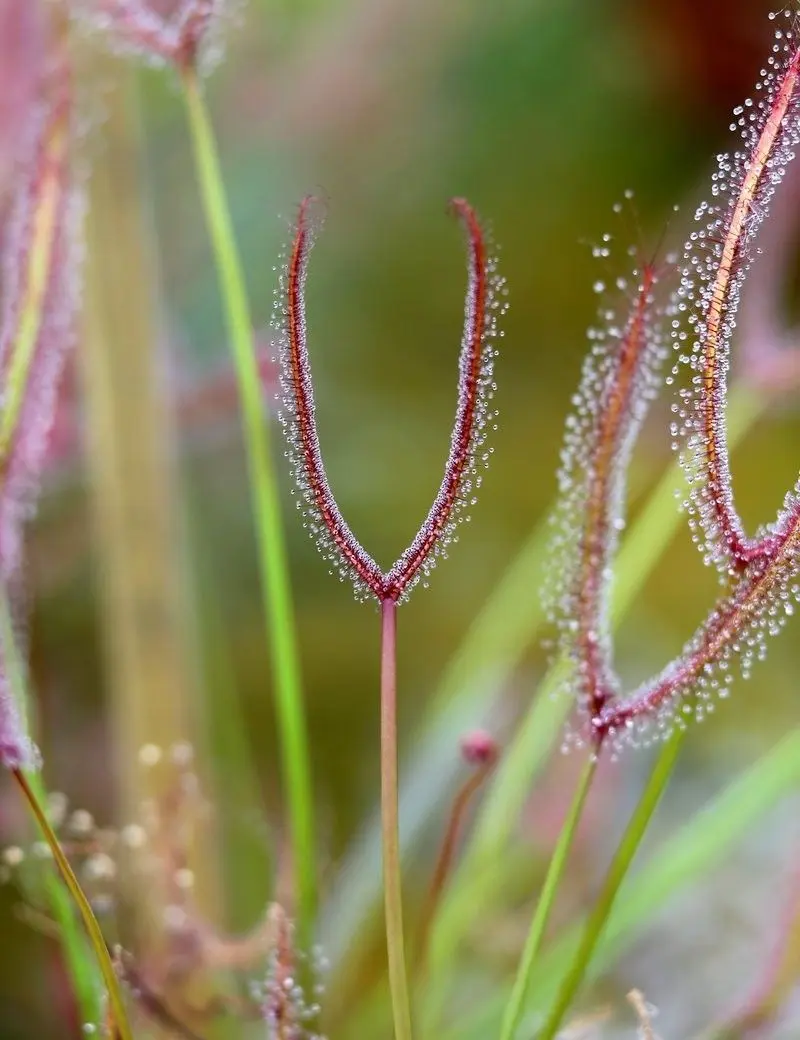
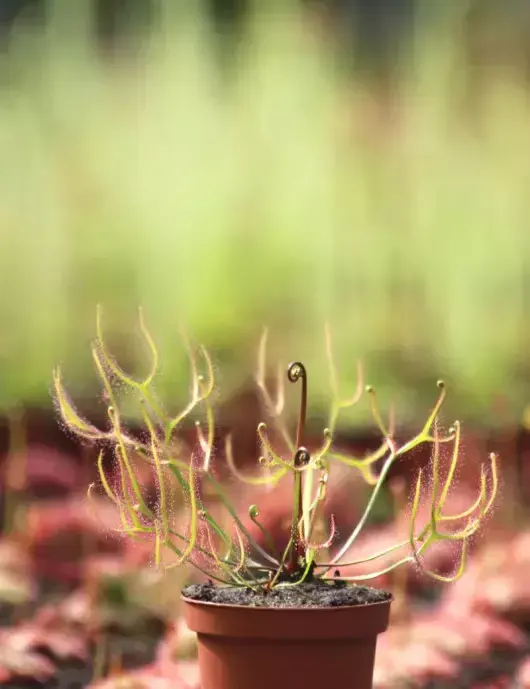
The most striking feature of Drosera binata lies in the shape of its leaves. These emerge directly from the base and rise vertically before dividing into two segments. This dichotomous division, visible even in the simplest forms, is the origin of the name binata, which means ‘divided into two’.
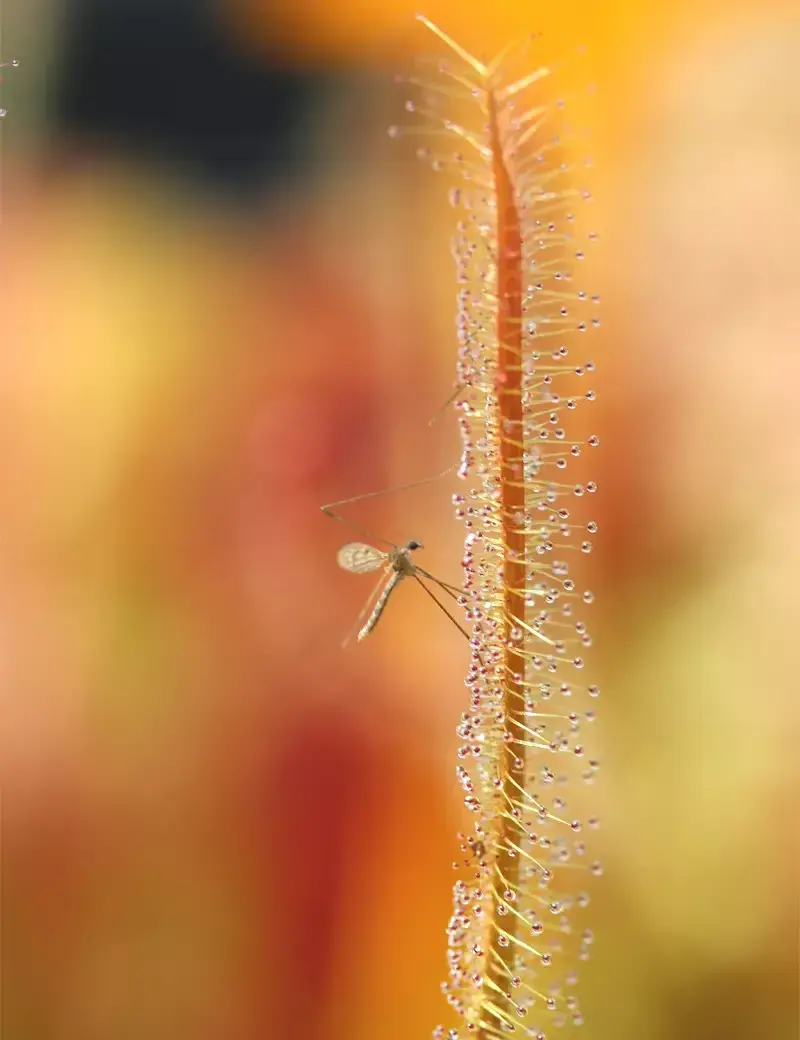
In some forms, the division is repeated several times. The tips can then develop into veritable plant ‘candlesticks’ composed of numerous slender segments. Each segment is covered with glandular tentacles secreting a sticky, shiny substance, capable of effectively trapping insects.
This aerial structure is rare amongst Drosera species. It enables Drosera binata to capture not only crawling insects, but also flying prey moving above the substrate. This is a different capture strategy to that of rosette-forming Drosera species, and is particularly effective in open habitats.
How the trap works and digestion
Like all Drosera species, Drosera binata uses a sticky trap. The tentacles produce viscous droplets rich in sugars and attractive enzymes. When an insect comes into contact with these droplets, it becomes immobilised. The leaf can then slowly curl to increase contact between the prey and the digestive areas.
Digestion is carried out by enzymes that break down the insect’s tissues. The released nutrients, notably nitrogen and phosphorus, are then absorbed by the leaf. This mechanism enables Drosera binata to compensate for the extreme nutrient poverty of its substrate and to maintain sustained growth.
Ecology and adaptation
In the wild, Drosera binata is closely associated with wetlands. It tolerates prolonged drought very poorly and thrives in soils that are constantly moist, or even temporarily flooded. It also favours open habitats with little competition from other plants.
This preference explains why Drosera binata can sometimes become very abundant in recently disturbed areas, where plant competition is reduced and light is more plentiful. Its ability to rapidly exploit these favourable conditions makes it a dynamic and adaptable species.
Tailles and general habit
Compared with many other species in the genus, Drosera binata is a large plant. Both in cultivation and in the wild, it can reach several tens of centimetres in height. Its upright leaves form an airy clump, often wider than it is tall, which immediately catches the eye.
This imposing stature, combined with the branched shape of the leaves, makes Drosera binata an ideal centrepiece in a collection of carnivorous plants or in a bright, open terrarium.
Flowering and reproduction
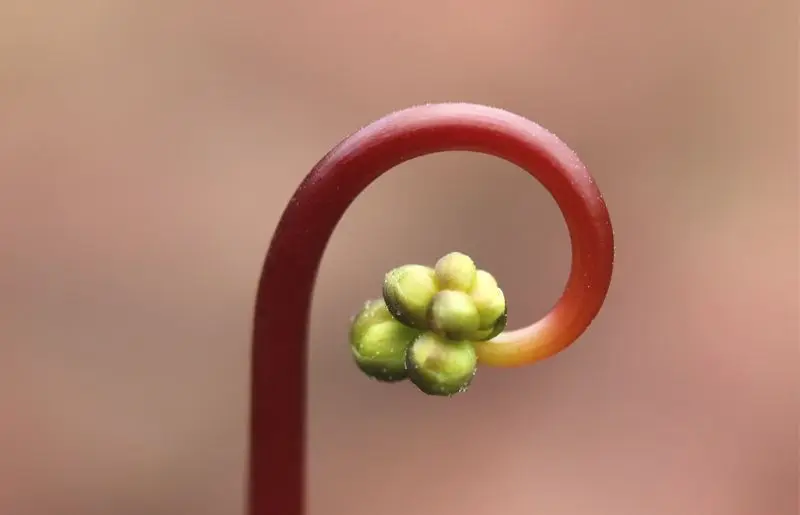
Drosera binata’s flowering is relatively unobtrusive compared to its foliage. A slender, delicate flower stalk rises above the plant, bearing several flowers that are usually white. This clear separation between the flowers and the traps helps prevent pollinating insects from being trapped.
After flowering, Drosera binata produces very small, light seeds that are easily dispersed by the wind. Under favourable conditions, these seeds can germinate easily, allowing the species to be propagated from seed.
Tips for growing Drosera binata
Drosera binata is known for being a relatively easy carnivorous plant to grow, provided you follow a few essential rules. Some rarer cultivars, such as ‘Drosera’‘copper-leaved’, are more fussy, whilst others, such as Drosera var. dichotoma Mont Ruapehu, are perfectly capable of withstanding sub-zero temperatures. Generally speaking, all Drosera binata are grown in the same way.
Light
Very bright light is essential. Drosera binata thrives best in full sun or under strong artificial light. A lack of light results in thinner, less branched leaves and reduced mucilage production.
Eau
Watering must be consistent and plentiful. Use only rainwater, osmosis water or demineralised water. The pot can be placed in a saucer containing a few centimetres of water at all times, particularly during the growing season.
Substrate
A poor, acidic substrate is essential. A standard mixture of unfertilised blond peat and quartz sand or perlite is ideal. The use of any fertiliser should be avoided.
Temperature
: Drosera binata tolerates a wide range of temperatures. It thrives in the heat of summer and withstands cooler temperatures in winter. Some varieties may enter a state of partial dormancy when conditions become less favourable, but resume growth vigorously in spring.
Forms and cultivars
Over time, Drosera binata has given rise to numerous horticultural forms and cultivars. Some are characterised by a simple division into two segments, whilst others feature much more complex branching that can result in numerous lobes. Selected cultivars also display impressive size or particularly long, drooping leaves.
These variations illustrate the great morphological plasticity of *Drosera* binata and explain its enduring popularity amongst collectors and novice enthusiasts alike.
An iconic species
Drosera binata is not merely an ornamental carnivorous plant. It is an excellent example of evolutionary adaptation to extreme environments, combining carnivory, a distinctive leaf structure and relative hardiness. Its ease of cultivation, clearly visible trap and numerous forms make it an essential species for anyone interested in botany and carnivorous plants.
For a blog dedicated to carnivorous plants, Drosera binata perfectly embodies the link between aesthetics, education and plant biology.
Conclusion
Drosera binata stands out within the genus Drosera for its erect, forked leaves and its aerial trapping mechanism, perfectly adapted to damp, nutrient-poor environments. Its biology clearly illustrates the principles of plant carnivory and the ingenuity of the adaptations developed by these plants.
Hardy, decorative and easy to observe, Drosera binata is suitable for both beginners and collectors. Its various forms and cultivars further enhance its botanical interest and make it an iconic carnivorous plant, offering both educational and aesthetic value.
FAQ – Drosera binata
What distinguishes Drosera binata from other Drosera species?
Drosera binata has erect, forked leaves, unlike most Drosera species, which have a low rosette. This form enables it to capture insects at different heights.
Where does Drosera binata come from?
Drosera binata is native to Oceania, mainly Australia and New Zealand. It grows in damp, acidic and nutrient-poor habitats that are highly exposed to light.
How does the trap of *Drosera binata* work?
Its leaves are covered in sticky tentacles that trap insects. Digestive enzymes then enable the plant to absorb the nutrients it needs to grow.
In what natural habitat does Drosera binata grow?
It is associated with wetlands such as peat bogs and does not tolerate drought well. It thrives mainly in open, well-lit areas where there is little competition.
How big can Drosera binata grow?
Drosera binata is a large plant for its genus. It can grow to several tens of centimetres and forms an airy, branched clump.
Is Drosera binata easy to grow?
Yes, it is relatively easy to grow provided its requirements are met: bright light, an acidic, nutrient-poor growing medium, and regular watering with demineralised water.
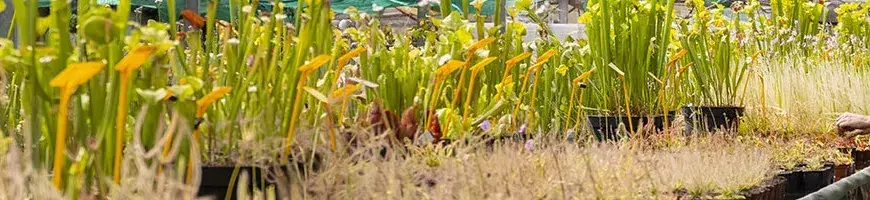
For sale in the Karnivores shop
Love Carnivorous plants? Don't miss our plants and exclusive offers in the online shop.
Read next
Saxifraga candelabrum: the flowering plant that confirms a 150-year-old hypothesis by Darwin
How does the Venus flytrap detect its prey? A 2025 study sheds light on its ‘sixth sense’
Growing Tillandsia from seed: a comprehensive guide to successful germination

Do Dionisian traps run on electricity?
How carnivorous plants digest their prey
Which plants can you grow on xaxim?