
Underground energy
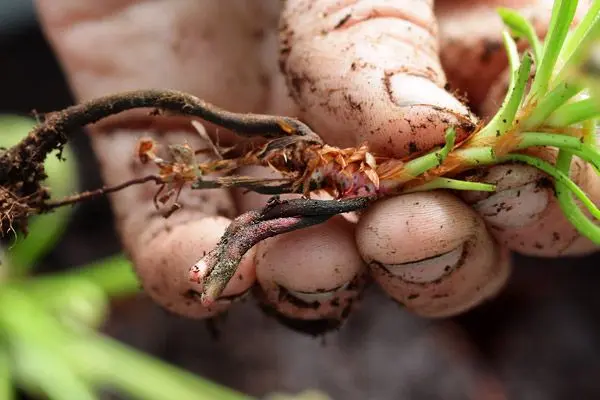
Repotting carnivorous plants provides an opportunity to examine them in their entirety. Just as with the foliage, root development is at its most vigorous in spring: the plants strengthen their hold in the ground in preparation for future growth and build up new underground energy reserves. Let’s take a look at the Drosera…
These roots (shown here with their pinkish tips) are thick, stiff, and penetrate deep into the soil… But anchoring is not their primary function: when you remove a Drosera from the soil, you’ll find that they offer no resistance, unlike the more or less numerous rootlets that also develop from the base of the plant. Much like a rhizome, they act as energy reserves; their genetic material enables new plants to be produced should the parent plant die (for example, in winter).
In cultivation, these roots make excellent cuttings, to be placed on well-moistened peat in a warm, bright environment. Drosera capensis, Drosera binata and even Drosera hamiltonii reproduce remarkably well using this method!

For sale in the Karnivores shop
Love Carnivorous plants? Don't miss our plants and exclusive offers in the online shop.
Read next
Saxifraga candelabrum: the flowering plant that confirms a 150-year-old hypothesis by Darwin
How does the Venus flytrap detect its prey? A 2025 study sheds light on its ‘sixth sense’
Growing Tillandsia from seed: a comprehensive guide to successful germination

Do Dionisian traps run on electricity?
How carnivorous plants digest their prey
Which plants can you grow on xaxim?