
Unbelievable: A fossilised wasp that acts as a trap, just like the Venus flytrap!
Introduction
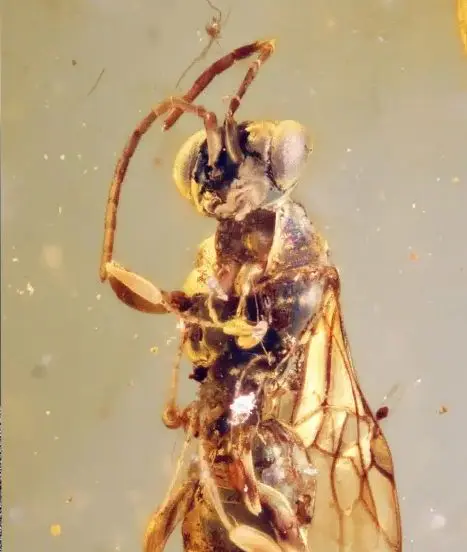
A stunning palaeontological discovery reveals an unexpected evolutionary convergence within the animal kingdom. Analysis of an exceptional fossilised wasp, Sirenobethylus charybdis, preserved in Burmese amber, sheds light on a surprising predatory adaptation. This 99-million-year-old insect from the Cretaceous period had an abdomen whose structure bears a striking resemblance to the formidable traps of the most famous carnivorous plant: the Venus flytrap (Dionaea muscipula). This fascinating similarity suggests a strategy for immobilising prey that is unique in the world of fossil insects, shedding new light on ancient parasitic mechanisms and the evolution of parasitoid wasps. This discovery highlights nature’s ingenuity, where similar solutions sometimes emerge across distinct biological kingdoms.
An Abdomen Transformed into a Plant Trap: The Cretaceous ‘Dionaea’ Wasp
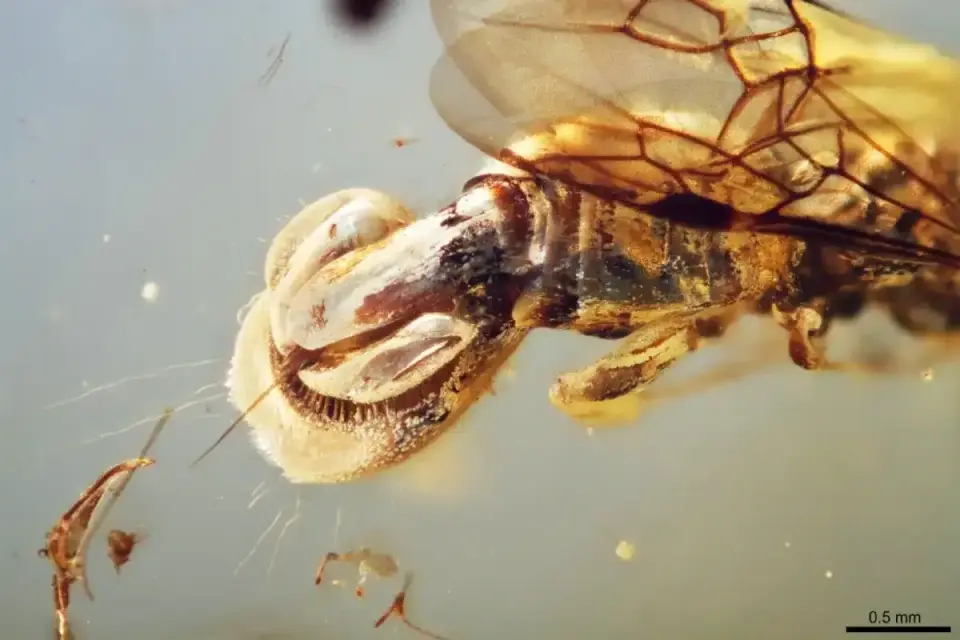
A close examination of Sirenobethylus charybdis, a species of fossil wasp discovered in Kachin amber, reveals an extraordinary morphological feature. The tip of its abdomen featured a structure comprising three movable flaps edged with fine bristles, whose arrangement and apparent function bear a striking resemblance to the trapping lobes of *Dionaea* muscipula. Just like the carnivorous plant, these flaps appear to have closed in a coordinated manner to capture prey. Images obtained via micro-computed tomography (micro-CT) of sixteen fossilised specimens have revealed different positions of these abdominal ‘jaws’, reinforcing the idea of an active capture mechanism similar to that of the Venus flytrap. This unique evolutionary adaptation radically distinguishes this prehistoric wasp from modern parasitoid wasps, which use different restraint methods to subdue their hosts.
Hunting Strategy and Evolution: When an Insect Mimics a Carnivorous Plant
The main function of the abdominal trap of Sirenobethylus charybdis, much like that of the Venus flytrap, was probably to immobilise agile prey quickly. This parasitic strategy then allowed the wasp to lay its eggs on a host unable to escape. The sensory bristles on the trap flaps played a crucial role, triggering the trap to close upon contact with an insect – a mechanism comparable to the ‘trigger hairs’ that make the carnivorous plant’s trap so effective. This morphological and functional convergence between an insect and a plant is a fascinating example of evolution towards similar solutions in the face of predation challenges. The discovery of this fossil wasp sheds light on an unexpected diversification of capture mechanisms within the Chrysidoidea during the Cretaceous period, revealing a surprising imitation of the hunting techniques of the plant kingdom.
Conclusion
The discovery of Sirenobethylus charybdis, the fossil wasp whose abdomen mimics the traps of Dionaea muscipula, is a major palaeontological revelation. It spectacularly illustrates the unexpected paths that evolution can take. This unique adaptation, in which an insect develops a capture structure reminiscent of that of a carnivorous plant, highlights the ingenuity of predation mechanisms in the living world, whether animal or plant. The study of this Cretaceous wasp enriches our understanding of ancient ecological interactions and the remarkable evolutionary strategies that have shaped past and present biodiversity. Sirenobethylus charybdis will remain an iconic example of nature’s capacity for innovation, sometimes by reproducing surprisingly similar solutions across very different biological kingdoms.
For sale in the Karnivores shop
Love Carnivorous plants? Don't miss our plants and exclusive offers in the online shop.
Read next
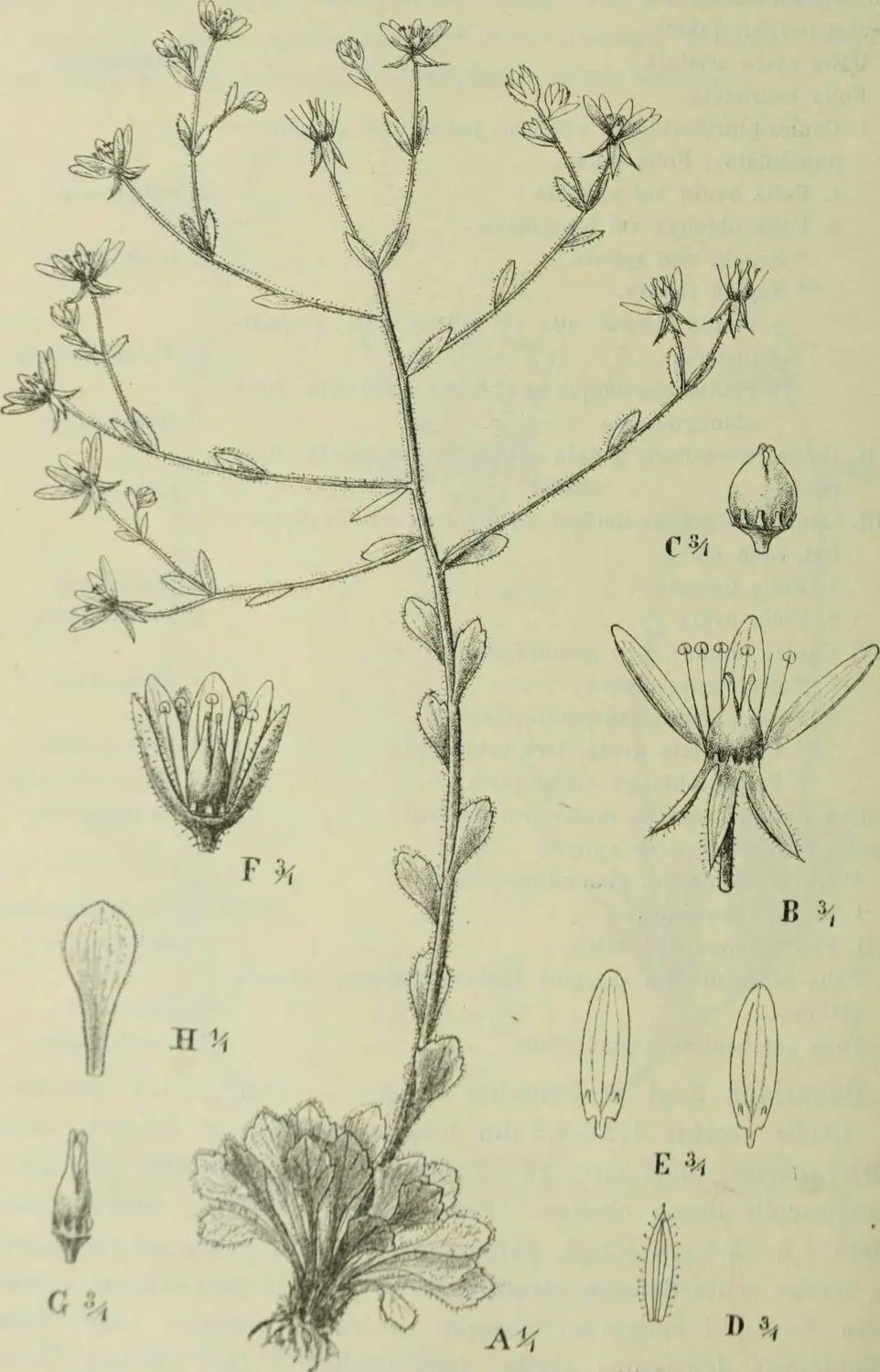
Saxifraga candelabrum: the flowering plant that confirms a 150-year-old hypothesis by Darwin
How does the Venus flytrap detect its prey? A 2025 study sheds light on its ‘sixth sense’
Growing Tillandsia from seed: a comprehensive guide to successful germination
Do Dionisian traps run on electricity?
How carnivorous plants digest their prey
Which plants can you grow on xaxim?