
Sooty mould on Sarracenia: understanding, treating and preventing it
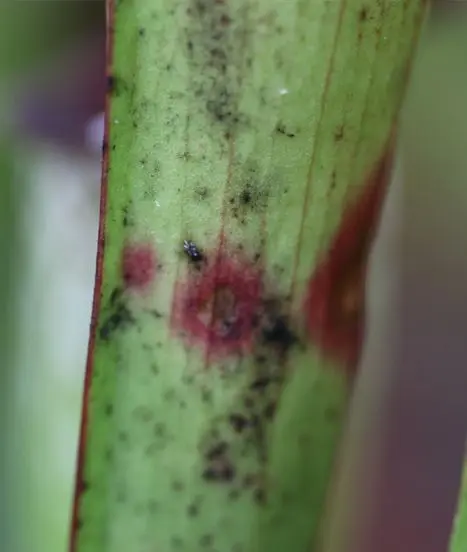
Sooty mould is a common problem in Sarracenia plants, particularly when grown outdoors, in a greenhouse or in damp conditions. Although this black coating is not harmful in itself, it weakens the plant by reducing photosynthesis and slowing down growth. Understanding where it comes from is essential for taking effective action.
What is sooty mould?
Sooty mould is a superficial, black, powdery fungus that develops on the leaves and pitchers when a sugary substance — honeydew — is present. This honeydew does not come from the plant itself, but from parasitic insects.
On Sarracenia, scale insects are the most common cause. Settling at the base of the pitchers, in the folds or sometimes on the flower stalks, they feed on the sap and excrete copious amounts of honeydew on which sooty mould thrives.
So, sooty mould is not a disease of Sarracenia, but the result of a scale insect infestation.
How can you recognise sooty mould on Sarracenia?
Sooty mould is characterised by:
– a matt black deposit that partially or completely covers the pitcher,
– a surface that looks dirty or as though it has been ‘painted with charcoal’,
– sometimes a sticky texture caused by the honeydew,
– reduced vigour, with pitchers that are smaller or dry out more quickly.
The plant is not infected from the inside, but is simply smothered by the black layer.
Why do Sarracenias attract scale insects?
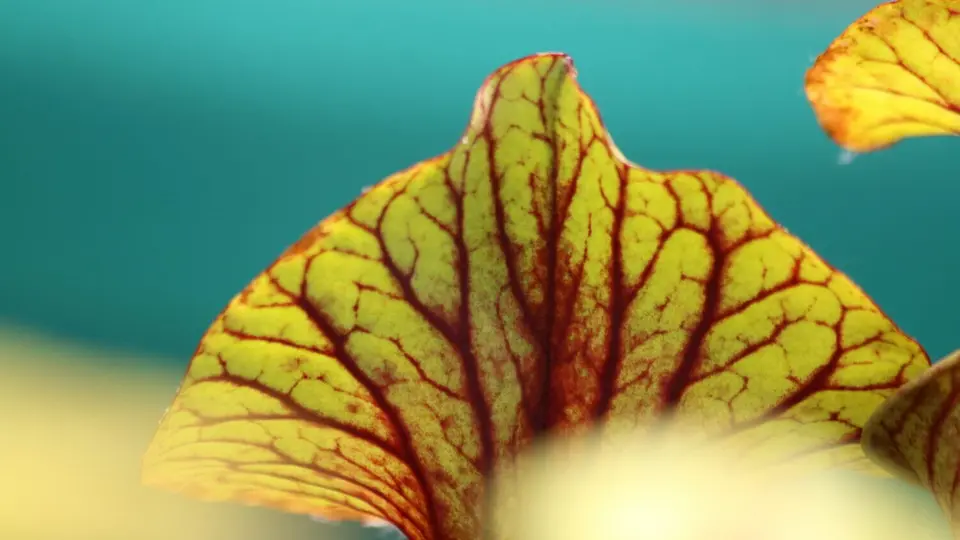
Sarracenias produce nectar to attract insect prey. This nectar, combined with a protective tubular structure, creates an environment favoured by several pests, including scale insects. In hot, dry climates or in poorly ventilated greenhouses, they can become established long-term and multiply rapidly.
Scale insects often hide:
– at the base of the stem,
– in areas of the plant that are not easily visible,
– between two fused pitchers,
– and sometimes in young shoots.
The resulting production of honeydew then creates an ideal breeding ground for sooty mould.
How do you treat sooty mould?
- Remove the scale insects (essential)
Unless the scale insects are removed, sooty mould will return.
Methods suitable for Sarracenia:
– manual cleaning using 70 per cent alcohol applied with a cotton bud,
– removal of heavily infested pitchers,
– very dilute black soap on the outer parts,
– organic systemic treatment if the infestation is severe (to be used with caution).
Scale insects hidden in the folds must be removed mechanically.
- Cleaning off sooty mould
Once the scale insects have been removed, sooty mould will not grow back.
It can be easily removed:
– with a damp cloth,
– with a fine spray of water followed by gentle wiping.
The new urns will emerge clean and healthy.
- Improving growing conditions
To prevent recurrence:
– increase ventilation,
– grow the plants in full sun,
– clean old pitchers regularly,
– avoid areas that are too confined or constantly damp.
A Sarracenia plant that is well exposed to the sun, in a poor, constantly moist growing medium, is much more resistant to attack.
Should you be concerned about sooty mould?
Sooty mould does not kill Sarracenia, but it reduces its ability to produce new pitchers and weakens the plant if it covers a large area. Once the scale insects have been removed and the black coating cleaned off, the plant will resume normal growth.
Conclusion
Sooty mould on Sarracenia is primarily a sign of a scale insect infestation, which is much more common on this species than one might think. By treating the cause, then cleaning the pitchers and improving growing conditions, the problem can be permanently eliminated. With plenty of sunlight and good ventilation, Sarracenias remain vigorous and quickly produce new, perfectly clean pitchers.

For sale in the Karnivores shop
Love Carnivorous plants? Don't miss our plants and exclusive offers in the online shop.
Read next
Saxifraga candelabrum: the flowering plant that confirms a 150-year-old hypothesis by Darwin
How does the Venus flytrap detect its prey? A 2025 study sheds light on its ‘sixth sense’
Growing Tillandsia from seed: a comprehensive guide to successful germination
Do Dionisian traps run on electricity?
How carnivorous plants digest their prey
Which plants can you grow on xaxim?