
The mealybug: a formidable enemy for your plants
Introduction
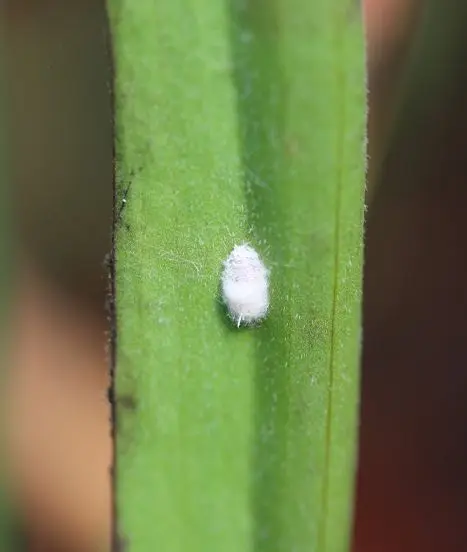
The mealybug is apest particularly feared by houseplant enthusiasts. These tiny creatures, covered in a white, cottony substance, feed on the sap of our favourite plants, weakening them considerably and potentially even killing them. In this article, we will explore in detail the biology of this insect, its impact on plants, and the various control methods available to get rid of it effectively.
Biology of the mealybug
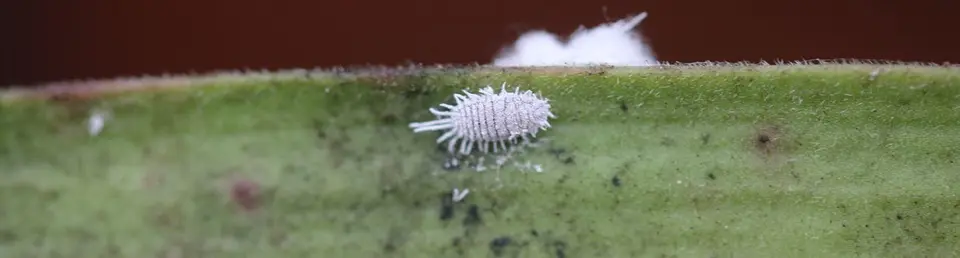
The mealybug (Pseudococcus spp.) is a hemipteran insect, just like aphids. It is characterised by its soft body, often pink or greyish in colour, and by the presence of a white waxy substance that acts as a protective coating. It is this substance that gives it its name.
Life cycle:
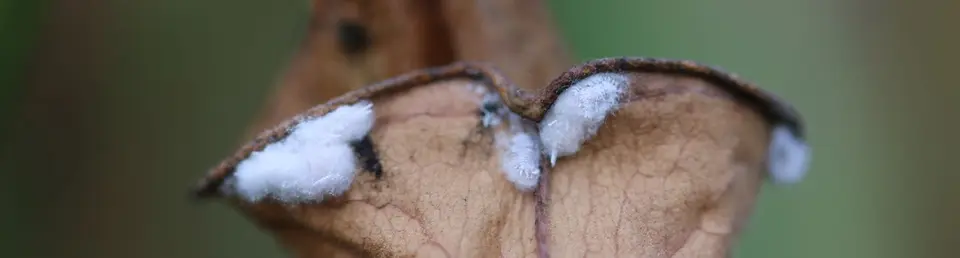
The mealybug’s life cycle comprises several stages: egg, larva, nymph and adult. Females lay numerous eggs beneath their bodies, protected by wax filaments. The larvae, known as neonates, are mobile and spread rapidly across the plant. They then attach themselves to feed and moult several times before reaching the adult stage.
Feeding:
Mealybugs feed on the plant’s sap by piercing the plant tissues. This feeding causes general weakening of the plant, yellowing of the leaves and premature bud drop. Furthermore, mealybugs secrete honeydew, a sugary substance that encourages the growth of black mould, also known as sooty mould.
Origin and distribution
Mealybugs are native to tropical and subtropical regions. They have been introduced to many parts of the world through the trade in ornamental plants. Today, they are found on every continent and attack a wide variety of plants, both indoors and outdoors.
Damage caused by mealybugs
Mealybugs cause significant damage to houseplants:
- General weakening of the plant: By feeding on the sap, mealybugs deprive the plant of the nutrients it needs.
- Yellowing and leaf drop: Infested leaves turn yellow and fall off prematurely.
- Deformation of stems and fruit: Mealybugs can cause deformities in young shoots and fruit.
- Development of black mould: The honeydew secreted by mealybugs encourages the growth of black mould, which can block the stomata on the leaves and hinder the plant’s respiration.
How can you control mealybugs?
Controlling mealybugs can be tricky, as these insects are well protected by their waxy shell. Here are some effective methods:
- Regularly inspect your plants: Check your plants regularly for the first signs of infestation.
- Isolate infested plants: Isolate any infested plants to prevent the spread of the infestation to others.
- Manual removal: Remove the mealybugs using a cotton bud soaked in 70° alcohol or black soap.
- Insecticide treatments: In the event of a severe infestation, you can use insecticides specifically designed for scale insects. Opt for organic products based on neem oil or insecticidal soap.
- Biological control: Certain species of predatory insects, such as ladybirds, can help to control scale insect populations.
- Rempotageing and soaking: If the infestation is too advanced and you do not wish to use plant protection products, you can remove your plants from their pots, rinse them thoroughly and soak them for 24 hours (fully submerged) in a solution of neem oil (20ml/L) and black soap (40ml/L) before repotting them.
Conclusion
The mealybug is a persistent pest that can cause serious damage to your houseplants. By adopting the right prevention and control measures, you can protect your plants and enjoy their beauty for many years to come.
FAQ – The mealybug
What is the mealybug?
The mealybug is a pest covered in a white, cottony substance. It feeds on the sap of houseplants, which severely weakens them and can lead to their death.
How does the mealybug develop and spread?
Its life cycle comprises the egg, larval, nymph and adult stages. The larvae, known as neonates, are mobile and spread rapidly across the plant before settling down to feed.
What damage do mealybugs cause to plants?
It causes general weakening, yellowing and premature leaf drop, deformities in the stems or fruit, and the appearance of sooty mould.
Why does sooty mould appear during an infestation?
The mealybug secretes honeydew, a sugary substance that encourages the growth of black mould known as sooty mould, which can hinder the plant’s respiration.
What methods can be used to control mealybugs?
Control measures include regular inspection, isolating infested plants, cleaning them by hand with alcohol or black soap, using organic treatments such as neem oil, or, as a last resort, soaking and repotting the plant.
Sources and references
Our own experience :)
University of Maryland
: Mealybugs on Indoor Plants
https://extension.umd.edu/resource/mealybugs-indoor-plants
For sale in the Karnivores shop
Love Growing guide & tips? Don't miss our plants and exclusive offers in the online shop.
Read next
Quartz sand for carnivorous plants: what is it used for and how do you use it?
How to care for and maintain xaxim in a terrarium and a tropical greenhouse
Cork oak bark: an ideal natural substrate for epiphytic plants and terrariums

Free delivery on orders of €59 or more until midnight on Sunday

Oxalis triangularis: growing, care and tips
Dicksonia sellowiana: an iconic tree fern of the xaxim