
Sarracenia
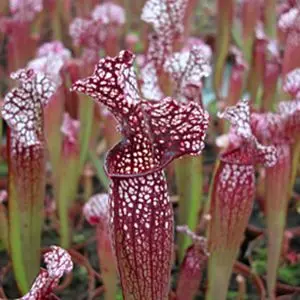
Sarracenias (carnivorous plants that deter Asian hornets) are hardy carnivorous plants that take the form of cups or tubes (hence their name ‘trumpet plants’), sometimes reaching 1 metre in height, and forming impressive clumps.
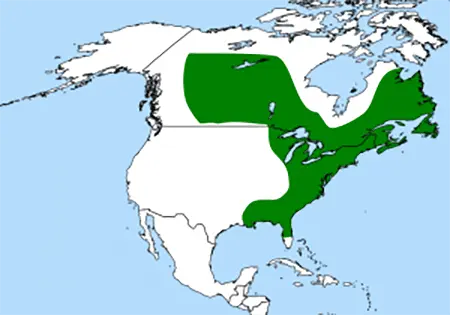
**Sarracenia**s are native to the southern and eastern United States. The species Sarracenia purpurea also grows in Canada!
As they feed on the nectar produced by the plant at the top of its ascidian, the insects eventually fall inside with no way out, due to the very smooth walls and the downward-curving hairs, which prevent them from climbing back up. Digestion takes place through enzymatic secretion. The pitchers can hold a very large quantity of prey, most of which are flying insects such as flies and wasps.
There are 8 species, numerous varieties and a profusion of natural and horticultural hybrids, which are often very vigorous and colourful. The flowers produced by Sarracenias are amongst the most beautiful of all carnivorous plants, thanks to their unique structure and vivid colours. We have a wide selection of magnificent species and hybrids.
List of Sarracenia species
- Sarracenia alata
- Sarracenia flava (7 varieties)
- Sarracenia leucophylla
- Sarracenia minor (2 varieties)
- Sarracenia oreophila
- Sarracenia psittacina
- Sarracenia purpurea (2 subspecies, 2 varieties, 2 forms)
- Sarracenia rubra (5 subspecies)
Sarracenia cultivation
Best practice
- Grow the plant outdoors all year round or in a conservatory or cool greenhouse during winter, ensuring it receives as much sunlight as possible and without worrying about the ambient temperature, whether it is very high or very low.
- Use a mix based on blond peat (mixture for carnivorous plants) or sphagnum moss.
- Keep the growing medium very moist from spring to autumn, using rainwater, demineralised or reverse-osmosis water, and only use other types of water in the event of a shortage.
- Use a large plastic pot with drainage holes, placed on a saucer to facilitate watering.
- Allow the insects to trap themselves.
- Place a piece of cotton wool in each fully developed trap, once it contains about one-third of its volume in insects, to prevent it from rotting due to ‘indigestion’.
- Cut back the urns from the previous season in February/March, BEFORE growth resumes.
- Shelter the plant from strong winds as much as possible.
- Shelter the plant from rainfall in winter, as far as possible.
- Stake up any bent urns.
Things to avoid
- Do not keep the plant indoors all year round in a dimly lit spot, or bring it indoors as soon as the weather turns cold.
- Do not grow the plant in a terrarium.
- Using standard potting compost, garden soil or other garden centre compost.
- Watering with tap water, spring water or mineral water, or water from a stream or river (which may be hard or polluted).
- Constantly move the plant around, or repot it several times a year.
- Feed it by hand with meat or give it fertiliser.
- Cut off its stems as soon as they start to turn black.
FAQ — Sarracenia
Where do Sarracenia come from?
Sarracenias are native to the southern and eastern United States, and some species also grow as far north as Canada.
What sort of trap do Sarracenia plants use to catch their prey?
Sarracenias form open urns or tubes. The nectar attracts insects, which fall into the urn. Inside, the smooth walls and sloping hairs prevent them from climbing back out, and digestion takes place with the help of enzymes.
What sort of care do they need to ensure they thrive?
Sarracenias prefer a nutrient-poor growing medium (peat or sphagnum moss), soil that is kept constantly moist (using rainwater, osmosis water or demineralised water), and full sun; they can tolerate a wide range of temperatures — which makes them hardy, robust plants.
Do Sarracenia need fertiliser or feeding to survive?
No. Sarracenias derive their nutrients from the prey they capture. Adding fertiliser to the soil or trap is not recommended, as this can harm the plant.
What should you do with Sarracenia plants in winter?
In winter, many species go into dormancy. It is advisable to prune back the growth, keep the growing medium slightly moist but never waterlogged, and place them outdoors, in a cool greenhouse or an unheated conservatory if temperatures are low.
Why do some people think that Sarracenia plants attract Asian hornets — is there any truth in this?
Although the upright traps of the Sarracenia attract flying insects, their effectiveness against pests such as the Asian hornet is very limited. The traps do not specifically target these large insects, and the number captured remains negligible.
Sources and references
Our experience :)
New York Botanical Garden (NYBG)
Carnivorous Plant Care: American Pitcher Plant
https://libguides.nybg.org/c.php?g=654975&p=4597450&utm
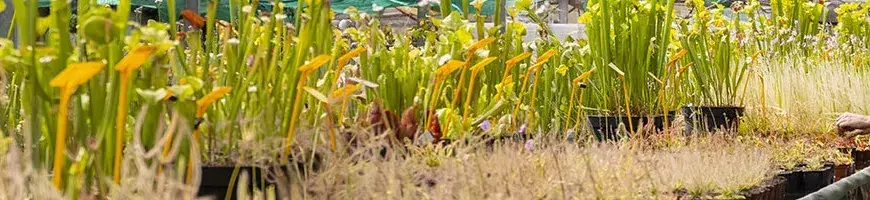
For sale in the Karnivores shop
Love Carnivorous plants? Don't miss our plants and exclusive offers in the online shop.
Read next
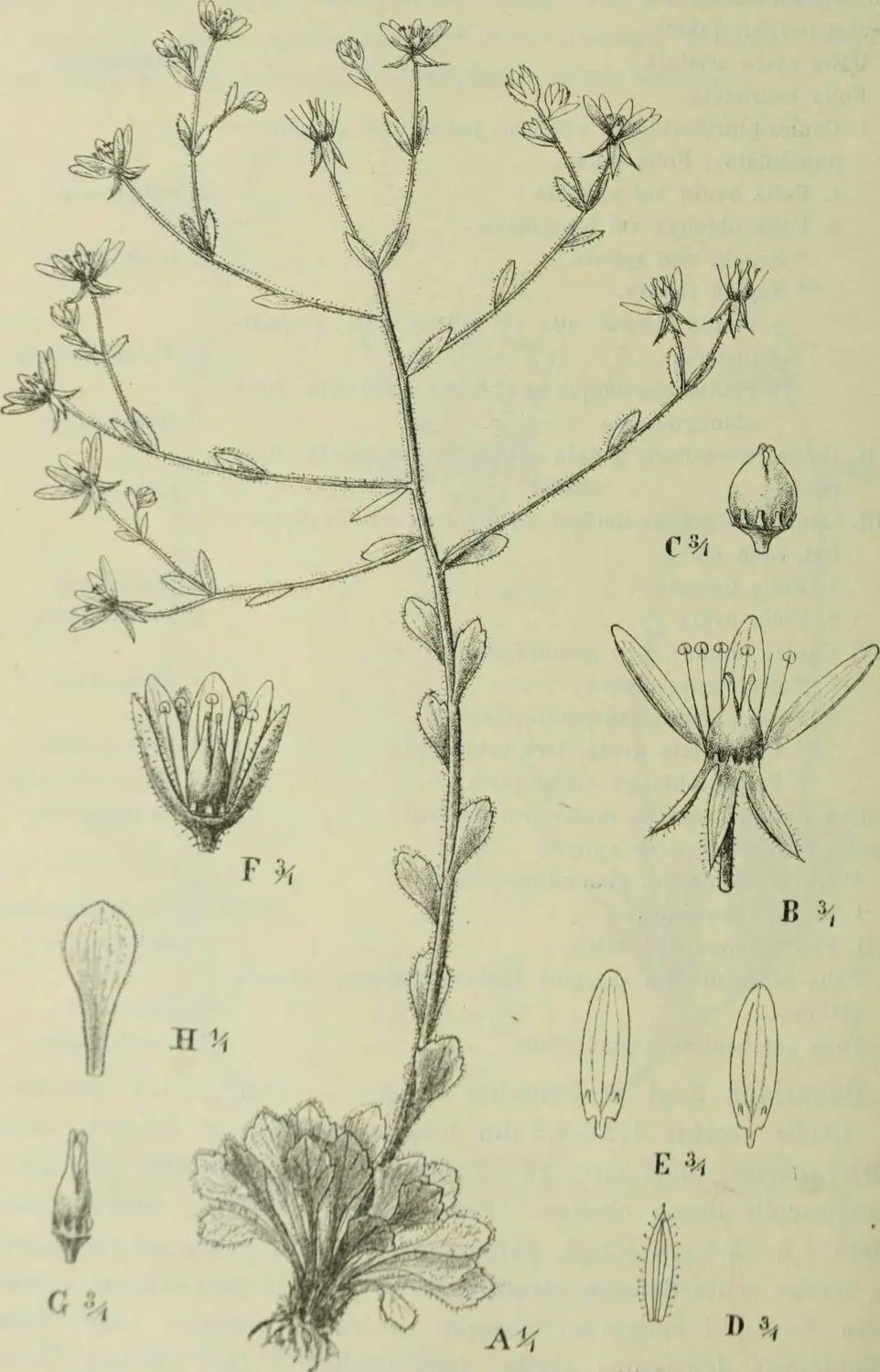
Saxifraga candelabrum: the flowering plant that confirms a 150-year-old hypothesis by Darwin
How does the Venus flytrap detect its prey? A 2025 study sheds light on its ‘sixth sense’
Growing Tillandsia from seed: a comprehensive guide to successful germination
Do Dionisian traps run on electricity?
How carnivorous plants digest their prey
Which plants can you grow on xaxim?