
Pythium infestation on a Sarracenia
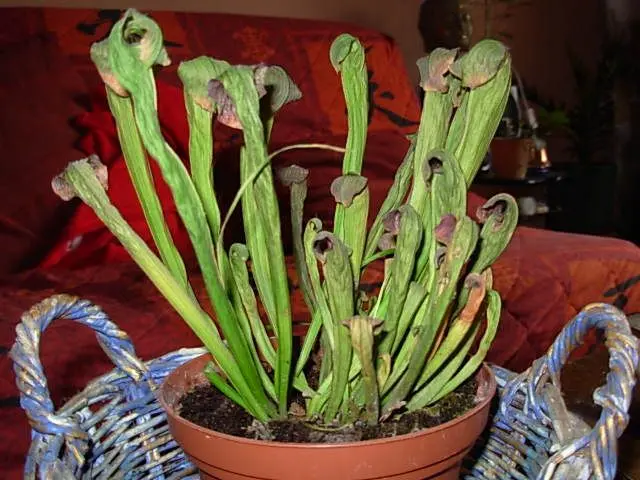
There are a few fungi that prove to be particularly harmful to carnivorous plants, as we explain in detail in this article on diseases of carnivorous plants. The photograph below shows the effects of an attack by a microorganism of the genus Pythium, formerly classified as a fungus but now considered a protist. The foliage had begun to wither three days before the photograph was taken.
Pythium attacks the roots, which lose their ability to absorb water to nourish the plant tissues. Deprived of water, they dry out rapidly. The upper part of the urns is affected first, as this is where the water is lost most quickly.
An emergency treatment can then be considered, involving removing the plant from its pot and soaking the rhizome and roots in a commercially available anti-Pythium solution, but the chances of keeping anything alive are slim. Fortunately, Pythium is not a very common disease. To prevent it**, you must ensure that the water used for watering is not stagnant water** that has been left standing for a long time.

For sale in the Karnivores shop
Love Carnivorous plants? Don't miss our plants and exclusive offers in the online shop.
Read next
Saxifraga candelabrum: the flowering plant that confirms a 150-year-old hypothesis by Darwin
How does the Venus flytrap detect its prey? A 2025 study sheds light on its ‘sixth sense’
Growing Tillandsia from seed: a comprehensive guide to successful germination
Do Dionisian traps run on electricity?
How carnivorous plants digest their prey

Which plants can you grow on xaxim?