
Irresistible!
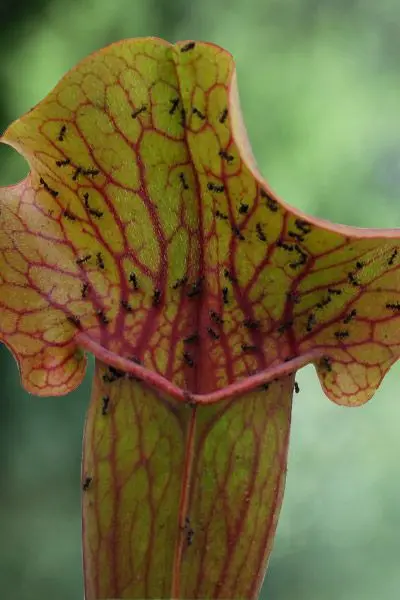
Sarracenias are every bit as attractive as Nepenthess. If you grow them and live in the countryside, you’ve no doubt noticed that, come spring, there are plenty of insects flitting around the plants, and the traps fill up quickly.
Here, an anthill has established itself near a hybrid based on Sarracenia purpurea.
These worker ants were drawn by the intense scent emanating from the plant’s sweet nectar. The plant must have had quite a feast… Well, not at all! Not a single ant in the trap! It’s not that they have any special defence to avoid being trapped… It’s simply that they didn’t taste the nectar, but carried it back to the ant colony (you could clearly see them going back and forth).
However, tasting the nectar is crucial to the capture process, as the nectar of Sarracenias contains a neurotoxin called coniine (harmless to humans and pets in such quantities), which is also found in hemlock. Coniin literally drugs the insects that ingest it. They then lose their balance and fall into the trap. The carnivorous plant therefore did not eat any ants.
With so much nectar introduced and distributed within the anthill, one might think things didn’t go quite to plan inside. But I wasn’t able to see that for myself…
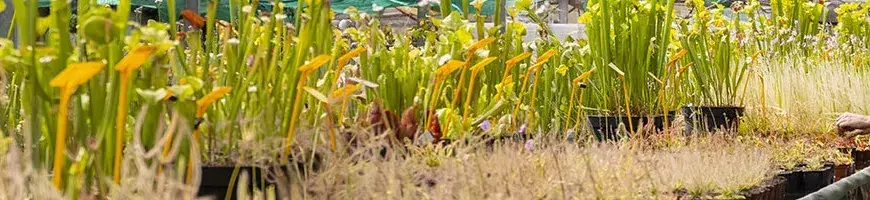
For sale in the Karnivores shop
Love Carnivorous plants? Don't miss our plants and exclusive offers in the online shop.
Read next
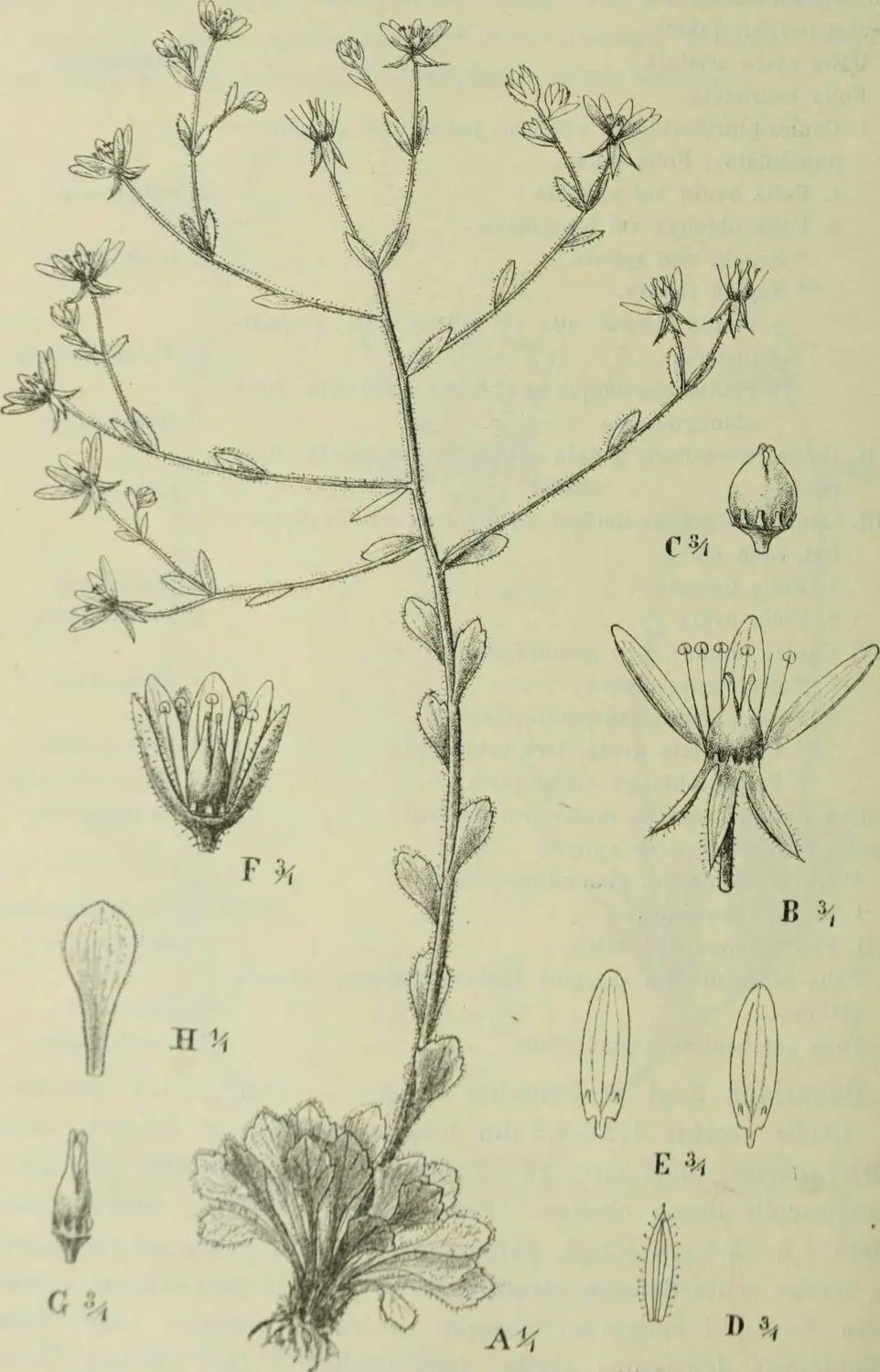
Saxifraga candelabrum: the flowering plant that confirms a 150-year-old hypothesis by Darwin
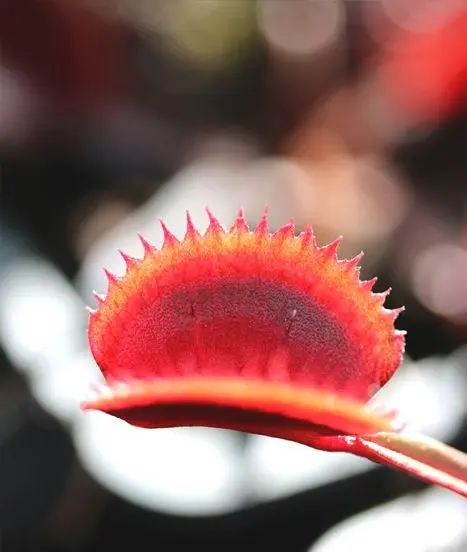
How does the Venus flytrap detect its prey? A 2025 study sheds light on its ‘sixth sense’
Growing Tillandsia from seed: a comprehensive guide to successful germination
Do Dionisian traps run on electricity?
How carnivorous plants digest their prey
Which plants can you grow on xaxim?