
Unexpected interaction between Sarracenia purpurea and a pollinator
Introduction
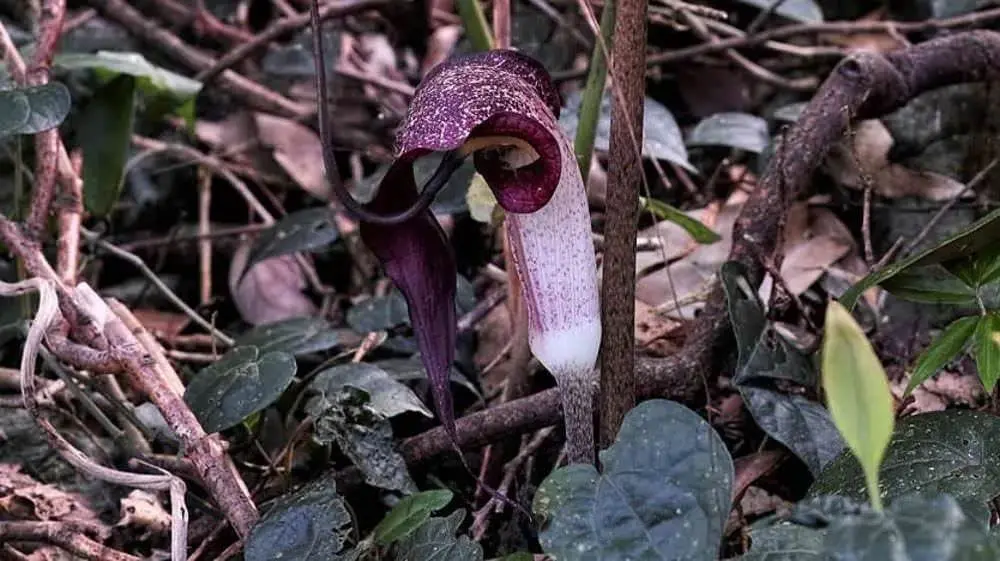
A recent study has revealed a surprising interaction between Arisaema thunbergii, a plant of the Araceae family, and Leia ishitanii, a pollinating midge. Contrary to popular belief, this interaction is not limited to a simple case of deceptive attraction. Researchers have discovered that L. ishitanii uses the lethal floral traps of A. thunbergii as a nursery for its offspring, thereby challenging previous understandings of pollination within the genus Arisaema.
In a recent study, researchers examined the interaction between Arisaema thunbergii, a plant of the Araceae family, and Leia ishitanii, a pollinating midge. Contrary to preconceived notions, this interaction is not limited to a simple case of deceptive attraction. The researchers discovered that L. ishitanii uses the lethal floral traps of A. thunbergii as a nursery for its offspring, thereby challenging previous assumptions about pollination within the genus Arisaema.
In the plant kingdom, interactions between plants and pollinating insects are essential for reproduction. However, not all such interactions are mutually beneficial. Some plants, such as Arisaema thunbergii, employ deceptive pollination strategies, luring pollinators with false promises of rewards. Yet this new study reveals that the relationship between A. thunbergii and L. ishitanii goes beyond deception. Indeed, the researchers observed that L. ishitanii uses the lethal floral traps of A. thunbergii as a nursery for its offspring!
This discovery challenges preconceived notions about pollination within the genus Arisaema, suggesting that a more complex and mutually beneficial interaction may exist between certain plant species and their pollinators. This study highlights the importance of further research to better understand the dynamics of plant–insect interactions and their implications for biodiversity and species evolution.
For sale in the Karnivores shop
Love Carnivorous plants? Don't miss our plants and exclusive offers in the online shop.
Read next
Saxifraga candelabrum: the flowering plant that confirms a 150-year-old hypothesis by Darwin
How does the Venus flytrap detect its prey? A 2025 study sheds light on its ‘sixth sense’
Growing Tillandsia from seed: a comprehensive guide to successful germination
Do Dionisian traps run on electricity?
How carnivorous plants digest their prey

Which plants can you grow on xaxim?