
Tradescantia: Getting to know them better
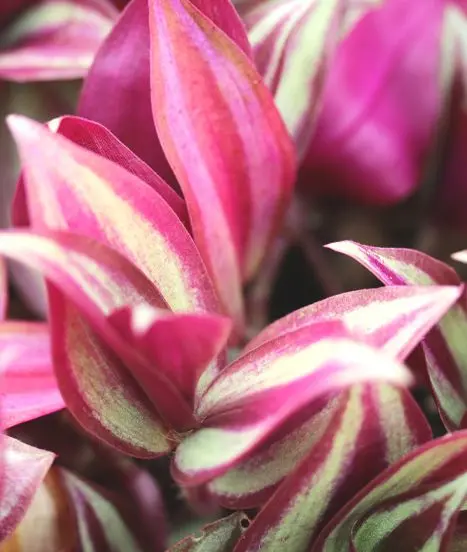
The Tradescantia family, also known as ‘Misère’, is a group of ornamental plants widely appreciated for their beauty and ease of cultivation. These plants, which belong to the Commelinaceae family, are highly prized in both indoor and outdoor gardening. This article explores their geographical origin, their natural habitat and cultivation methods, and introduces some popular species such as Tradescantia gentlei, Tradescantia fluminensis and Tradescantia ‘Blushing Bride’. You can also find out a little more about Tradescantia pallida in another article on our blog!
Geographical origin and natural habitat
Plants of the Tradescantia family are native to the Americas, particularly the southern United States, Mexico, and Central and South America. They thrive in tropical and subtropical climates, but are also found in temperate zones.
Their natural habitat is characterised by rainforests and shady undergrowth, where they often grow in dense mats on the forest floor. These plants are adapted to environments with high humidity, where they can benefit from light filtered through the tree canopy.
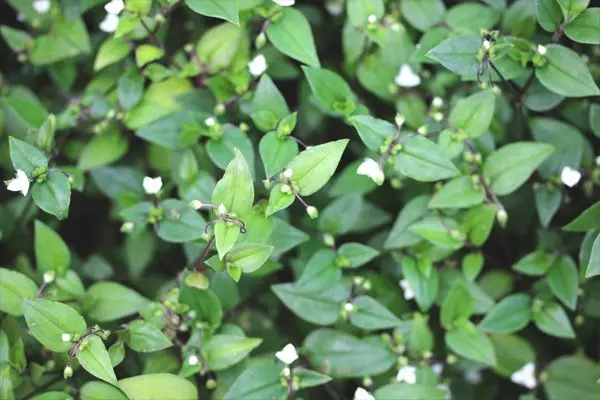
Growing Tradescantia
Tradescantias are relatively easy to grow, making them popular with both amateur and experienced gardeners. Here are a few tips for growing them successfully:
Light
Tradescantias prefer bright, indirect light. Exposure to direct sunlight can scorch their delicate leaves, whilst a lack of light can make their colours less vibrant.
Soil
Well-drained soil is essential to prevent root rot. A mixture of potting compost for indoor plants with a little sand or perlite is ideal.
Watering
These plants like the soil to remain slightly moist. It is important to allow the soil to dry out slightly between waterings to prevent excess moisture, which can lead to rot. In winter, watering should be reduced.
Humidity
Tradescantias thrive in high humidity. Misting the leaves or using a humidifier can be beneficial, particularly when the heating is on.
Temperature
They thrive in moderate to warm temperatures, ideally between 18 and 24°C. They do not tolerate the cold well and must be protected from cold draughts.
Propagating Tradescantia
Propagating Tradescantias is a simple and rewarding task, often carried out using cuttings. To do this, cut a healthy stem about 10 cm long just below a node, where the leaves attach to the stem. Remove the lower leaves to expose a few nodes, then place the cutting in a glass of water, ensuring that the submerged nodes develop roots. Change the water regularly to prevent it from becoming stagnant. Once the roots are about 2 to 3 cm long, transplant the cutting into a pot filled with well-drained potting compost. Keep the soil moist and place the cutting in a bright spot, but out of direct sunlight. Within a few weeks, the cutting will take root and start to grow, quickly adding a new Tradescantia plant to your collection.
Planting Tradescantia cuttings directly into a light, high-quality growing medium and keeping it moist also works very well, provided you do not let the compost dry out or become waterlogged.
Examples of Tradescantia
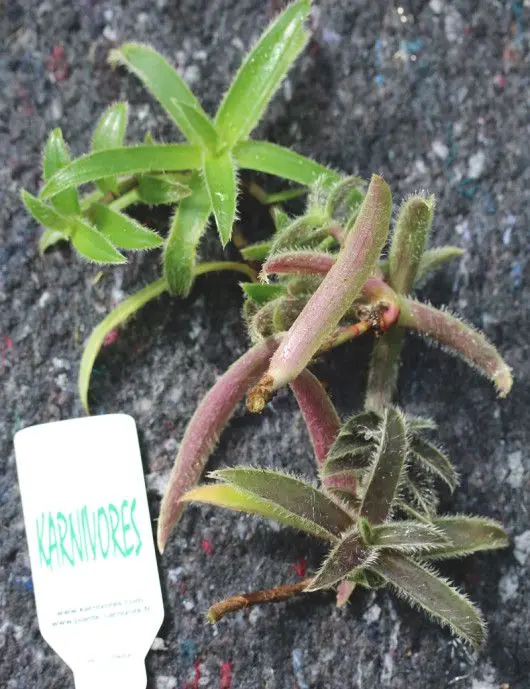
Tradescantia tomentosa
Tradescantia tomentosa, also known as ‘Hairy Tradescantia’ or ‘Tradescantia velutina’, is an ornamental plant notable for its thick, velvety leaves. The leaves are generally dark green in colour, often with silvery or purplish highlights, and covered in fine hairs that give them a soft, downy texture. The plant forms creeping or trailing stems, making it ideal for hanging baskets or as a ground cover. During the flowering season, *Tradescantia* tomentosa produces small pink or purple flowers, adding a delicate touch of colour to its lush foliage. Easy to grow, this species is prized for its hardiness and unique visual appeal.
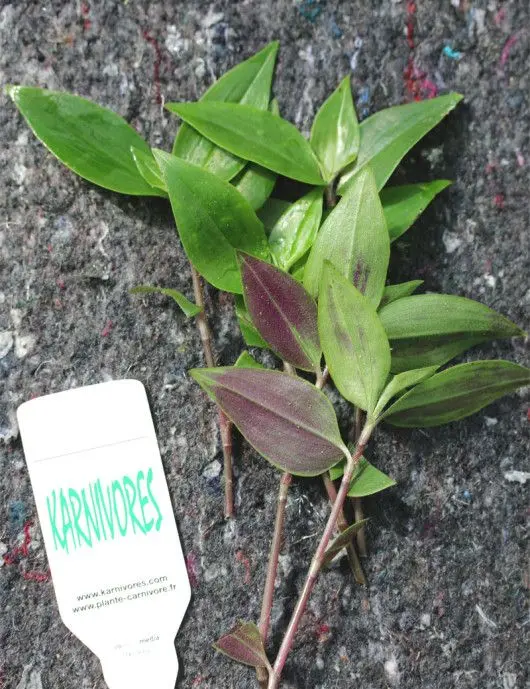
Tradescantia fluminensis
Tradescantia fluminensis, commonly known as ‘White Misery’, has glossy dark green leaves and small white flowers. Native to Brazil, it is often used as a houseplant due to its ability to thrive in low-light conditions.
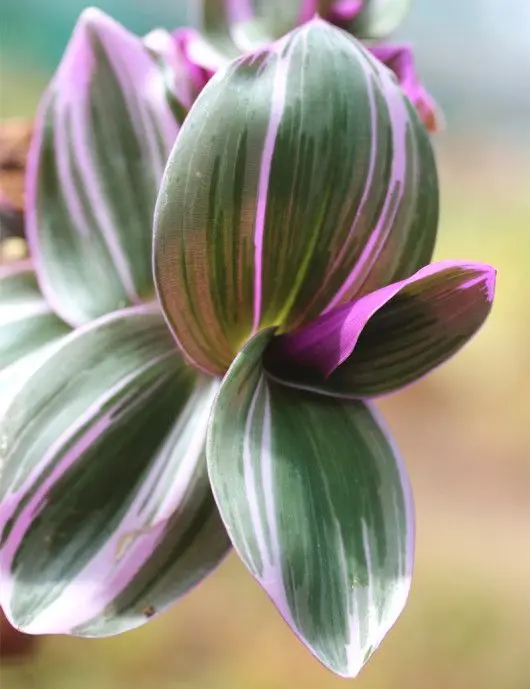
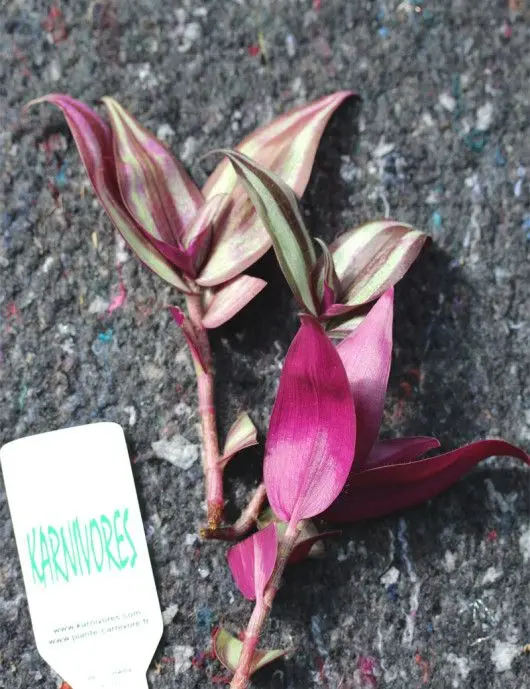
Tradescantia ‘Blushing Bride’
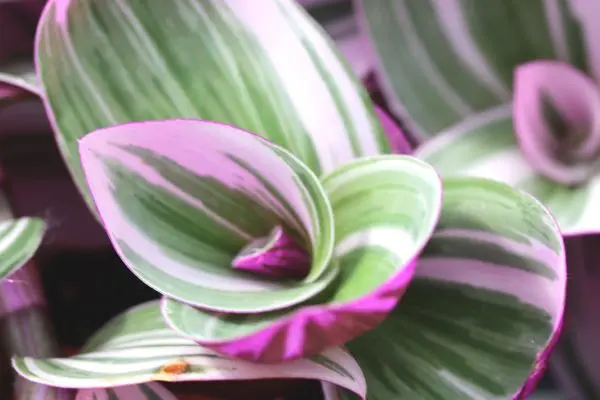
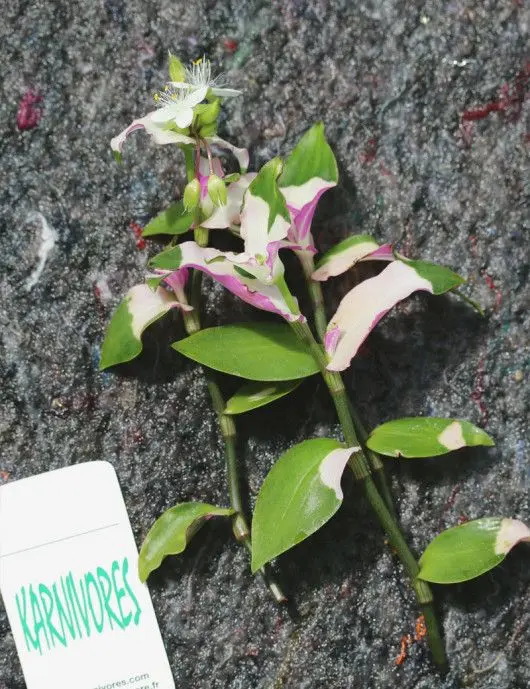
Tradescantia ‘Blushing Bride’ is a hybrid variety known for its green and white leaves with shades of pink. This unique plant is ideal for adding a splash of colour to your collection of houseplants. It requires a little more light to maintain its vibrant colours.
Conclusion
Plants from the Tradescantia family are fantastic choices for plant lovers, offering a combination of beauty, diversity and ease of care. Whether grown indoors or outdoors, they bring a touch of lush greenery to any space. With the right care, these plants will continue to thrive and brighten up your surroundings for many years to come. Whether you’re drawn to the delicacy of Tradescantia gentlei, the hardiness of Tradescantia fluminensis or the colourful beauty of Tradescantia ‘Blushing Bride’, there’s a Tradescantia to suit every gardener.
FAQ — Tradescantia: getting to know them better
Where do Tradescantia plants come from?
They are native to the Americas, particularly the southern United States, Mexico, Central America and South America, where they grow in humid forests and shady undergrowth.
What is the natural habitat of Tradescantia?
They grow in dense mats in damp, shaded areas, thriving in filtered light and high ambient humidity.
What sort of light is best for Tradescantia?
They prefer bright, indirect light. Direct sunlight burns their leaves, whilst a lack of light causes their colours to fade.
What sort of soil should you use for growing Tradescantia?
Well-drained soil is essential; ideally, a potting compost for indoor plants mixed with a little sand or perlite.
How should you water a Tradescantia properly?
The soil should remain slightly moist, whilst allowing it to dry out a little between waterings to prevent rot. In winter, watering should be reduced.
What are the ideal humidity and temperature levels for these plants?
They thrive in high humidity and temperatures between 18 and 24 °C, but are sensitive to the cold and draughts.
How do you propagate a Tradescantia?
Taking cuttings is simple: cut a healthy stem just below a node, remove the lower leaves, allow it to root in water and then replant it, or plant it directly in a light, moist growing medium.
Which Tradescantia species are the most popular?
Among the most frequently mentioned are: Tradescantia tomentosa, Tradescantia fluminensis, Tradescantia ‘Blushing Bride’, Tradescantia nanouk, Tradescantia gentlei and Tradescantia pallida.
Why are Tradescantia plants popular in interior design?
They come in a variety of shapes, textures and colours, are easy to grow, and are suitable for both beginners and experienced gardeners.
Sources and references
Our experience :)
Wisconsin Horticulture
Tradescantia zebrina
https://hort.extension.wisc.edu/articles/tradescantia-zebrina/
For sale in the Karnivores shop
Love Exotic animals and terrariums? Don't miss our plants and exclusive offers in the online shop.
Read next
Cyrtomium fortunei: an evergreen fern ideal for shaded areas
Asplenium trichomanes: wall fern – growing, origin and tips
Ficus pumila: growing, care and tips
How to secure the xaxim in a terrarium so that it stays in place safely and securely
Plectranthus ernestii: an ideal, striking plant for a terrarium
A comprehensive guide to growing Neoregelia in a terrarium