
She specialises in catching termites
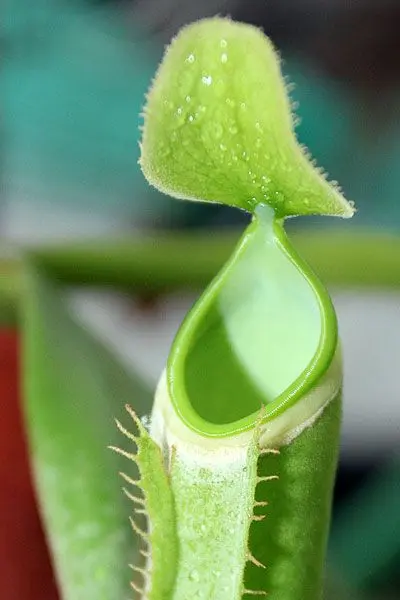
No carnivorous plant specifically chooses its food. None, that is, except Nepenthes albomarginata. Evolution has specialised it in capturing termites, whose colonies are abundant wherever the plant grows, in the heath forests of Borneo. Nepenthes albomarginata appears, at first glance, to be a Nepenthes like any other, with leaves bearing colourful pitchers. On closer inspection, one can see a ring of grey-white trichomes (very short hairs) just below the opening of the pitcher (see opposite).
Once fully developed and mature, this ring irresistibly attracts termites, which flock to it in droves to feed. As the pitcher’s opening is right next to it, many fall in! Once trapped, the termites cannot escape. The ring then sheds its trichomes and turns brown… the pitcher loses all its power of attraction and devotes its energy to digesting its prey!
This energy is, in fact, carefully conserved, as Nepenthes albomarginata does not expend it on producing sweet nectar, which it does not need… In other Nepenthes species, however, this nectar is essential for attracting and capturing prey.
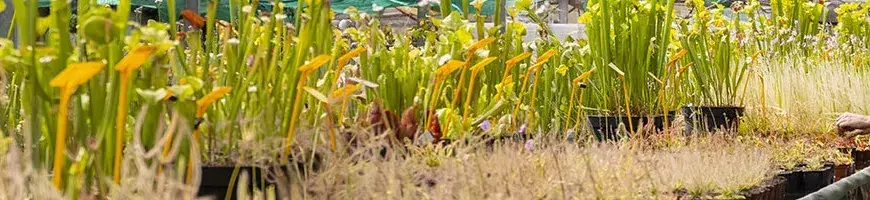
For sale in the Karnivores shop
Love Carnivorous plants? Don't miss our plants and exclusive offers in the online shop.
Read next
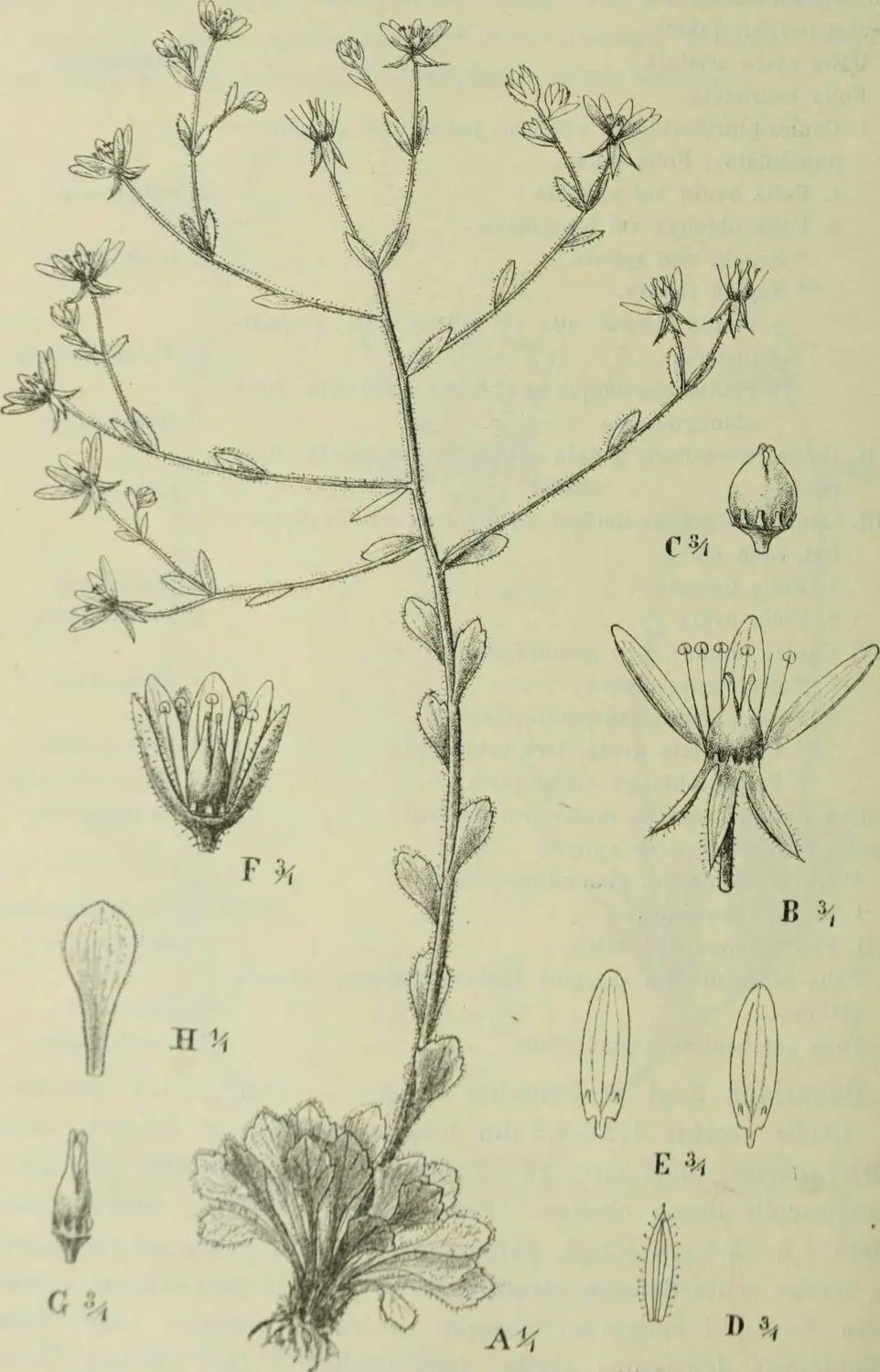
Saxifraga candelabrum: the flowering plant that confirms a 150-year-old hypothesis by Darwin
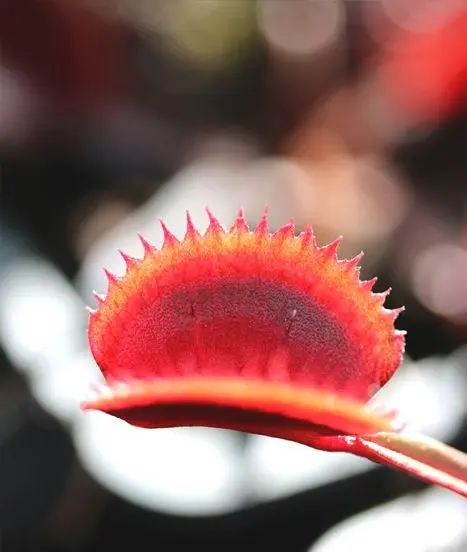
How does the Venus flytrap detect its prey? A 2025 study sheds light on its ‘sixth sense’
Growing Tillandsia from seed: a comprehensive guide to successful germination
Do Dionisian traps run on electricity?
How carnivorous plants digest their prey
Which plants can you grow on xaxim?