
A key fungus for the digestion of carnivorous plants: a new scientific discovery
Introduction
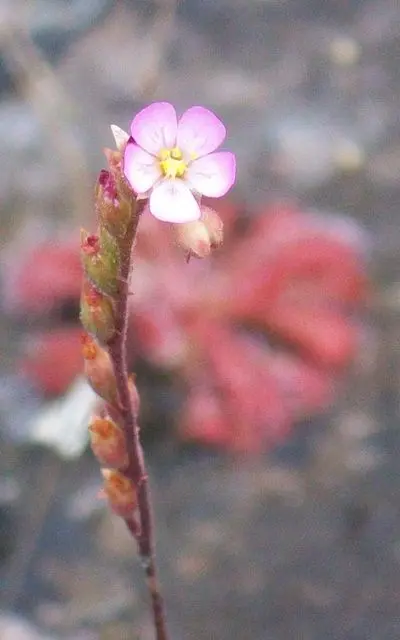
Carnivorous plants, fascinating for their adaptations to capture and digest insects, have always aroused the curiosity of scientists. Whilst the mechanisms of capture are well understood, the details of digestion have remained partly a mystery. A recent study, published in *Nature Microbiology*, sheds new light on this process by revealing the crucial role played by a fungus, *Acrodontium crateriforme*, in the digestion of prey by carnivorous plants of the genus *Drosera*, more commonly known as sundews.
The key role of Acrodontium crateriforme
The researchers discovered that the viscous mucilage secreted by sundew leaves, which is used to trap insects, harbours a complex microbial community. Among these microorganisms, Acrodontium crateriforme stands out for its dominance and its adaptation to the acidic environment of the mucilage. This fungus does not merely coexist with the plant; it plays an active role in the digestion process. Indeed, experiments have shown that the presence of A. crateriforme significantly accelerates the breakdown of prey.
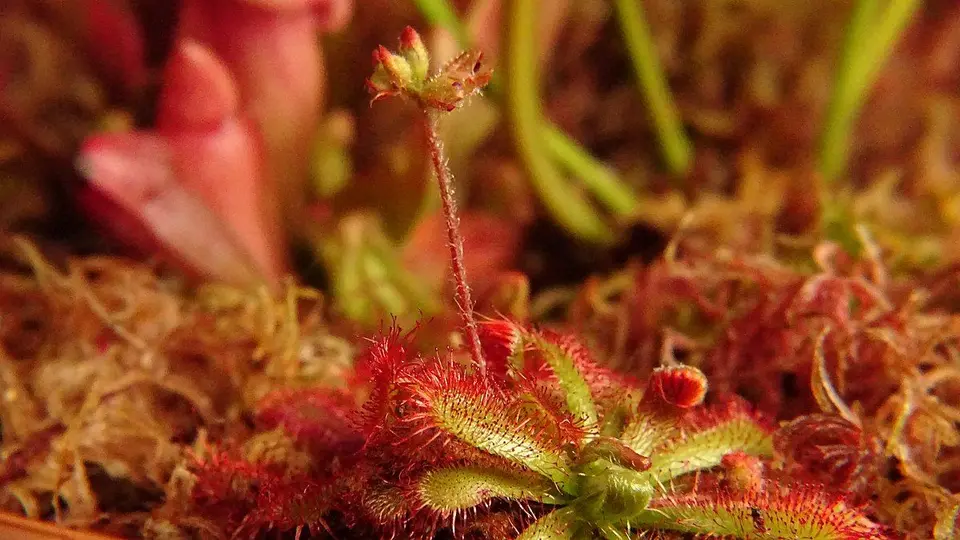
Genomic analyses have revealed that this fungus has a reduced genome, a characteristic often associated with symbiotic organisms. Furthermore, the study of the plant’s and the fungus’s transcriptomes has highlighted the co-evolution of the two organisms, with their genes adapting to one another to optimise digestion. For example, the fungus produces specific enzymes, such as aspartic enzymes and sedolysins, which facilitate the breakdown of the prey’s proteins. For its part, the plant adjusts its gene expression to promote the uptake of nutrients released during digestion.
A beneficial symbiosis
This discovery highlights the importance of interactions between plants and microorganisms in nature. In the case of sundews, the symbiosis with Acrodontium crateriforme represents a significant evolutionary advantage, enabling the plant to optimise the use of nutrients derived from its prey.
Conclusion
This study opens up new avenues of research into plant-microbe interactions and could have implications for agriculture and biotechnology. Indeed, understanding the molecular mechanisms at work in this symbiosis could lead to the development of new strategies to improve the nutrition of cultivated plants or to degrade pollutants.
For sale in the Karnivores shop
Love Carnivorous plants? Don't miss our plants and exclusive offers in the online shop.
Read next
Saxifraga candelabrum: the flowering plant that confirms a 150-year-old hypothesis by Darwin
How does the Venus flytrap detect its prey? A 2025 study sheds light on its ‘sixth sense’
Growing Tillandsia from seed: a comprehensive guide to successful germination
Do Dionisian traps run on electricity?
How carnivorous plants digest their prey

Which plants can you grow on xaxim?