
The need to ‘charge’ biochar
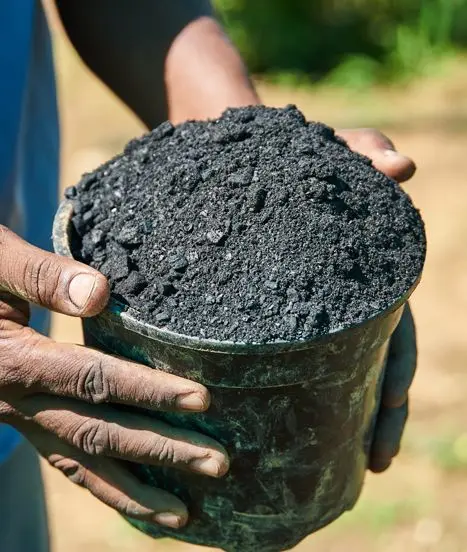
Whilst biochar is undoubtedly of great interest for growing houseplants, its use should be approached with the same caution as any new product on the market. The most important thing, in the case of biochar, is to pre-activate it before use.
Tip: Before using it, make sure you pre-charge your biochar. You can soak it for 24 hours in a diluted fertiliser solution or, ideally, mix it with one to two times its volume of mature compost for one to two weeks. This biological or chemical ‘charging’ ensures that it acts immediately as a nutrient reservoir.
Here’s why this step is considered critical, especially in a nutrient-poor growing medium such as that used for indoor plants:
1. Preventing the ‘nitrogen starvation’ effect (the main risk)
- The Adsorption Trap: Biochar, due to its highly porous nature and large specific surface area, possesses an extremely high adsorption capacity. If added to a growing medium in a dry, untreated state, it will initially adsorb the small molecules available around it, including nitrates and ammonium (forms of nitrogen that can be taken up by the plant).
- Consequence: This initial adsorption can lead to a temporary phenomenon of competition for nitrogen (nutrient immobilisation), resulting in nitrogen deficiency and, consequently, a slowdown or inhibition of plant growth shortly after application. Loading the biochar with a nutrient solution helps to saturate these adsorption sites before it competes with the plant.
2. Maximising microbial life
- The Porous Habitat: Biochar is an ideal refuge for beneficial microorganisms.
- Biological Loading: By inoculating it with compost (or compost tea), the porous walls are immediately coated with active microbial communities. This allows the microorganisms to establish their ‘home’ quickly, accelerating the secondary benefits of biochar (improved nutrient uptake, protection against pathogens). This is why biochar is often mixed with compost to mimic the fertility of Terra Preta (the source of the founding principles).
3. Activating the cation exchange capacity (CEC)
- Moisture and Surface Area: The cation exchange sites in biochar (where nutrients are stored) function optimally in a moist and nutrient-rich environment.
- Chemical Loading: Soaking in a nutrient solution or mixing with rich organic matter (compost) allows the exchange sites to be occupied by cations and anions, enabling the biochar to function immediately as a nutrient reservoir rather than simply as an adsorbent.
Conclusion: Whilst biochar eventually becomes naturally charged over time and through watering (after several months), pre-loading is a proactive method to ensure that the plant benefits from its properties immediately and to eliminate the risk of initial nitrogen deficiency, making the claim of ‘85 per cent or greater efficacy’ much more credible to users.

For sale in the Karnivores shop
Love Growing guide & tips? Don't miss our plants and exclusive offers in the online shop.
Read next
Quartz sand for carnivorous plants: what is it used for and how do you use it?
How to care for and maintain xaxim in a terrarium and a tropical greenhouse
Cork oak bark: an ideal natural substrate for epiphytic plants and terrariums

Free delivery on orders of €59 or more until midnight on Sunday

Oxalis triangularis: growing, care and tips
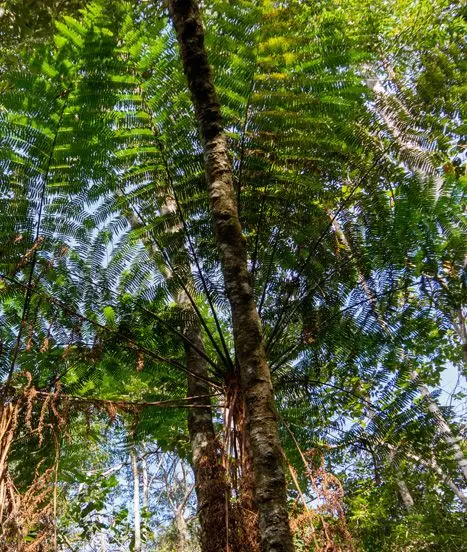
Dicksonia sellowiana: an iconic tree fern of the xaxim