
Proboscidea
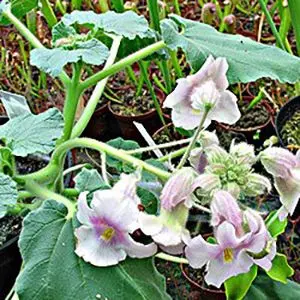
Proboscidea are large annual plants (compared to other carnivorous plants) whose stems and leaves are entirely covered in sticky hairs, designed to capture insects that might attempt to feed on them. They thus trap and kill a very large number of them, but their ability to break them down and then digest them remains a matter of debate. Furthermore, the energy required to produce the glandular hairs and mucilage is thought to be far greater than what they could derive from assimilating the nutrients from the insects.
Proboscidea louisianica produces purple flowers, whilst Proboscidea lutea (more commonly known as Ibicella lutea) produces yellow flowers.
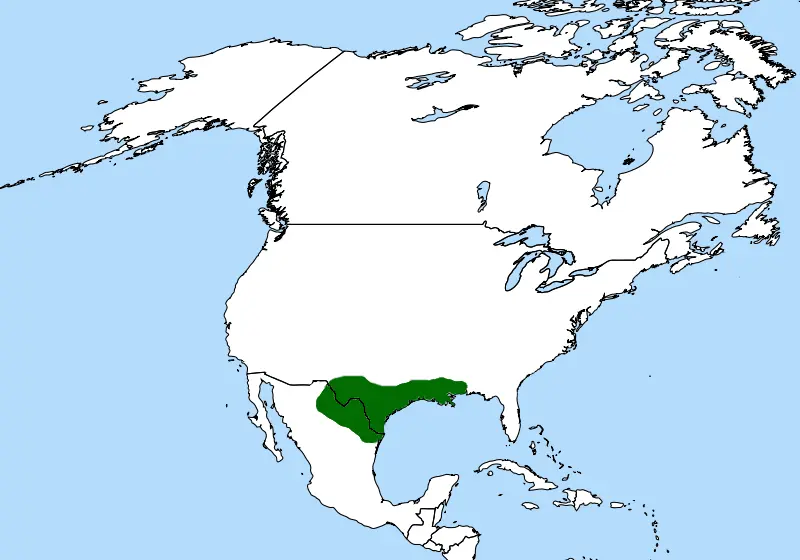
P. louisianica is native to northern Mexico and the states bordering the Gulf of Mexico, as far south as Louisiana. I. lutea is found across much of eastern Brazil.
Proboscidea utilise ambient moisture to replenish their water reserves and produce mucilage, in the same way as Drosophyllum lusitanicum and certain Droseras found on dry soils.
There are only two protocarnivorous species (P. louisianica and P. lutea), which are sometimes nicknamed ‘ram’s horn’ because of the shape of the fruits once they have dried (photo to follow!). This curved structure enables them to cling to the legs of passing animals, thereby aiding seed dispersal and ensuring the species’ survival.
For sale in the Karnivores shop
Love Exotic animals and terrariums? Don't miss our plants and exclusive offers in the online shop.
Read next
Cyrtomium fortunei: an evergreen fern ideal for shaded areas
Asplenium trichomanes: wall fern – growing, origin and tips
Ficus pumila: growing, care and tips
How to secure the xaxim in a terrarium so that it stays in place safely and securely
Plectranthus ernestii: an ideal, striking plant for a terrarium
A comprehensive guide to growing Neoregelia in a terrarium