
Carnivorous plants in VIETNAM
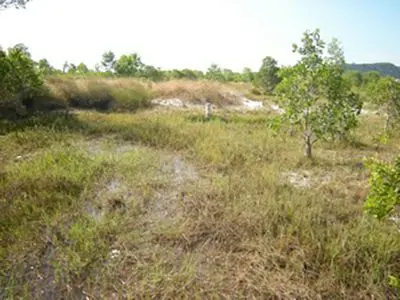
During my trip to Vietnam (November–December 2009), I spent a few days on the island of Phu Quoc looking for carnivorous plants.
This island, which is closer to Cambodia than to Vietnam (to which it belongs), seemed to me to be an ideal place to discover carnivorous plants, and in particular, Nepenthes.
So, from the very first day, as I set off to explore the tracks of Phu Quoc on a motorbike, I stopped – as is my habit – whenever the landscape suggested a habitat that seemed suitable for the growth of carnivorous plants…
After a few kilometres towards An Thoï (Road 46), a sandy landscape, tall grass and waterholes gave me hope that I might find some Drosera.
Sure enough, after a few steps through the sand, I was delighted to discover some Drosera burmannii! Once that initial excitement had subsided, I explored the surrounding area…
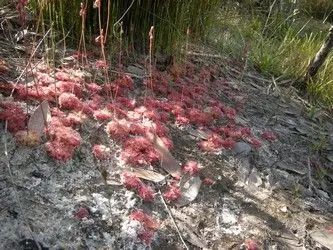
I actually find myself in the middle of a veritable field of carnivorous plants: bladderworts in the pools and around their edges, and Drosera burmanii and indica colonising all the sandy areas, some of which are covered with a thin layer of humus.
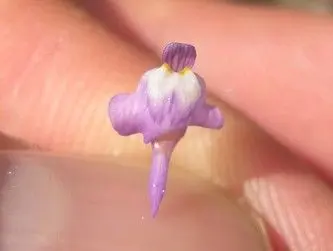
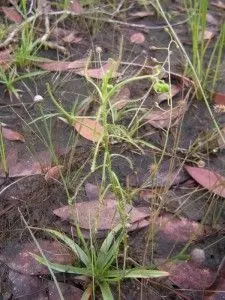
After a photo shoot and collecting seeds from a few specimens, I head back to Duong Dông before the sun sets…
The next day, with Nicolas, a fellow Frenchman I’d met the day before, we set off once again on motorbikes towards the north of the island. The first few kilometres took us into the island’s lush heart: a dense, impenetrable primary forest, through which the track led us to Bäi Thom. We stopped when we spotted a clearing that had, in all likelihood, been made by heavy machinery.
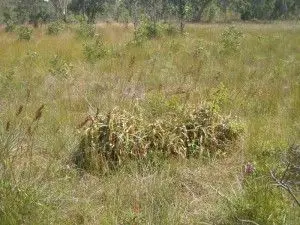
Over a few hectares, the jungle gives way to a savannah covered in Drosera and bladderworts, whilst magnificent Nepenthes plants cling to the shade of each copse. A few plants grow without the shelter of the trees’ foliage and are particularly yellowed and affected by the drought.
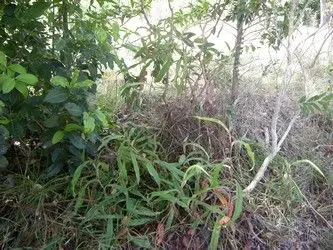
It’s the dry season at the moment. It’s easy to imagine this place turning into a vast marsh during the wet season…
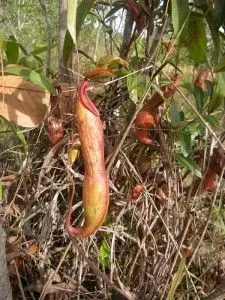
Nepenthes smilesii exhibits remarkable variation: some plants have completely red pitchers, whilst others are a pale green, and still others are variegated.
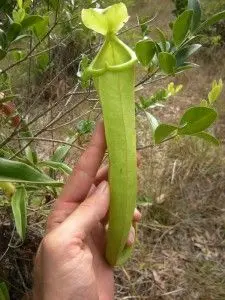
I’m collecting a few seeds:
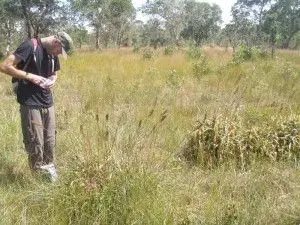
In the jungle, as we retraced our steps, we came across another colony of Nepenthes. These grow in the shelter of the jungle trees and climb right up to their crowns.
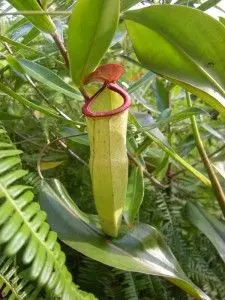
Following discussions with François Mey (a French specialist in Indochinese Nepenthes), it would appear that these plants, which colonise the undergrowth, are Nepenthes mirabilis.
I will return to the north of the island twice more before setting off for Saigon and returning to France.
Alain Kern (former owner of Karnivores)
Thanks to Nicolas for taking photos when my batteries ran out, and to François for his insights into Indochinese Nepenthes!
For sale in the Karnivores shop
Love Growing guide & tips? Don't miss our plants and exclusive offers in the online shop.
Read next
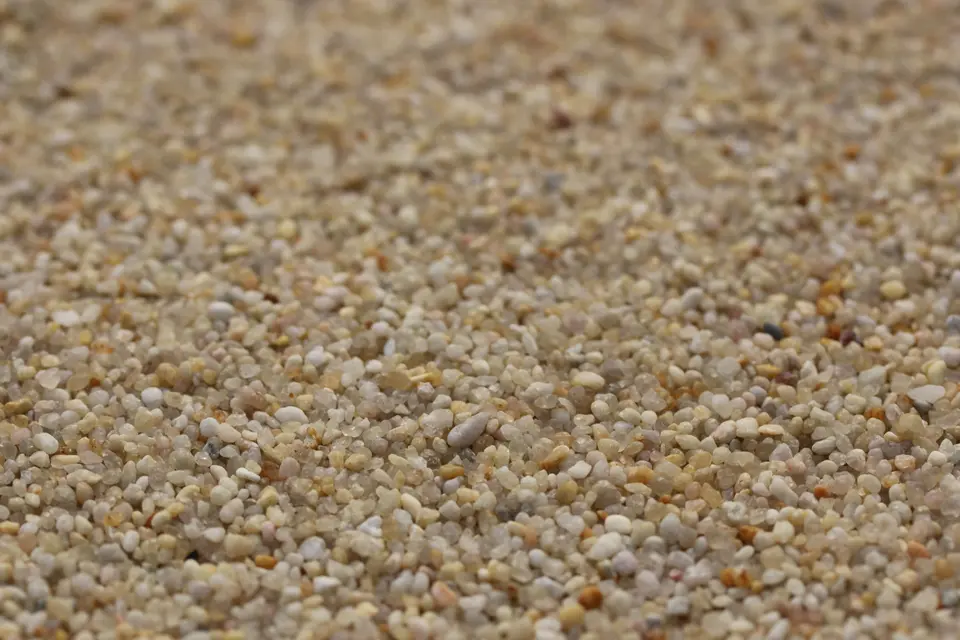
Quartz sand for carnivorous plants: what is it used for and how do you use it?
How to care for and maintain xaxim in a terrarium and a tropical greenhouse
Cork oak bark: an ideal natural substrate for epiphytic plants and terrariums

Free delivery on orders of €59 or more until midnight on Sunday
Oxalis triangularis: growing, care and tips
Dicksonia sellowiana: an iconic tree fern of the xaxim