Tillandsia: rather special seeds
Introduction
Tillandsias are fascinating epiphytic plants of the Bromeliaceae family, often referred to as air plants. Whilst their way of life is already unusual, their seeds also possess astonishing characteristics that perfectly reflect their strategy for adapting to life at height. Understanding how these seeds are structured and dispersed helps us to better grasp how Tillandsias colonise their environment — often in places where few other plants can take root. In this article, we explore in detail the highly distinctive seeds of Tillandsia, their shape, how they are dispersed by the wind, and the role they play in the propagation of these unique aerial plants.
Morphology of Tillandsia seeds
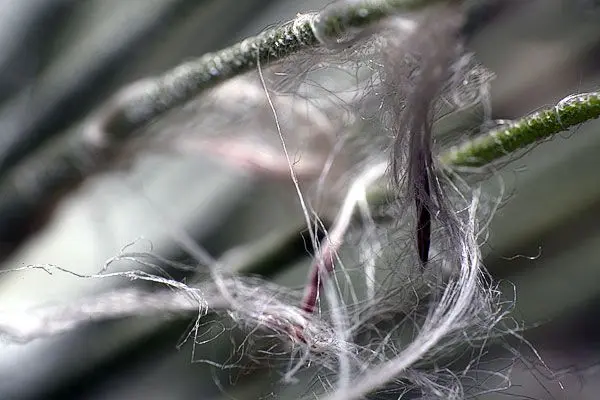
Like all flowering plants, Tillandsias produce seeds after each flowering. However, these seeds do not resemble those most commonly found on the ground in other plants. They are attached to elliptical capsules, surrounded by a light, silky filamentous network. This distinctive structure is one of the most striking adaptations of Tillandsias and enables effective dispersal through the air, in keeping with their aerial lifestyle.
The adaptation for aerial dispersal
Unlike most plants, which disperse their seeds to the ground, Tillandsias appear to be designed so that their seeds remain suspended in the air or are carried by the wind. This strategy makes sense: these plants often grow clinging to vertical surfaces such as branches, rocks or other exposed structures. By allowing the seeds to remain in the air, Tillandsias maximise their chances of landing in locations suited to their epiphytic lifestyle, where there is less competition and where they can absorb ambient moisture.
The filamentous network: a key adaptation
The filamentous network surrounding Tillandsia seeds is more than just a decoration: it acts as a structure for trapping and clinging. When the seeds fall, this network ensures they can cling to whatever they encounter, be it a leaf, a branch or a rough surface. This significantly increases the chances of the seed finding a suitable substrate for germination, rather than falling to the ground where conditions are often unfavourable.
Germination and colonisation
Once attached, these seeds can germinate, even at height. The ability of Tillandsias to germinate without needing nutrient-rich soil is linked to their capacity to absorb water and nutrients directly from the air via their specialised leaves. Once established, they use this ability to begin growing without direct competition from terrestrial plants, which explains why these plants are so effective at colonising areas where few other species manage to take root.
Why are these seeds so special?
Tillandsia seeds are the result of a reproductive strategy that is unique amongst flowering plants. Their lightness, their filamentous network and their ability to cling to unusual surfaces enable them to be dispersed into environments that ‘conventional’ seeds cannot reach. This active mode of dispersal perfectly illustrates why these plants are often called ‘daughters of the air’: they literally live in the air, and their seeds follow the same path to ensure the survival of the species.
Conclusion
Tillandsia seeds are not merely reproductive units: they are adaptive mechanisms shaped by evolution to ensure the propagation of epiphytic plants in environments that can be harsh. Their filamentous structure, their ability to cling on, and their dispersal by the wind are remarkable examples of the diversity of survival strategies among flowering plants. By understanding these mechanisms, we gain an even greater appreciation of the uniqueness of Tillandsias and their incredible ability to colonise aerial ecological niches where few other plants thrive.
FAQ – Tillandsia: rather special seeds
What do Tillandsia seeds look like after flowering?
After each flowering, Tillandsias produce seeds that are visible within slender, elliptical capsules surrounded by filaments.
Why don’t Tillandsia plants scatter their seeds on the ground?
Unlike most plants, Tillandsias do not seek to disperse their seeds onto the ground: they must remain suspended, as these plants grow at height.
What is the purpose of the filaments around Tillandsia seeds?
The filamentous network enables the seeds to cling to whatever they come into contact with as they fall (often the leaves of the parent plant) or when they are carried away by the wind.
How does the wind help Tillandsia to spread?
The wind can carry these seeds away, and once they have attached themselves, germination follows, which helps Tillandsias to colonise new areas.
Why are Tillandsia plants known as ‘daughters of the air’?
Because their seeds are designed to remain airborne, cling to surfaces and then germinate with the help of the wind, Tillandsias can colonise places where they face no competition from other plants, which is why they are aptly nicknamed daughters of the air.

For sale in the Karnivores shop
Love Tillandsia? Don't miss our plants and exclusive offers in the online shop.