Spotlight on Tillandsia argentea
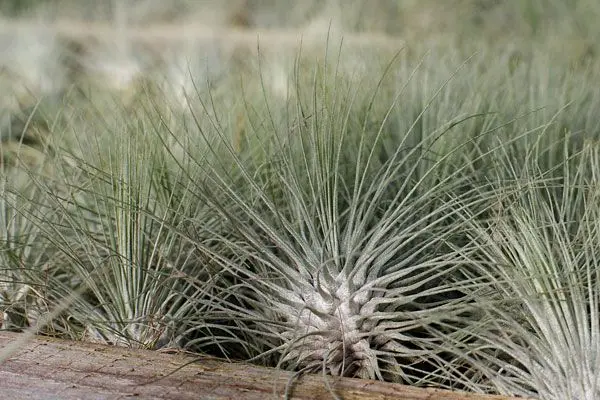
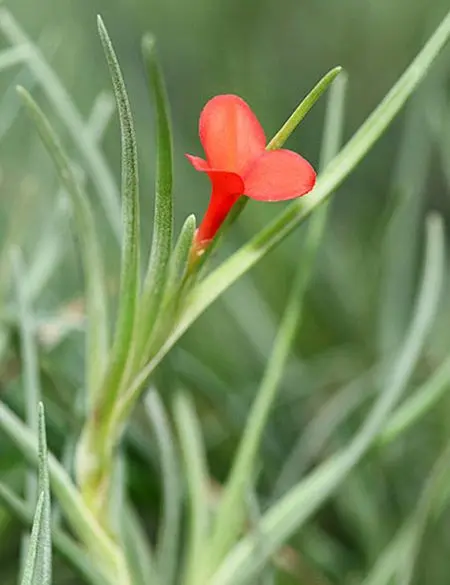
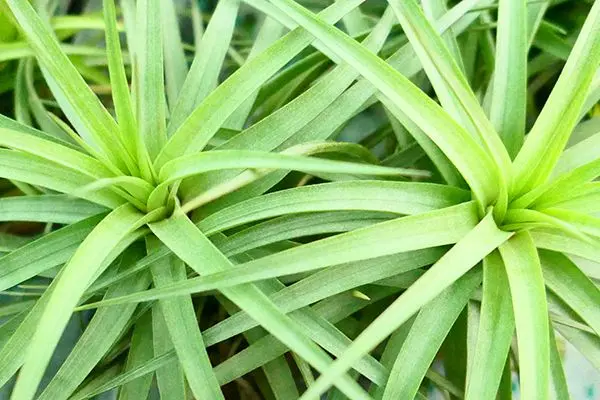
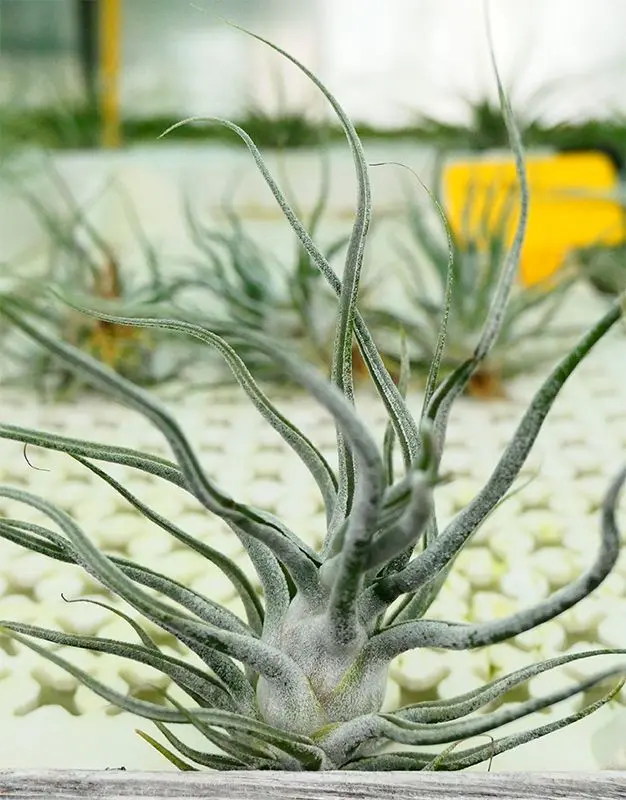
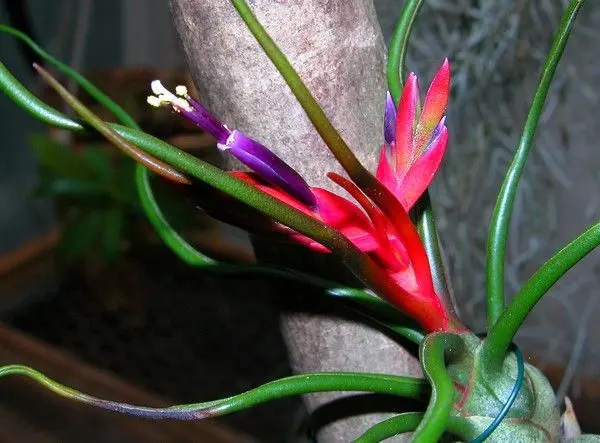
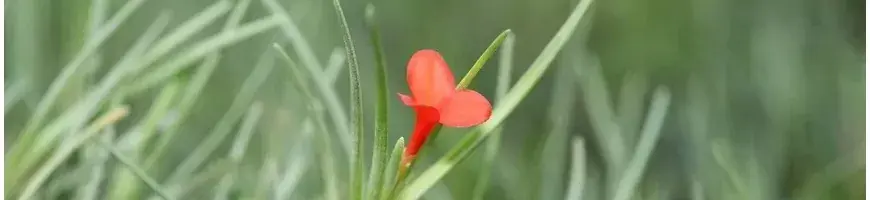
Tillandsia argentea is an epiphytic bromeliad native to Cuba and Jamaica. The species grows in both lowland and mountainous areas: it is found at altitudes of between 300 and 2,400 metres. It develops a dense rosette of thread-like grey-green leaves, no more than 10 cm long and 0.5 mm in diameter at the apex, which spring from a pseudobulb. The density of silvery scales is such that the pseudobulb appears almost white! This enables it to capture water very efficiently, a vital ability in its habitats, which are found in the driest regions of the two islands mentioned above. Tillandsia argentea bears 3 to 4 flowers at the tip of a slender inflorescence, consisting of a single stem that is forked at its tip. The petals are red to purple. The rosette does not change colour when flowering, creating a striking contrast.
The species, which is one of the first Tillandsias to have been described, was published in 1866 by the German botanist August Grisebach. The Latin epithet ‘argentea’ is hardly mysterious; it means… silvery. This name does not seem at all specific nowadays, given that a great many silvery Tillandsias have been discovered since then!
It is prized for its very elegant aerial rosettes with silvery centres, as well as its colourful flower spikes.
Cultivating Tillandsia argentea
From autumn through to spring, ideally in a terrarium with good air circulation, or placed in front of a window and misted once a day. It thrives outdoors in the warmer months, but must be protected from any dry winds and misted regularly (2 to 3 times a day), especially if it is in a sunny spot.
For sale in the Karnivores shop
Love Tillandsia? Don't miss our plants and exclusive offers in the online shop.