A comparison of watering methods for two Tillandsia plants
Introduction
Watering Tillandsia is an essential aspect of their care, but not all Tillandsia require watering at the same frequency. In a cultivation experiment carried out on two specimens of Tillandsia duratii, a difference in watering frequency produced visibly different results despite the plants being in generally good health. Understanding how to adjust watering according to the species, the structure of the foliage and the need for the plant to dry out between waterings is essential for achieving vigorous, well-developed Tillandsia. In this article, we compare two watering regimes to draw practical advice that can be directly applied to your air plants.
Watering: the key to growing Tillandsia
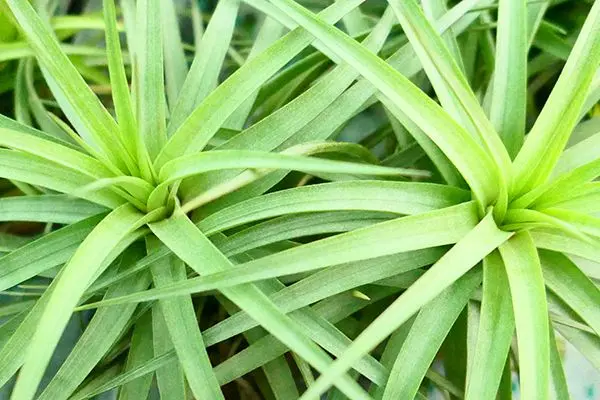
Successfully growing Tillandsias hinges on mastering one crucial aspect: watering. It’s not complicated; green species are watered more frequently (at least once a day in summer) than silvery species (once every two days in summer).
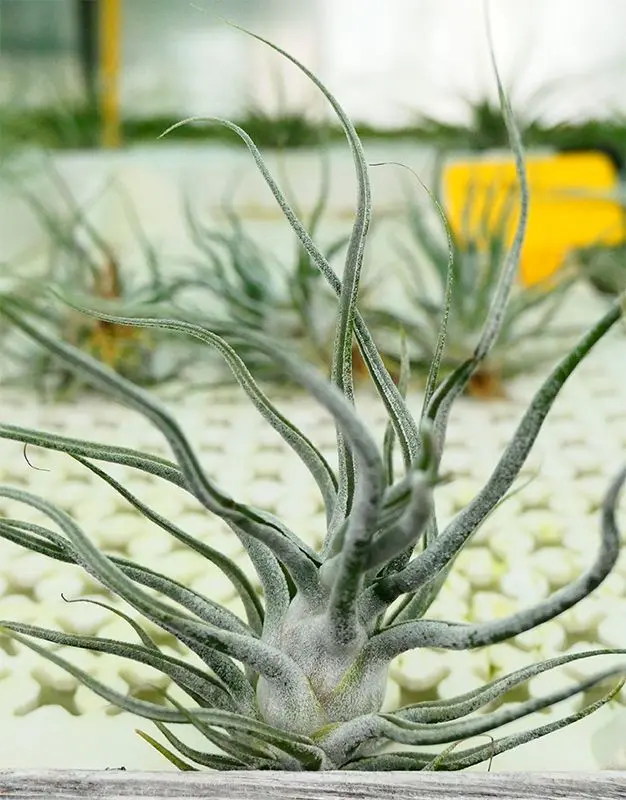
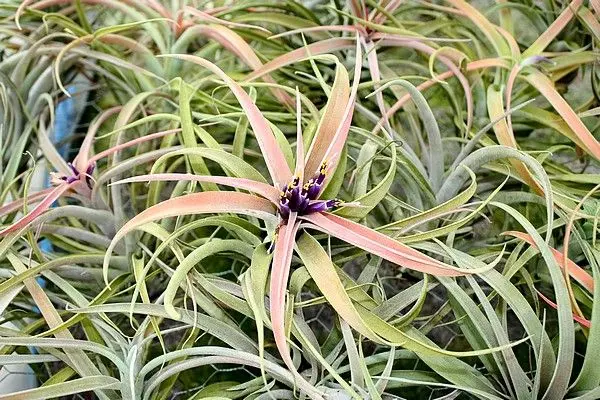
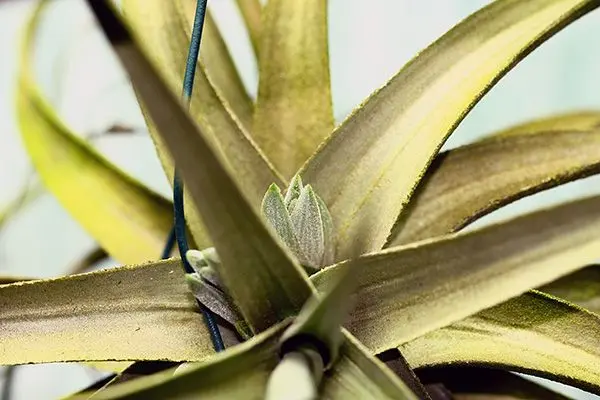
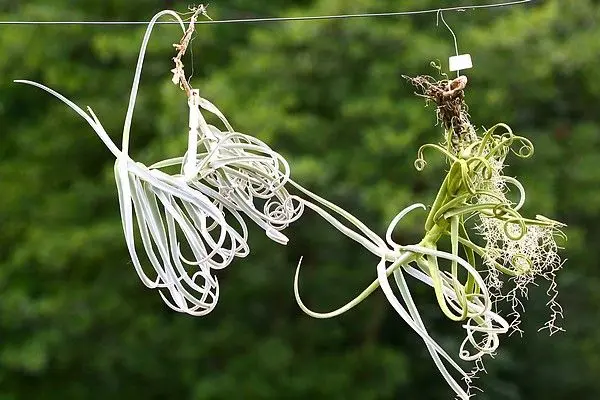
They both appear to be in good health, yet one looks ‘normal’ – the one on the left. All its foliage is covered in silvery hairs; the plant has a uniform colour. The other has been watered too often (once a day) and has probably not dried out quickly enough after each watering.
Effects of overwatering on Tillandsia
The result: half the plant has lost its silvery down, and the affected leaves have become stiff. These will, in fact, die prematurely.
Note the presence of a small Tillandsia usneoides clinging to the Tillandsia duratii on the right. Whilst rather pretty, such a coexistence is, of course, only possible between Tillandsias that need to be watered at the same frequency…
Conclusion
The comparative watering experiment on the two Tillandsia duratii shows that watering too frequently can harm the plants’ development and appearance, even if they appear to be in good general health. The silvery varieties, in particular, need time to dry out after each watering and should not be treated in the same way as the green or more succulent varieties. Adopting an appropriate watering strategy — less frequent for silvery varieties and more frequent for green varieties during hot periods — helps prevent the loss of protective fuzz and premature stiffening of the leaves. By applying these observations to your care routine, you will optimise the health, appearance and longevity of your Tillandsia plants.
FAQ – A comparison of watering methods for two Tillandsia plants
Why compare two watering regimes for Tillandsia duratii?
Comparing two watering methods allows us to see how the frequency of watering affects the appearance and health of Tillandsia plants, and to adapt our approach to each species based on its foliage.
What is the main difference between the two plants?
The main difference is that one of the plants, which was over-watered, has lost some of its silvery down and has stiffer leaves – signs of overwatering or insufficient drying out.
How do you work out the right watering frequency for a Tillandsia?
The ideal frequency depends on the type of leaves: green varieties may need watering every day in summer, whilst silvery varieties should be watered less often to prevent water from standing for too long.
What does it mean when a Tillandsia loses its silvery fuzz?
The loss of the silvery fuzz often indicates that the plant has not dried out sufficiently between waterings, which can weaken the plant and make its leaves stiffer or more vulnerable.
Can you water several Tillandsia plants together?
Yes, but it is important to ensure that their watering requirements are compatible: plants with different needs should not be watered in exactly the same way, to avoid damaging those that require less water.

For sale in the Karnivores shop
Love Tillandsia? Don't miss our plants and exclusive offers in the online shop.