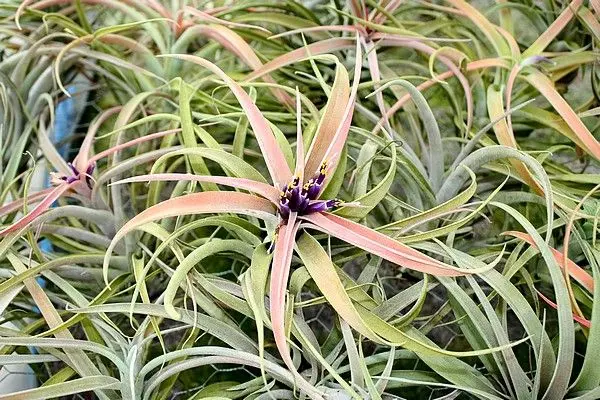
Spotlight on Tillandsia magnusiana
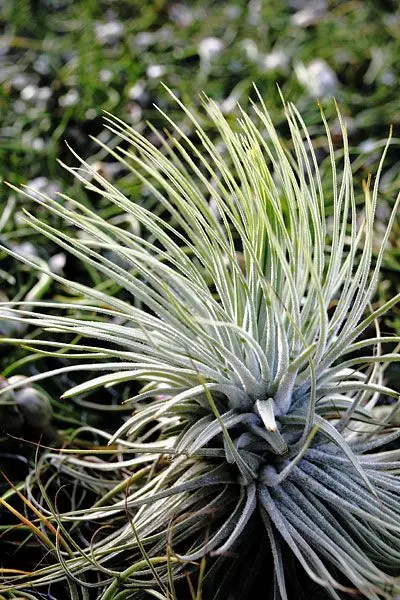
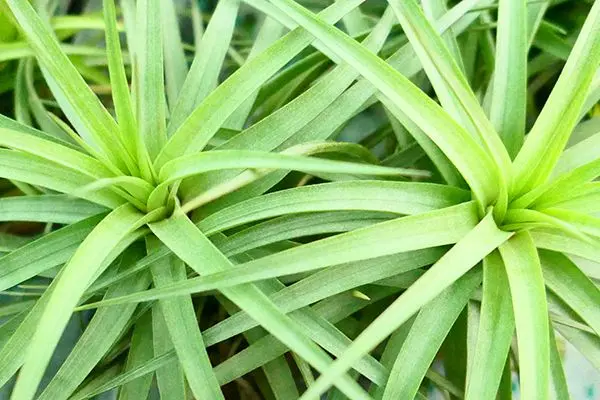
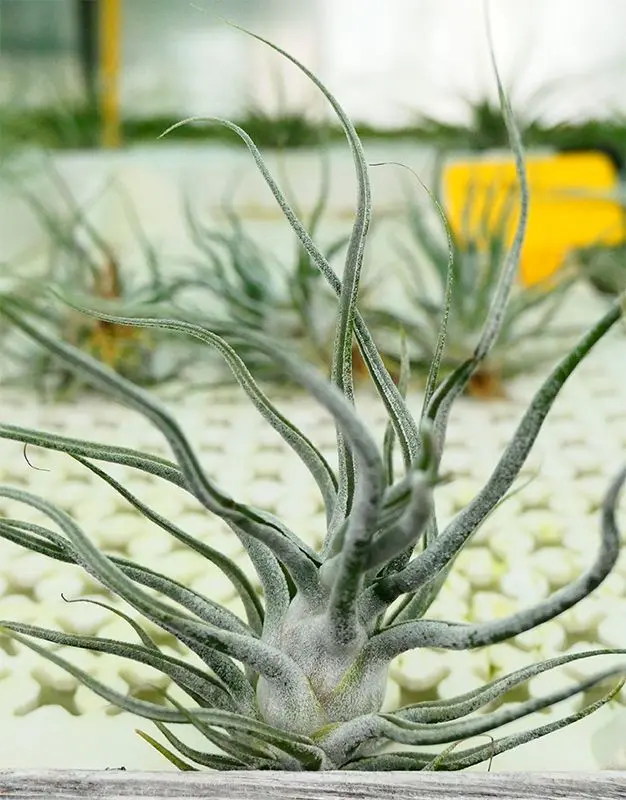
The very elegant Tillandsia magnusiana is an epiphytic bromeliad that grows on oaks and conifers in the mid-mountain forests (at altitudes of between 1,000 and 2,000 metres) found in Honduras, El Salvador and southern Mexico. It forms a rosette of numerous leaves, with the newest ones standing upright and the oldest ones drooping, giving it a distinctive appearance.
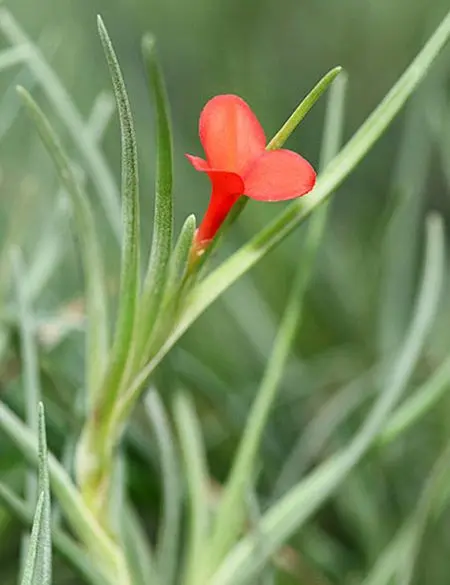
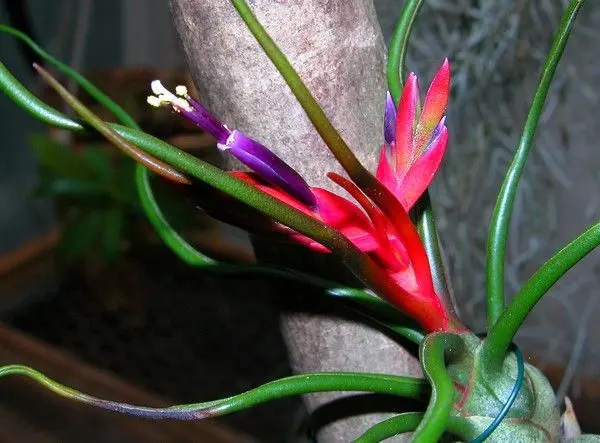
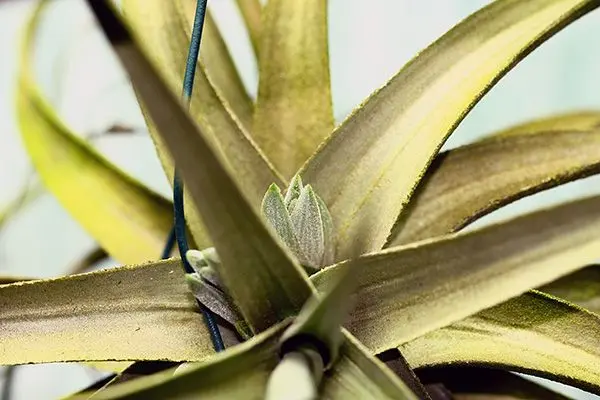
Without the thousands of silvery scales that cover its leaves, they would dry out very quickly, given how thin they are: sometimes just 1 mm in diameter and several centimetres long! Acting like sponges, the scales prevent the extremely thin leaf blades from drying out by capturing dewdrops and, of course, rainwater. The purple tubular flowers rise from a short red inflorescence.
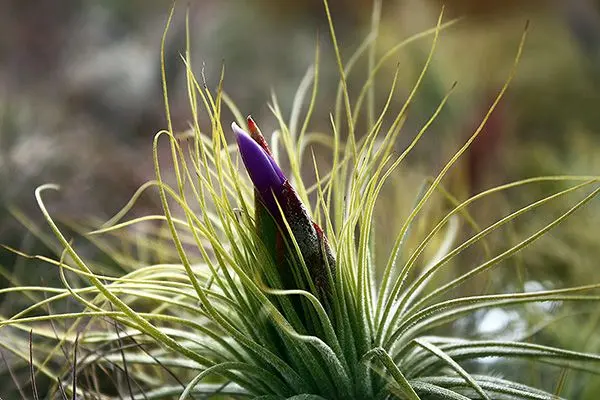
Tillandsia magnusiana in flower. The species was described in 1911 by the German botanist Ludwig Wittmack. The Latin name magnusiana might be thought to derive from the Latin magnus, meaning ‘large’, but it actually refers to another German botanist: Paul Wilhelm Magnus, a close associate of Wittmack.
Cultivation of Tillandsia magnusiana
This Tillandsia can tolerate a sunny position once it has become acclimatised to it. You must then ensure that the tips do not dry out; if they do, watering should be more frequent.
The rosette must dry out quickly and, above all, must not remain wet overnight. You will then end up with a well-formed, uniform rosette!

For sale in the Karnivores shop
Love Tillandsia? Don't miss our plants and exclusive offers in the online shop.